Leaf Anatomy and Morphology: The Science of Plant Foliage
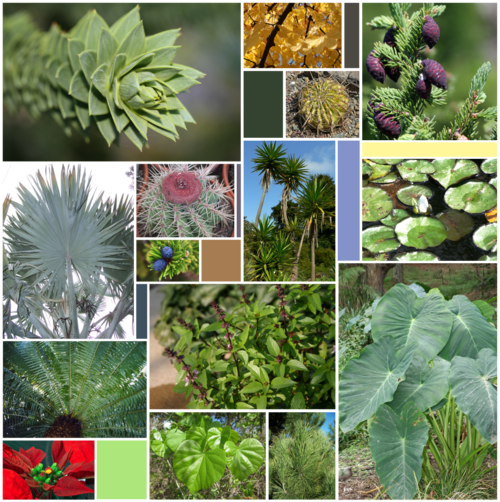
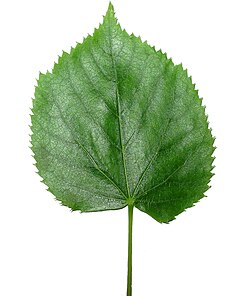
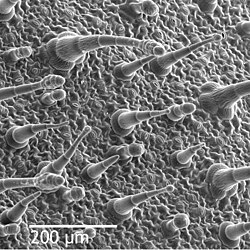
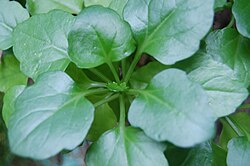
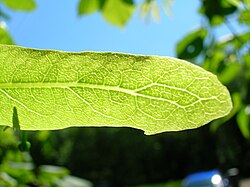
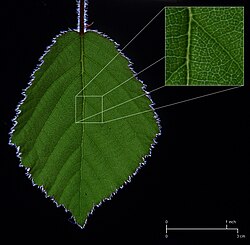
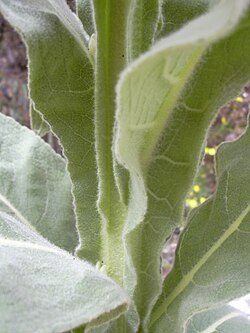
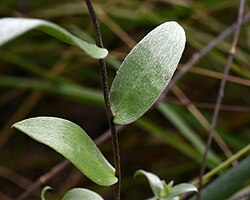
A leaf is a primary appendage of the stem of a vascular plant, typically positioned above ground and specialized for the critical process of photosynthesis. Collectively referred to as foliage, leaves work alongside the stem, flowers, and fruit to form the plant's shoot system. Most leaves are characterized by a flattened structure with distinct upper (adaxial) and lower (abaxial) surfaces, which often differ in color, hairiness, and the density of gas-exchange pores.
The characteristic green color of most leaves is due to chlorophyll, a compound essential for absorbing light energy from the sun. While most foliage is green, some plants exhibit variegated leaves, which feature lighter-colored or white patches.
Key Facts
- Primary Function: Specialized for photosynthesis and gas exchange.
- Gas Regulation: Controlled by stomata, which can number from 1,000 to 100,000 per square centimeter.
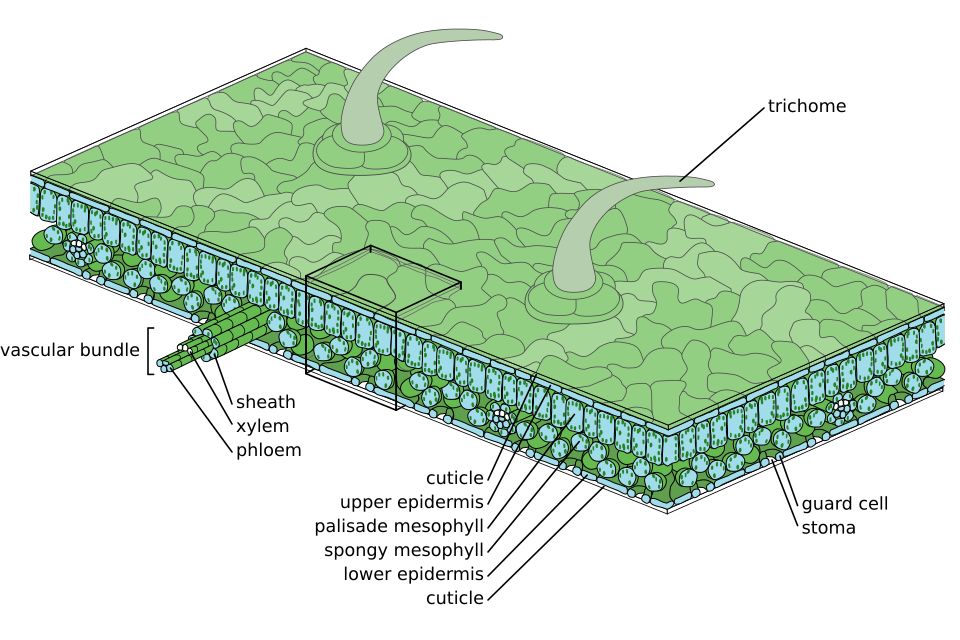
- Internal Structure: Comprised of the epidermis, mesophyll (photosynthetic tissue), and vascular tissue (veins).
- Waterproofing: The plant cuticle provides a waterproof barrier to prevent dehydration.
- Diversity: Leaves vary wildly in shape, margin, and venation to adapt to specific environments.
Internal Anatomy and Physiology
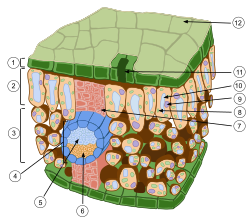
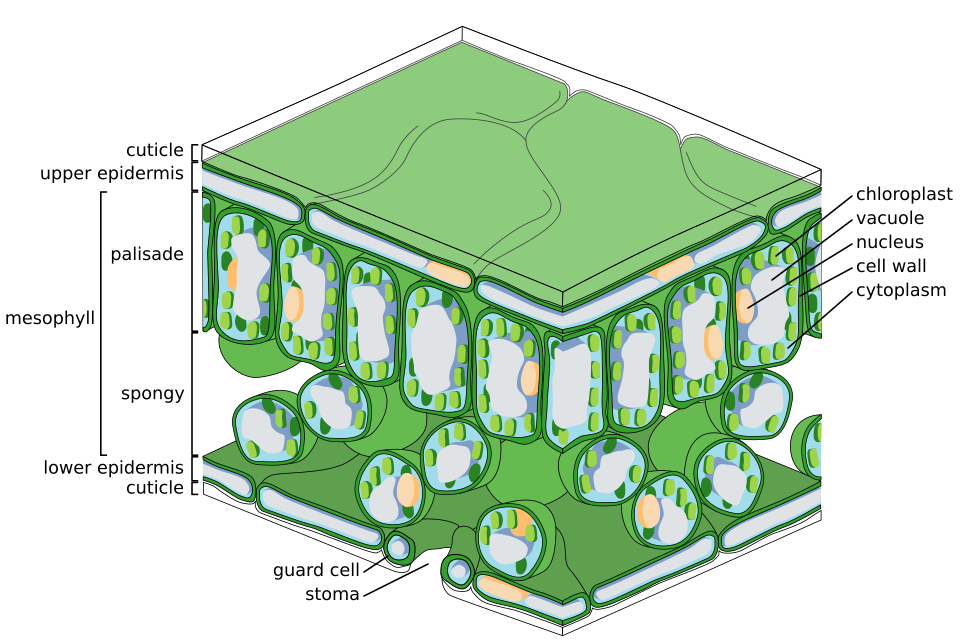
The internal organization of a leaf is evolved to maximize the exposure of chloroplasts (photosynthetic organelles) to light and increase carbon dioxide (CO2) absorption while minimizing water loss.
Tissue Layers
Most leaves consist of three major tissue systems:
- Epidermis: The outermost layer covering both the upper and lower surfaces. It includes the cuticle and stomata.
- Mesophyll: The internal photosynthetic tissue, also known as chlorenchyma. In most flowering plants and ferns, this is divided into the palisade mesophyll (typically on the upper side) and the spongy mesophyll.
- Vascular Tissue: The system of veins containing xylem and phloem for transporting water and nutrients.
Gas Exchange and Regulation
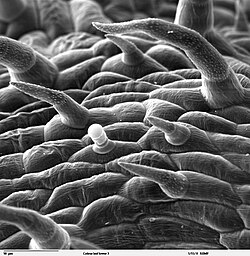
Gas exchange between the mesophyll and the atmosphere is managed by stomata—minute pores measured in tens of micrometers. The opening and closing of these pores are controlled by the turgor pressure of a pair of guard cells, regulating the flow of CO2, oxygen (O2), and water vapor.
Leaf Morphology and Classification
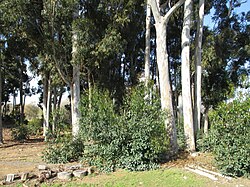
Leaf morphology refers to the physical form and structure of the leaf, which varies based on the species and its evolutionary adaptations.
Basic Types and Arrangement
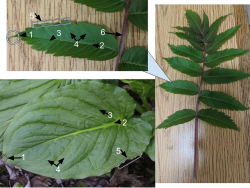
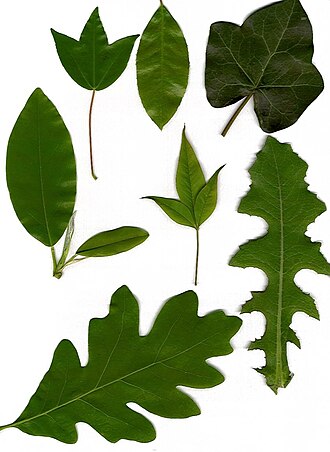
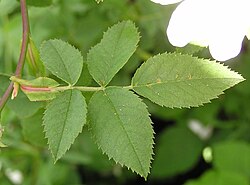
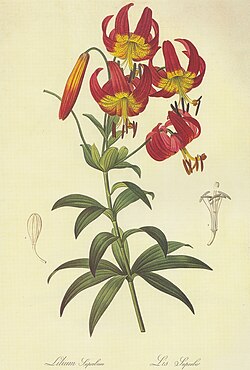
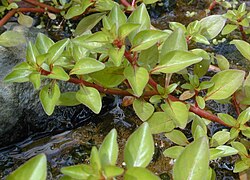
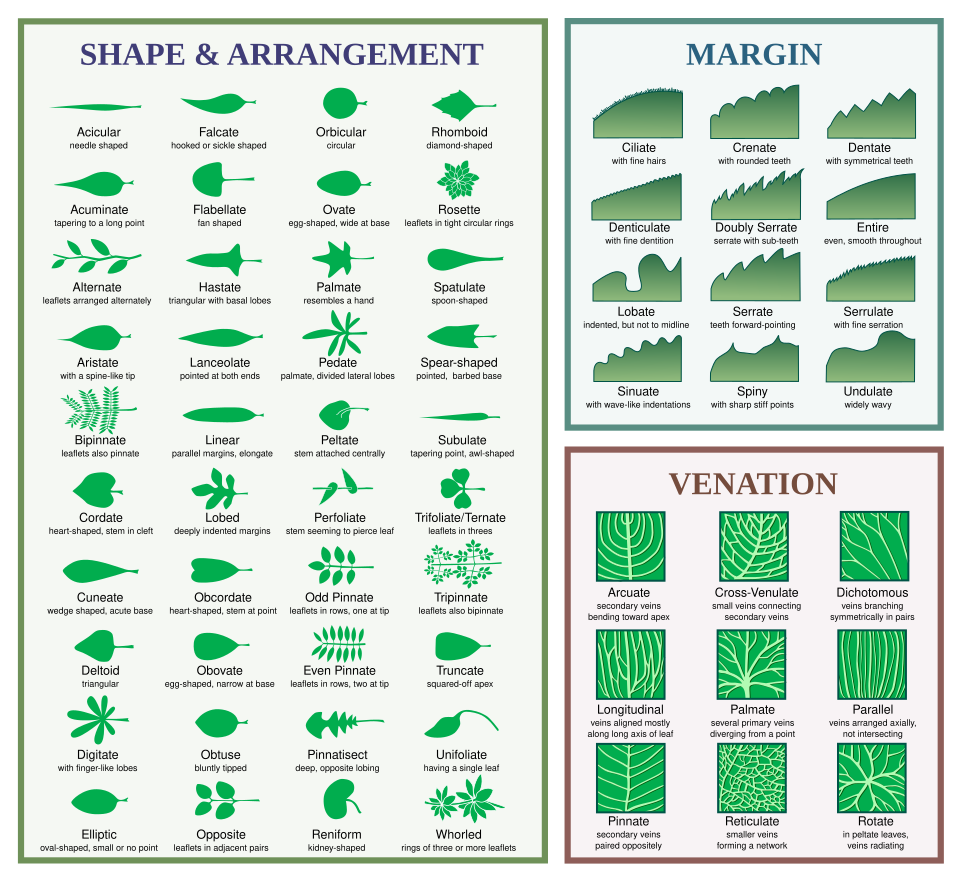
Leaves can be simple or compound. A simple leaf has a single blade, whereas a compound leaf is divided into leaflets. Their arrangement on the stem can be alternate, opposite (in pairs), decussate (opposite pairs at right angles), or whorled (three or more leaves per node).
The Blade and Petiole
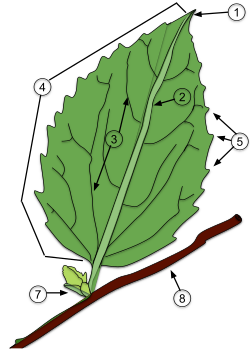
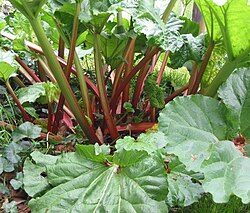
The main part of the leaf is the lamina (blade), which is attached to the stem by the petiole. In some plants, such as rhubarb, these petioles are overgrown and edible.
Leaf Margins and Tips
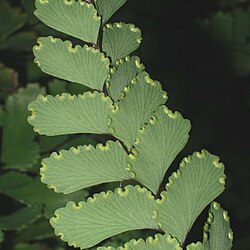
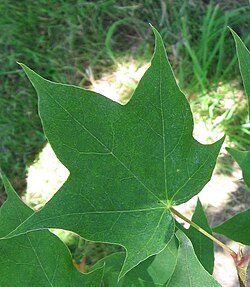
Botanists classify leaves by their edges (margins) and tips (apex). Common margin types include entire (smooth), serrate (saw-toothed), and lobate (indented). The apex can be acuminate (long-pointed), obtuse (rounded), or truncate (flat).
Venation Patterns
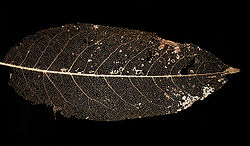
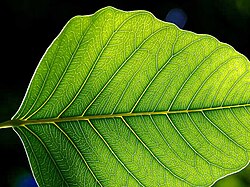
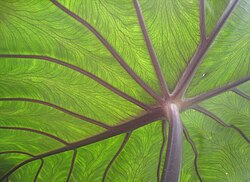
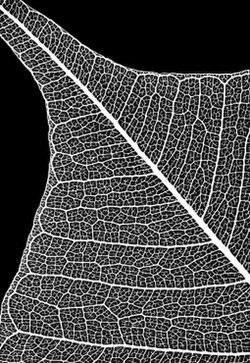
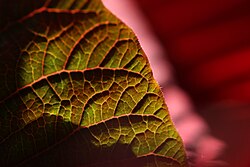
Venation is the arrangement of veins within the leaf lamina. These veins contain lignin, making them more resistant to degradation by microorganisms than the surrounding tissue.
| Venation Type | Description | Example/Characteristic |
|---|---|---|
| Pinnate | Secondary veins branch off a single midrib | Feather-like appearance |
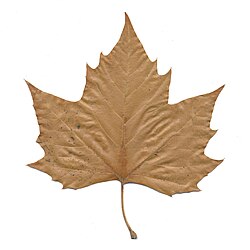
| Palmate | Several main veins radiate from a single point | Hand-like appearance (e.g., Maple) |
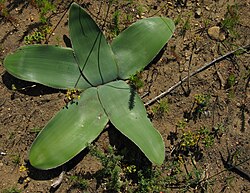
| Parallel | Veins run parallel to each other | Common in monocots (e.g., Grasses) |
| Dichotomous | Veins fork repeatedly into two | Ginkgo biloba |
| Reticulate | Veins branch repeatedly to form a net | Complex netting pattern |

Evolutionary Adaptations
![Citrus leaves with translucent glands[16]](/images/6d/8b/6d8b8a6a764db1811518660dfa27cdf3693062268e9939ca353e32512ae4f033.jpg)
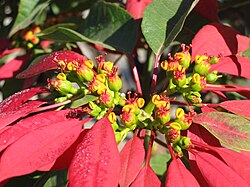
Leaves have evolved diverse forms to survive in various climates. Some plants develop Kranz anatomy to optimize C4 carbon fixation. Others modify their leaves for non-photosynthetic roles; for example, Poinsettia bracts are modified leaves that evolved red pigmentation to attract pollinators.
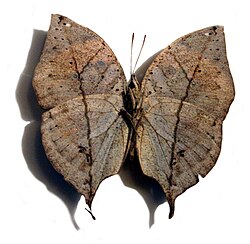
Additionally, some organisms have evolved to mimic leaves for protection, such as the butterfly Kallima inachus.
Frequently Asked Questions
What is the difference between adaxial and abaxial surfaces?
The adaxial surface is the upper side of the leaf, while the abaxial surface is the lower side. They often differ in color, the number of stomata, and the amount of epicuticular wax.
What are stomata and how do they work?
Stomata are microscopic pores on the leaf surface that regulate gas exchange. They open and close based on the turgor pressure of surrounding guard cells to allow CO2 in and release O2 and water vapor.
What is the function of the mesophyll?
The mesophyll is the primary photosynthetic tissue of the leaf. It contains a high concentration of chloroplasts, which capture light energy to produce food for the plant.
What is the difference between simple and compound leaves?
A simple leaf has a single, undivided blade. A compound leaf has a blade that is divided into multiple distinct leaflets attached to a central axis called a rachis.
Why do some leaves change color in autumn?
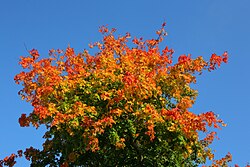
Seasonal leaf loss and color changes occur as plants prepare for winter, often involving the breakdown of chlorophyll, which reveals other pigments or creates new ones.