Language Shift: How Speech Communities Transition Between Tongues
Language shift, also referred to as language transfer, replacement, or assimilation, is the gradual process by which a speech community moves from using one language to another. This transition rarely happens overnight; instead, it typically unfolds over an extended period, often driven by social, political, or economic pressures.
At its core, language shift is frequently tied to the perceived status of a language. When one language is viewed as having higher prestige—whether due to its association with power, education, or wealth—it tends to stabilize and spread. Conversely, languages perceived as lower-status may be abandoned, sometimes even by their own native speakers. A classic historical example is the shift from Gaulish to Latin during the era of the Roman Empire.
This linguistic transition often operates in tandem with cultural assimilation, the process where different cultures merge, leading to a loss of distinct ancestral traits in favor of a dominant societal norm.
Key Facts
- Status-Driven: Shifts usually occur toward languages perceived as having higher social or economic status.
- Gradual Process: Language replacement typically happens over generations rather than abruptly.
- Cultural Link: Linguistic shift is often a primary component of broader cultural assimilation.
- Drivers: Common catalysts include national education policies, administrative requirements, and urbanization.
Regional Examples of Language Shift
Europe
Europe provides numerous examples of how political boundaries and national policies drive linguistic change.
In Austria, southern Carinthia saw a dramatic decline in Slovene speakers. In the 1820s, roughly 97% of inhabitants south of the Villach-Klagenfurt-Diex line spoke Slovene. By 2001, this figure for the whole region plummeted to 2.3%, with German becoming the dominant tongue. This shift was primarily a result of social transition, with emigration and genocide playing only minor roles.
Belgium experienced a similar shift in Brussels. Once an exclusively Dutch-speaking city, it transformed into a bilingual hub where French became the majority language and lingua franca (a bridge language used between speakers of different native tongues). This acceleration began in the 18th century and intensified as the city expanded.
In France, several regions have faced intense pressure to adopt French:
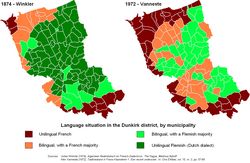
- French Flanders: Historically part of the Dutch sprachraum (language area), West Flemish was the native dialect. After the French Revolution and subsequent bans on Dutch in education during the 19th century, larger cities became predominantly French-speaking.
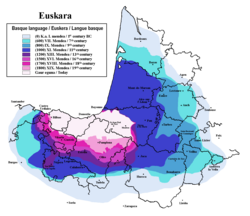
- Basque Country: The Basque language faced persecution and exclusion from official use during the Napoleonic period and the National Convention. A French-only education system in the mid-19th century marginalized the language, halting family transmission in many areas by the 1960s.
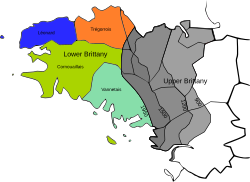
- Brittany: Breton has seen a massive decline, losing 80% of its speakers over 60 years. In the 1920s, 60% of children learned Breton from parents; by the 1980s, that number dropped to 6%.
- Corsica: Following the acquisition of the island by France from Genoa in 1768, French replaced Italian as the official language. By the 1960s, monolingual Corsican speakers had virtually disappeared.
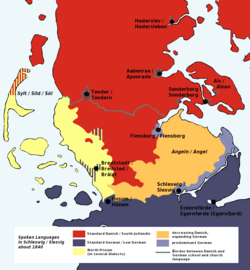
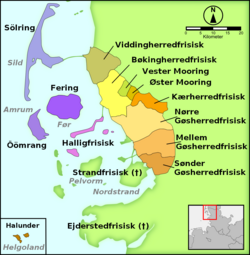
In Germany, Southern Schleswig shifted from Danish and North Frisian to Low and High German between the 17th and 20th centuries. This was driven by the Reformation, which made German the language of the Church, and later by the influence of German nobility and Prussian administrative policies.
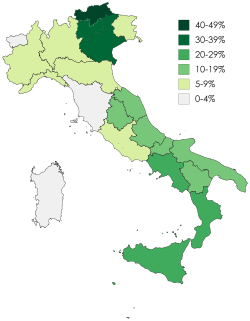
Italy exhibits a complex relationship between standard Italian and regional dialects. In Southern Italy and Sicily, local Italo-Dalmatian dialects remain widely used. For instance, in Campania, only 20.7% of family members speak standard Italian as their primary home language, while 75.2% use local dialects.
Asia
Language shifts in Asia are often linked to migration and national identity.
In Belarus, despite independence from the USSR in 1991, the Belarusian language is declining. The 2009 census revealed that 72% of Belarusians speak Russian at home, while only 11.9% use Belarusian.
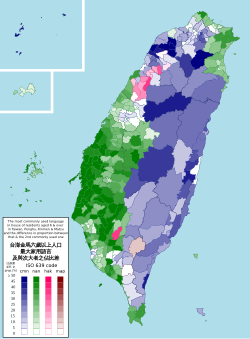
Hong Kong saw Cantonese become the dominant language starting in the 1940s due to widespread immigration. This led to the disappearance of ancestral dialects such as Tanka, Weitou, and Hakka, which are now largely unknown to the younger generation.
United Kingdom
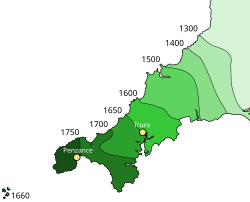
The UK has seen significant shifts in its Celtic fringes. In Cornwall, the linguistic boundary shifted from Cornish to English between 1300 and 1750.
In Scotland, Scottish Gaelic remains a minority language in the traditional Gàidhealtachd, though the Gaelic Language (Scotland) Act of 2005 and the rise of Gaelic-medium education (enrolling over 2,000 students annually) represent efforts to reverse the shift.
Summary of Language Shift Trends
| Region | Original/Minority Language | Dominant Language | Primary Driver |
|---|---|---|---|
| Southern Carinthia | Slovene | German | Social/Political Shift |
| Brussels | Dutch | French | Urbanization/Independence |
| Hong Kong | Tanka, Hakka, Weitou | Cantonese | Mass Immigration |
| Brittany | Breton | French | Education Policy |
| Southern Schleswig | Danish/North Frisian | German | Church/State Policy |
Frequently Asked Questions
What is the difference between language shift and language death?
Language shift is the process where a community moves from one language to another. Language death occurs when the last native speaker of a language passes away, often as the final result of a completed language shift.
Why do people abandon their native languages?
People often shift to a different language if it is perceived to have higher social status, provides better economic opportunities, or is required for official administration and education.
Can a language shift be reversed?
Yes, through a process called language revitalization. Examples include the Gaelic Language (Scotland) Act, which promotes Gaelic-medium education to encourage new speakers.
How does education influence language shift?
Education is a powerful tool for shift; when a national government mandates a single language for schooling (as seen in 19th-century France or Prussia), minority languages are often marginalized and stop being passed to children.