Mother Tongue and First Language: Defining the Roots of Communication
Every human being begins their journey of communication through a first language, often referred to as a native language, native tongue, or mother tongue. This is the primary language a person is exposed to from birth or during the critical period of early childhood development. Beyond mere communication, a first language serves as a cornerstone of personal, social, and cultural identity, helping individuals reflect and learn successful social patterns of behavior and speech.
Key Facts
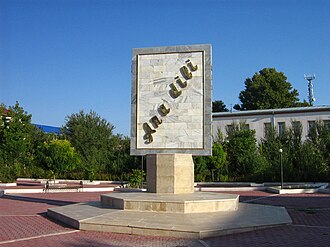
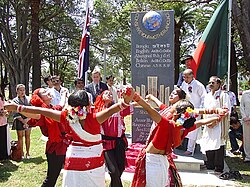
- International Mother Language Day is observed annually on 21 February, a designation made by UNESCO in 1999.
- A native speaker typically acquires language through natural immersion during youth rather than formal study.
- Bilingualism refers to proficiency in two languages, while multilingualism involves two or more.
- Research indicates it can take 5 to 7 years for a child to reach the working level of a native speaker after immersion.
- The term "mother tongue" can sometimes refer to an ethnic group's language rather than an individual's first language in certain countries.
Defining the Native Language
While the term is used widely, defining a "native language" can be complex and imprecise. Scholars often approach the definition through several different lenses:
- Origin: The language or dialect learned first and used for long-lasting verbal contact.
- Internal Identification: The language a person identifies with as a speaker.
- External Identification: The language others identify a person as speaking.
- Competence: The language a person knows best.
- Function: The language a person uses most frequently.
- Nationhood: The dominant language of a specific geographic area.
In some regions, such as Kenya, India, Belarus, Ukraine, and various East and Central Asian countries, "mother tongue" is often used in journalism and common speech to denote the language of one's ethnic group. Similarly, in Singapore, the term refers to an individual's ethnic language regardless of their actual level of proficiency.
Variations in Definition and Usage
Different institutions apply different standards. For example, Statistics Canada defines mother tongue as the first language learned at home in childhood that is still understood by the individual at the time of a census. This acknowledges that a person's first language may no longer be their dominant language due to language attrition—the loss of a language over time.
Interestingly, the term "mother tongue" has historical roots. Some suggest it was used by Catholic monks to describe the vernacular language used when speaking from the pulpit, as opposed to Latin. Furthermore, the author J.R.R. Tolkien made a distinction between the "cradle tongue" (the language learned in early childhood) and the "native tongue," which he suggested could be a language one discovers later through a deep emotional affinity or inherited linguistic taste.
Native Speakers and Linguistic Intuition
A native speaker is generally defined by their immersion in a language during youth within a family that shares a similar linguistic experience. While native speakers may not be able to explain every complex grammatical rule, they possess a natural intuition of those rules through constant personal interaction with the language.
According to research published in the Asian EFL Journal, experts generally recognize six principles that define a native speaker:
- Acquisition of the language in early childhood and continued use.
- Possession of intuitive linguistic knowledge.
- Ability to produce fluent, spontaneous discourse.
- Communicative competence across various social contexts.
- Identification with a specific language community.
- Absence of a foreign accent.
Bilingualism and Multilingualism
When a child is raised with more than one language, they are considered bilingual or multilingual. A key concept in this field is the "balanced bilingual"—an individual who is equally proficient in two languages and feels that neither is more "native" than the other.
Studies on balanced bilinguals have shown unique cognitive advantages, including:
- Improved performance in tasks requiring mental flexibility.
- A heightened awareness of the arbitrary nature of language.
- A tendency to choose word associations based on logic rather than just sound.
It is important to note that the order in which languages are learned does not always dictate the order of proficiency. A child may learn one language first but become more proficient in a second language if they move to a different linguistic environment.
Summary of Language Concepts
| Term | Primary Definition |
|---|---|
| First Language (L1) | The first language exposed to from birth or during the critical period. |
| Native Speaker | An individual who acquired a language through natural immersion in youth. |
| Bilingualism | The ability to use two languages, ideally with equal proficiency. |
| Second Language | Any language spoken other than one's first language. |
| Language Attrition | The process of losing a language previously acquired. |
Frequently Asked Questions
What is the difference between a first language and a second language?
A first language (L1) is the language a person is exposed to from birth or during their early developmental years. A second language is any language learned after the first language has been established.
How long does it take for a non-native speaker to reach native-level proficiency?
While a non-native speaker may achieve fluency after approximately two years of immersion, research suggests it can take between five and seven years to reach the same working level as a native speaker.
Can a person have more than one native language?
Yes. Children raised in multilingual environments can acquire two or more native languages, making them native bilinguals or multilinguals.
Does being a native speaker mean you know all grammar rules?
Not necessarily. Native speakers often rely on linguistic intuition—a natural sense of how the language should sound—rather than formal knowledge of every grammatical rule.
What is a balanced bilingual?
A balanced bilingual is someone who possesses equal proficiency in two languages and perceives both as being equally natural to them.