La Masia: The Legendary Youth Academy of FC Barcelona
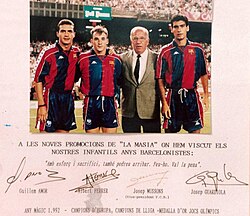
In the world of professional football, few names carry as much prestige as La Masia. Short for La Masia de Can Planes, the name literally translates from Catalan as "The Farmhouse." More than just a training ground, it is FC Barcelona's youth academy and a global symbol of excellence in player development. By blending a strict sporting philosophy with a commitment to technical mastery, La Masia has become an instrumental factor in Barcelona's European success, producing some of the greatest players to ever grace the pitch.
The academy's impact reached a historic peak in 2010 when it became the first youth system to have trained all three finalists for the Ballon d'Or—the award for the world's best player—in a single year: Lionel Messi, Andrés Iniesta, and Xavi.
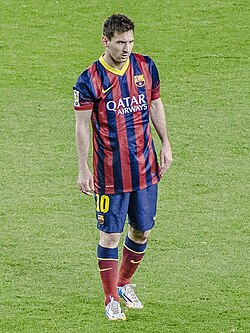
Key Facts
- Founded: The original building dates back to 1702; it became a youth dormitory in 1979.
- Capacity: Houses over 300 young players across various youth levels.
- Philosophy: Based on "Total Football" and the Spanish one-touch style known as tiki-taka.
- Global Reach: Operates scouting networks worldwide and has established schools in Mexico and Egypt.
- Historic Milestone: On November 25, 2012, Barcelona fielded an entire starting eleven of La Masia graduates in a La Liga match.
The Evolution of the Academy
The physical heart of the academy was originally an ancient country residence built in 1702. After the inauguration of the Camp Nou stadium in 1957, the building served as the club's social headquarters. However, as the club grew, the space became insufficient. On October 20, 1979, the facility was converted into a dormitory to house talented young players recruited from outside Barcelona.
For decades, the farmhouse served as the residential hub for these athletes. This changed on June 30, 2011, when the residential functions were moved to the modern Ciutat Esportiva Joan Gamper, a state-of-the-art sports complex designed to provide better training and living conditions.
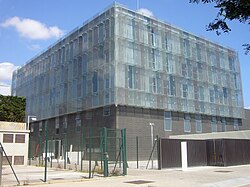
Organization and Recruitment
La Masia is one of the most expensive youth systems in Europe, with annual operating costs around £5 million. The recruitment process is rigorous; every year, over 1,000 boys aged six to eight try out, but only the top 200 are selected. To maintain this pipeline, the club employs a sophisticated scouting network consisting of 15 scouts in Catalonia, 15 in the rest of Spain, and 10 globally.
To manage costs and foster community ties, FC Barcelona partners with 15 local clubs that train players who are not yet ready for the academy. In exchange, Barcelona provides funding, coaching, and technical expertise.
The Path to the First Team
Under the influence of Pep Guardiola, the academy implemented a structured three-stage program to transition players from the Juvenil (youth) level to Barcelona B (the reserve team) and finally to the first team:
- Rotation: Players begin by rotating into the Barcelona B squad.
- Integration: Players are integrated into the reserve side with a focus on cohesion and performance.
- Key Player: The player is designated as a "key" member of the B team and becomes eligible for first-team call-ups.
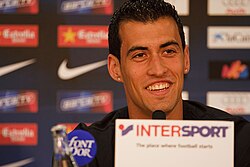
The Philosophy of Play
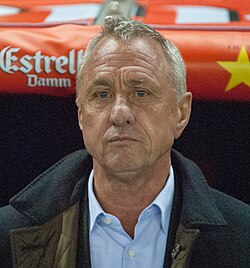
The success of La Masia is rooted in a unified "philosophy of play" that extends from the youngest age groups to the senior squad. This approach is a hybrid of Total Football—a fluid system where players interchange positions, introduced via Johan Cruyff—and tiki-taka, a traditional Spanish style characterized by short, rapid passing and movement.
Technical ability is the non-negotiable prerequisite for every player. This commitment to a specific style ensures that when a youth player is promoted to the first team, they already speak the same "tactical language" as their teammates.
![Pep Guardiola's reign at Barcelona (2008–2012) marked one of the most successful eras in the history of the club and its youth academy.[28][29][30]](/images/fa/5f/fa5f254012ae5fd133484e5dc8c122779739166dffd59f1b33a3c489c5033498.jpg)
Global Impact and Legacy
The influence of La Masia extends beyond the club to the Spanish national team. Spain's 2010 FIFA World Cup victory featured seven Barcelona players in the final, with opponents noting that the national team played with a distinct "Barcelona style" of calm, confident ball circulation.
While the club shifted toward expensive global signings (such as Neymar and Luis Suárez) in recent years, there has been a renewed return to academy graduates under the presidency of Joan Laporta and the coaching of Xavi. New talents like Lamine Yamal, Gavi, and Pau Cubarsí are currently carrying the torch of the academy's legacy.
| Player | Position | League Appearances | League Goals |
|---|---|---|---|
| Lionel Messi | Forward | 520 | 474 |
| Xavi | Midfielder | 505 | 58 |
| Andrés Iniesta | Midfielder | 442 | 35 |
| Sergio Busquets | Midfielder | 481 | 11 |
| Carles Puyol | Defender | 392 | 12 |
| Gerard Piqué | Defender | 397 | 29 |
Frequently Asked Questions
What does "La Masia" mean?
La Masia is Catalan for "The Farmhouse," referring to the original 1702 country residence that served as the academy's dormitory for many years.
What is the playing style taught at La Masia?
The academy teaches a combination of Total Football and tiki-taka, emphasizing fluid positioning, high technical ability, and a "pass and move" mentality.
How does a player get into La Masia?
Players are either selected through annual tryouts (where the best 200 out of 1,000+ applicants are chosen) or identified by a global network of scouts.
Does La Masia exist outside of Spain?
Yes, FC Barcelona has established schools in Mexico and Egypt, as well as a Residence Academy in Arizona, USA, to apply its training methods globally.
Who are some of the most successful graduates?
The most notable alumni include Lionel Messi, Xavi, Andrés Iniesta, Sergio Busquets, Carles Puyol, and Pep Guardiola.