Kyle Field: The Historic Home of the 12th Man
Located in College Station, Texas, Kyle Field is more than just a sports venue; it is a landmark of collegiate passion and tradition. As the home of the Texas A&M Aggies football team, this massive stadium is renowned as the "Home of the 12th Man," reflecting the deep connection between the student body and the team. With a current capacity of 102,733, it stands as the largest stadium in the Southeastern Conference (SEC) and the largest in the state of Texas.
From its humble beginnings as a fenced-off agricultural plot to its status as one of the largest non-racing stadiums in the world, Kyle Field has evolved through over a century of growth and architectural ambition.
Key Facts
- Current Capacity: 102,733 (since 2015).
- Record Football Attendance: 110,633 (vs. Ole Miss, 2014).
- World Record Concert: George Strait (June 15, 2024) with 110,905 attendees.
- Surface: Latitude 36 Bermudagrass (installed 2017).
- Location: 756 Houston Street, College Station, Texas.
- Primary Tenant: Texas A&M Aggies football (NCAA).
The Origins of Kyle Field
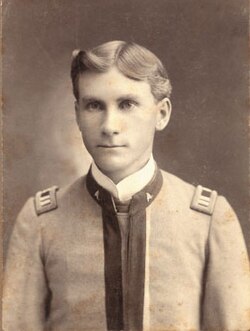
The stadium's history began in 1904 when Edwin Jackson Kyle, a Texas A&M graduate and professor of horticulture, was appointed president of the General Athletics Association. Seeking to improve the school's athletic facilities despite a lack of university funding, Kyle used $650 of his own money to fence off a section of campus designated for agricultural use. He purchased a covered grandstand from the Bryan fairgrounds and added wooden bleachers to accommodate 500 people.
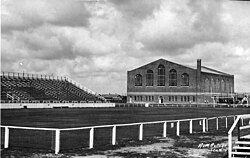
The first game took place in 1905, resulting in a 29-0 victory for A&M over the Houston YMCA. By 1906, the Corps of Cadets unofficially named the site "Kyle Field" in honor of its founder.
A Legacy of Firsts
Kyle Field is often associated with early broadcasting milestones. While some believe it hosted the first live radio broadcast of a college football game in 1921, records show that KDKA-AM broadcast a Pittsburgh vs. West Virginia game earlier that year. However, a 2005 historical marker confirms that the November 21, 1921, game between Texas A&M and the University of Texas is believed to be the first live play-by-play radio broadcast in the state of Texas.
Evolution and Facility Improvements
The transition to a permanent concrete structure occurred in 1927. By 1929, the stadium formed a horseshoe shape with a capacity of 32,890. Over the following decades, the facility underwent several major expansions to keep pace with the growing popularity of the Aggies.
- 1953: Capacity increased to 41,500 with a partial second deck and press box.
- 1967: Further second-deck improvements raised capacity to 48,000.
- 1980: A third deck was added, bringing the capacity to 70,000.
- 1999: The Bernard C. Richardson Zone was added at the north end, adding over 20,000 seats.
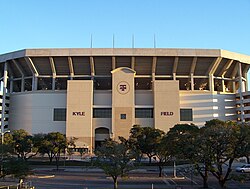
In 2003, the Bright Football Complex was completed on the south end, providing state-of-the-art training, rehabilitation, and academic facilities for the athletes.
Playing Surface Transitions
The field has seen various surfaces over the years. It utilized natural grass until 1970, when AstroTurf (a brand of synthetic turf) was installed. Natural turf returned in 1996, and the current Latitude 36 Bermudagrass was introduced in 2017. The groundskeeping team's excellence was recognized in 2004 when they won the STMA College Football Field of the Year award.
The 2013–2015 Modernization
Between 2013 and 2015, the university undertook a massive $483.8 million redevelopment. This project was executed in phases to ensure that home games could still be played during the construction period. The renovation included the implosion of the student section side and the creation of a new facade and grandstand.
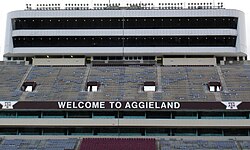
The project concluded ahead of schedule and under budget, resulting in the current official capacity of 102,733. This expansion solidified Kyle Field's position as one of the largest and most imposing venues in the NCAA.
Stadium Features and Notable Events
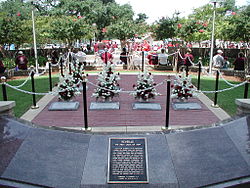
Beyond the seating, Kyle Field is equipped with high-tech amenities, including the 12th Man TV, a massive LED videoboard measuring 163 by 47 feet. The stadium also houses the Reveille cemetery, a place of honor for the university's mascots.
Beyond Football
While primarily a football venue, Kyle Field hosts a variety of events. In June 2024, it hosted an international soccer friendly between Mexico and Brazil, attended by 85,249 fans. That same month, country music legend George Strait performed a concert for 110,905 people, setting the record for the most-attended ticketed non-festival show in United States history.
The "Intimidating" Atmosphere
Kyle Field is widely regarded as one of the most intimidating venues for visiting teams. This reputation was cemented in the 1990s, during which Texas A&M maintained a dominant home record, including a 31-game winning streak from 1990 to 1995.
| Era/Year | Capacity | Surface Type |
|---|---|---|
| 1915–1923 | 6,800 | Grass (until 1969) |
| 1927–1948 | 32,890 | Grass |
| 1967–1976 | 48,000 | Grass / AstroTurf (1970) |
| 1980–1981 | 70,016 | AstroTurf |
| 1999–2000 | 80,650 | Tifway 419 Bermudagrass (1996) |
| 2014 | 106,511 | Tifway 419 Bermudagrass |
| 2015–Present | 102,733 | Latitude 36 Bermudagrass (2017) |
Frequently Asked Questions
Who is Kyle Field named after?
The stadium is named after Edwin Jackson Kyle (Class of 1899), a professor of horticulture and former president of the General Athletics Association, who used his own funds to establish the original athletic field.
What is the largest crowd to ever attend a game at Kyle Field?
The record for a football game is 110,633 people, which occurred on October 11, 2014, during a game against Ole Miss.
Does Kyle Field host events other than football?
Yes. It hosts international soccer matches, major concerts (such as George Strait's record-breaking show), high school football playoffs, and the Texas A&M Corps of Cadets annual reviews.
What is the current playing surface of the stadium?
Since 2017, the stadium has used Latitude 36 Bermudagrass.
How much did the 2014–2015 renovation cost?
The redevelopment of the stadium cost approximately $483,888,885.