Texas A&M UniversityAggiesCollege Stationland-grant research universityTexas A&M traditions

Texas A&M University: A Legacy of Research, Tradition, and Excellence

Texas A&M University: A Legacy of Research, Tradition, and Excellence Established in 1876, Texas A&M University has evolved from its origins as the State Agricultural and Mechanic...

Texas A&M University: A Legacy of Research, Tradition, and Excellence

Established in 1876, Texas A&M University has evolved from its origins as the State Agricultural and Mechanical College of Texas into a premier public land-grant research senior military university. Located in College Station, Texas, the institution serves as a cornerstone of the Texas A&M University System, blending rigorous academic inquiry with deep-rooted traditions that define the "Aggie" experience.

With a massive 5,500-acre main campus, the university has grown into a global powerhouse of research and education. Today, it is recognized for its significant academic affiliations, including membership in the Association of American Universities (AAU) and various specialized grants such as sea-grant and space-grant programs.
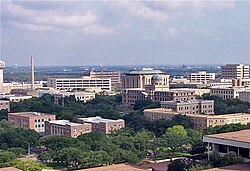
a skyline view of the Texas A&M campus. Dozens of buildings are visible including one that is domed
A view of the main campus, looking north from Kyle Field. At the center is the Academic Building with its copper dome.
: A view of the main campus, looking north from Kyle Field. At the center is the Academic Building with its copper dome.

Key Facts

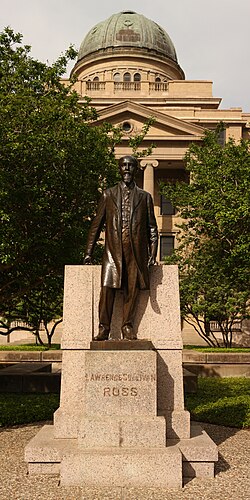
A large domed building overlooks a full-length statue of balding male with a mustache and long goatee and wearing a knee-length coat. The pedestal is engraved "Lawrence Sullivan Ross".
Statue of Lawrence Sullivan "Sul" Ross located in front of the Academic Building
  • Established: 1876
  • Location: College Station, Texas
  • Type: Public land-grant research senior military university
  • Mascot: Reveille X
  • Colors: Maroon and white
  • Endowment: $19.11 billion (FY 2024, Texas A&M only)
  • Athletic Conference: NCAA Division I FBS – SEC

Academic Excellence and Research Impact
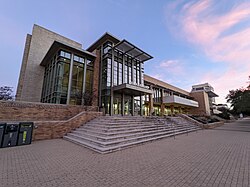
Texas A&M University Memorial Student Center
The Memorial Student Center

Texas A&M is a leader in higher education, boasting a diverse and robust student body. As of the fall 2024 semester, the university supports over 61,000 undergraduates, 12,140 postgraduates, and 5,439 doctoral students. This academic community is driven by a faculty of 4,300 and a dedicated staff of over 11,000.

The university's research capabilities are reflected in its high national and global rankings. It is recognized by prestigious outlets such as U.S. News & World Report and Forbes. The institution's financial strength is underscored by a massive endowment, which reached $19.11 billion for the university alone in fiscal year 2024.
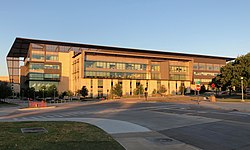
A five-story, tan building behind a street and sidewalk.
Zachry Engineering Education Complex
: Zachry Engineering Education Complex

Campus and Global Reach

While the College Station campus is the heart of the university, the Texas A&M University System extends its reach through various branch campuses. These include locations in Bryan, Canyon, Dallas, Fort Worth, Galveston, Houston, Kingsville, McAllen, and Round Rock, as well as an international presence in Al Rayyan, Qatar.
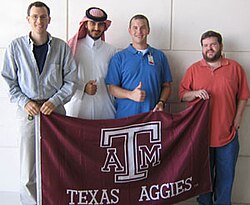
Four people standing behind a flag each holding their thumb in the air
Two professors, a graduate, and an undergraduate student at the TAMUQ branch campus
: Two professors, a graduate, and an undergraduate student at the TAMUQ branch campus

The Galveston campus is particularly notable for its dedication to marine research and hosting the Texas A&M Maritime Academy.
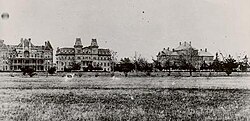
It shows, left to right, Ross Hall, Old Main, and Foster Hall.
Texas A&M in 1902
: Texas A&M in 1902

The Aggie Experience: Traditions and Student Life
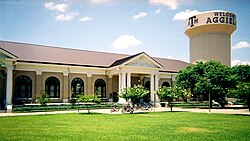
A neoclassical building with columns in front of a water tower sporting the greeting, "Welcome to Aggieland"
Sbisa Dining Hall and central utility plant water tower sporting the greeting, "Welcome to Aggieland"

What sets Texas A&M apart is its unique culture, often referred to as "Aggieland." The university is home to the Corps of Cadets, a senior military organization that plays a vital role in campus life. Traditions are woven into the fabric of the student experience, from the legendary Century Tree to the solemnity of Aggie Muster.
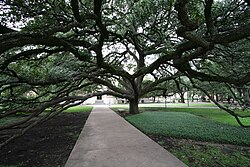
a sprawling oak tree with branches arching all the way to the ground over a sidewalk containing a bench
The Century Tree, a campus landmark and subject to several traditions
: The Century Tree, a campus landmark and subject to several traditions

Athletics also serve as a major unifying force. As members of the SEC, the Aggies compete at the highest level of collegiate sports. Football games at Kyle Field are a central event, characterized by intense school spirit and the presence of the Fightin' Texas Aggie Band.
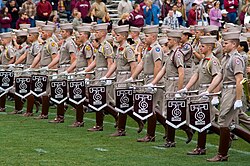
Row of students in uniform with calf-length boots. Each holds a bugle that dangles a pennant.
The Fightin' Texas Aggie Band's Bugle Rank leads the band at halftime at a football game.
: The Fightin' Texas Aggie Band's Bugle Rank leads the band at halftime at a football game.
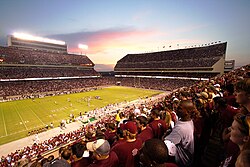
a crowd of people watch a football game at a three-tiered stadium
A view from the student section of Kyle Field during a 2007 football game
: A view from the student section of Kyle Field during a 2007 football game

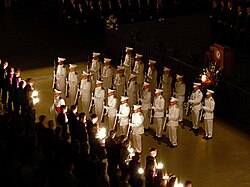
Other notable student activities include the Singing Cadets and various ceremonial honors performed by the Ross Volunteers, who are known for their precision rifleman's salutes.
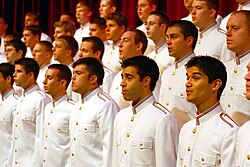
28 people standing on risers are signing while wearing white military-style uniforms
The Texas A&M University Singing Cadets
: The Texas A&M University Singing Cadets
21 cadets in white uniforms perform a salute with a rifle
The Ross Volunteers perform a rifleman's salute as candles are lit for the deceased at the 2007 Aggie Muster at Reed Arena.
: The Ross Volunteers perform a rifleman's salute as candles are lit for the deceased at the 2007 Aggie Muster at Reed Arena.

Institutional History and Growth

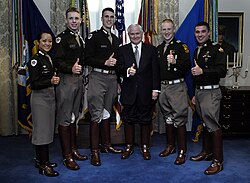
Secretary of Defense Robert Gates standing with 5 other people in uniform; all are giving a thumbs up gesture
Robert Gates and senior cadets from the Corps of Cadets give the "gig 'em" sign at the Pentagon.

The university's journey from the State Agricultural and Mechanical College of Texas (1871–1887) to its current status has been marked by significant milestones. From the early days of manual data entry using punch cards to the modern era of high-tech engineering complexes, the university has consistently adapted to the needs of the era.

Black and white photo of two women sitting at desks with a punch machines
Staff at Texas A&M entering data for punch cards for new computers in the 1950s
: Staff at Texas A&M entering data for punch cards for new computers in the 1950s

The campus has also been home to notable figures, including the Bush family. The George H.W. Bush Presidential Library and Museum stands as a testament to this connection, honoring the legacy of the 41st President.
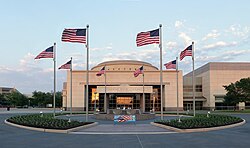

Above the doorway of a large, relatively plain rectangular structure with a short dome are the words "George Bush Library". In front of the building is a circular courtyard with a water fountain; eight American flags are positioned evenly around the circle.
George H.W. Bush Presidential Library and Museum
: George H.W. Bush Presidential Library and Museum
The head and shoulders of three people – an older man, an older woman, and a middle-aged man – wearing formal robes are shown in front of a large circular seal. On the outer edges of the seal the letters "XAS A...IVERSITY...87..." are visible; an inner band of leaves separates the letters from a block T superimposed with a star.
Then-President George W. Bush with parents, former President George H. W. Bush and former First Lady Barbara Bush at Texas A&M's December 2008 convocation
: Then-President George W. Bush with parents, former President George H. W. Bush and former First Lady Barbara Bush at Texas A&M's December 2008 convocation

Summary of University Statistics (Fall 2024)

Texas A&M University Enrollment and Faculty Overview
Category Value
Undergraduate Students 61,442
Postgraduate Students 12,140
Doctoral Students 5,439
Faculty Members 4,300
Total Staff 11,114

Frequently Asked Questions

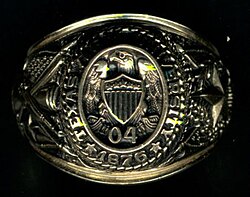
Close-up of gold ring. On the top, the words Texas A&M University 1876 encircle an eagle atop a shield over the numbers 0 and 4. The left side contains a large star and an oak. The right shows a cannon, saber, and rifle with the crossed flags of the United States and Texas.
Aggie ring for the class of 2004
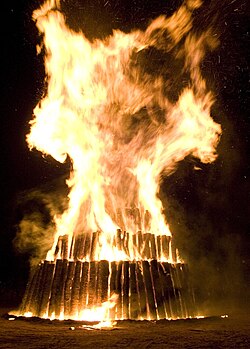
Large flames engulf the top layer of a circular three-tier structure of logs; the logs are vertical to the ground.
The 2007 Student Bonfire
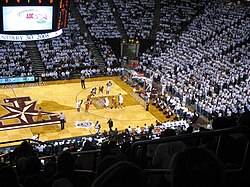
a crowd of people in mostly white T-shirts watch an indoor basketball game; a T with a start on it is upside down and featured prominently under the players
A men's basketball game at Reed Arena in January 2008
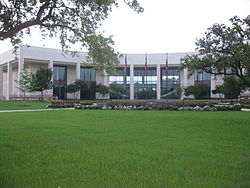
A two-story, white building in the shape of a crescent overlooks flowers and a grassy lawn
The Clayton W. Williams, Jr., Alumni Center is the home of The Association of Former Students.
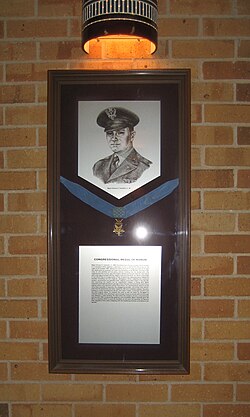
A plaque in a glass enclosed frame depicts a black and white image of a soldier in WWII regalia, a medal of honor suspended across the middle, and a description of the event for which the individual was awarded the medal
Specimen Medal of Honor displayed at the Memorial Student Center for Horace S. Carswell

What is the mascot of Texas A&M?

The official mascot of Texas A&M University is Reveille X.

Where is Texas A&M located?

The main campus is located in College Station, Texas, in the United States.

What are the official school colors?

The official colors of Texas A&M are maroon and white.

Does Texas A&M have branch campuses?

Yes, the university includes several branch campuses, including locations in Galveston, which focuses on marine research, and various other sites across Texas and internationally.

What is the Corps of Cadets?

The Corps of Cadets is a senior military organization at Texas A&M that is a central part of the university's identity and student life.

References

  1. The school was first given this name in 1871 (the year the Texas Legislature appropriated funds to begin A&M's construction), but did not open for instruction until 1876[1] The institution ceased using the word "State" around 1887.[2] It was known as the Agricultural and Mechanical College of Texas until it became Texas A&M University in 1963.[3]
  2. The seal contains the date 1876, the year in which Texas A&M began classes. Both 1871 (the year the Texas Legislature appropriated funds to begin A&M's construction) and 1876 can be considered the dates of establishment depending on the context of the usage.[1]
  3. The institution's branch campuses, Texas A&M University at Galveston and Texas A&M University at Qatar, are considered part of Texas A&M's Main Campus. These branches are located in Galveston, Texas and in Education City, Al Rayyan, Qatar respectively.[12]
  4. 22.4% Hispanic, 8.8% Asian, 7.2% international, 3.4% Black, 0.2% Native American, 0.1% Native Hawaiian, and 3.4% undetermined.
  5. The percentage of students who received an income-based federal Pell grant intended for low-income students.