Kunming: The City of Eternal Spring
Known globally as the City of Eternal Spring, Kunming is a vibrant prefecture-level city serving as the capital of Yunnan Province, China. Situated at an elevation of 1,892 meters (6,207 ft), the city is celebrated for its mild climate, rich ethnic diversity, and its role as a critical gateway between China and Southeast Asia.
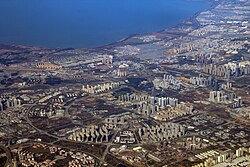
Historically referred to as Yunnan-Fu during imperial dynasties, Kunming has evolved from an ancient tribal settlement established around 279 BC into a modern metropolis. Today, it balances a deep respect for its heritage with rapid urban expansion, particularly in the developing Chenggong District.
Key Facts
- Nickname: City of Eternal Spring.
- Population: Approximately 8.46 million (2020 census).
- GDP: CN¥ 863.745 billion (2025 estimate).
- Climate: Cwb (subtropical highland climate) with an average annual precipitation of 991 mm.
- Administrative Center: Chenggong.
- Key Symbols: Camellia japonica (flower) and Magnolia denudata (tree).
Geography and Climate
![Flag and emblem of Kunming City from 1922 until 1949 under the Republic of China government.[31]](/images/68/51/6851707a60b11085a93ee5df147ab47890054879aace82a2cfc28dcf58c35a0f.webp)
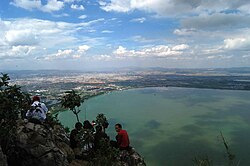
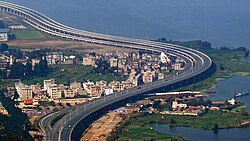
Kunming is defined by its unique geography, most notably the presence of Lake Dian (Dianchi), a massive freshwater lake that influences the local ecosystem and climate. The city's high altitude ensures that temperatures remain moderate throughout the year, avoiding the extreme heat of lower-lying Chinese cities.
The city experiences a subtropical highland climate. While summers are mild, the rainy season peaks between June and August, with July seeing the highest average precipitation at 215.7 mm. The region is also exceptionally sunny, averaging over 2,400 sunshine hours annually, which has fueled the city's ambitions in solar energy development.
History and Evolution
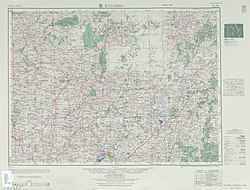
Kunming's history is a tapestry of tribal origins and imperial administration. By 1908, it had become a treaty port, opening its doors to foreign trade and transforming into a regional commercial hub. The early 20th century saw the establishment of key institutions, including the founding of Yunnan University in 1922.
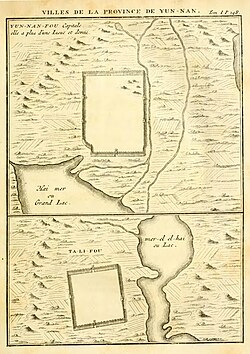
During the Second World War, Kunming played a strategic role as a base for the Flying Tigers and P-40 Warhawks, serving as a lifeline for resistance efforts. In the post-war era, the city focused on connectivity, reopening critical rail links to Hanoi and Haiphong in 1957, though these routes faced intermittent closures due to geopolitical tensions.

Cityscape and Landmarks
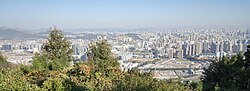
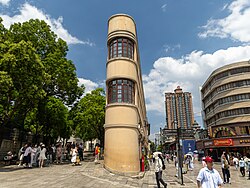
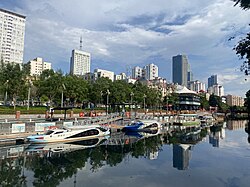
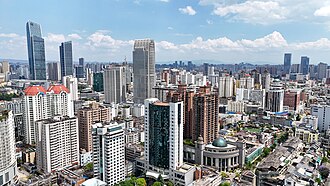
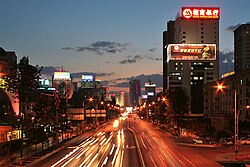
The modern cityscape of Kunming is a blend of traditional wooden architecture and soaring skyscrapers. The city is divided into several districts, with Wuhua and Panlong forming the core urban areas, while Chenggong serves as the new administrative seat.
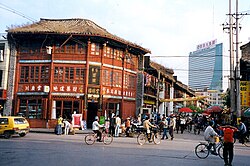
Cultural and Religious Sites
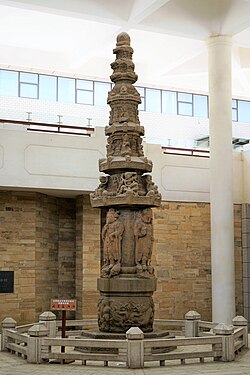
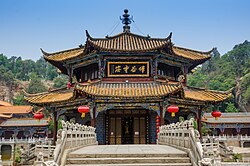
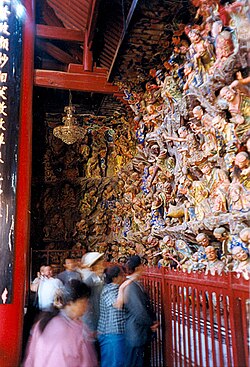
Kunming is home to several significant spiritual and cultural landmarks. The Yuantong Temple stands as the largest Buddhist complex in the city, while the Huating Temple offers a serene retreat in the nearby Western Hills.
Museums and Arts
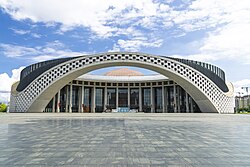
The city preserves its diverse heritage through institutions such as the Yunnan Provincial Museum, the Yunnan Ethnology Museum, and the Kunming Natural History Museum of Zoology. For contemporary culture, the Yunnan Grand Theater serves as a premier venue for the performing arts.
Economy and Infrastructure
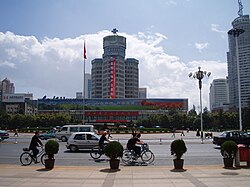
Kunming's economy is diversified, with a strong emphasis on horticulture, logistics, and energy. A major strategic goal since 2008 has been the transformation of the city into a massive solar energy industrial base, leveraging its high annual sunshine hours.
Transportation Hub
As a regional nexus, Kunming boasts comprehensive transport links:
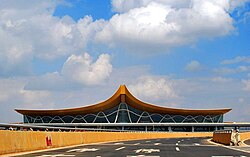
- Air: Served by the Kunming Changshui International Airport.
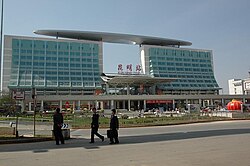
- Rail: Three major railway stations connect the city to the rest of China, with ongoing high-speed rail projects linking it to Nanning and planned routes toward Kolkata, India.
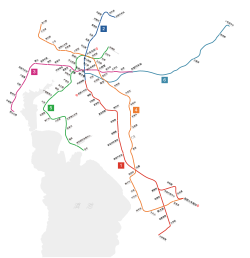
- Urban Transit: An extensive Kunming Metro system facilitates movement across the metropolitan area.
Demographics and Society
Kunming is a melting pot of ethnicities. While the Han people make up the majority (86.17%), the city has significant populations of Yi, Hui, Bai, and Hmong peoples, reflecting the multicultural nature of Yunnan Province.
The city is also a center for higher education, hosting prestigious institutions like Yunnan University and the Kunming University of Science and Technology. It further serves as a scientific hub through the Chinese Academy of Sciences, which operates institutes specializing in botany, zoology, and medical biology.
City Overview Summary
| Category | Detail |
|---|---|
| Total Area | 21,473 km² |
| Urban Population | 5,950,578 |
| Elevation | 1,892 m |
| GDP (2025) | US$ 125.24 billion |
| Major Districts | Chenggong, Panlong, Wuhua, Guandu, Xishan |
Frequently Asked Questions
Why is Kunming called the City of Eternal Spring?
Kunming earned this nickname due to its high altitude and subtropical highland climate, which results in mild temperatures and a lack of extreme seasonal swings throughout the year.
What are the main transportation options in Kunming?
The city is well-connected via the Kunming Changshui International Airport, a comprehensive Metro system, and three major railway stations including high-speed rail links.
Which ethnic groups live in Kunming?
While predominantly Han, Kunming has a diverse population including the Yi, Hui, Bai, Hmong, Hani, Zhuang, Dai, and Lisu ethnic groups.
What is the significance of Lake Dian?
Lake Dian (Dianchi) is the largest lake in the region and is a central geographic feature that influences the city's climate and provides a major recreational and ecological space.
What are the top educational institutions in the city?
Key institutions include Yunnan University, Yunnan Normal University, and the Kunming University of Science and Technology.