Yunnan: The Land of Colorful Clouds
Known literally as the land "South of the colorful clouds," Yunnan is a province in Southwest China renowned for its breathtaking landscapes, immense biodiversity, and a rich tapestry of ethnic diversity. From the towering peaks of the Himalayas to the tropical forests of the south, Yunnan offers a geographical and cultural variety that is unique within China.
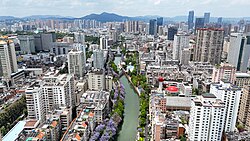
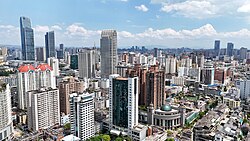
The province is governed from its capital, Kunming, and is divided into 16 prefecture-level divisions, including eight cities and eight autonomous prefectures. With a total area of 394,000 square kilometers, it ranks as the 8th largest province in China.
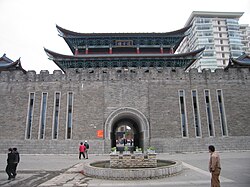
Key Facts
![A gold statue of Acharya Lokeshvara (Guanyin), recovered from the Qianxun Pagoda, Dali Kingdom[31]](/images/24/6a/246aa5436fc503b4521862880b4224c7646dc180b6a127eba64241114611d4c5.jpg)
- Capital: Kunming
- Population: 47,209,277 (2020 Census)
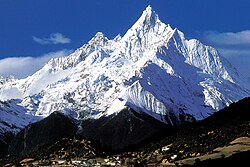
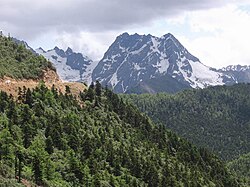
- Highest Point: Kawagarbo (6,740 m)
- GDP: CN¥ 3,002 billion (2023)
- UNESCO Sites: Five recognized World Heritage sites
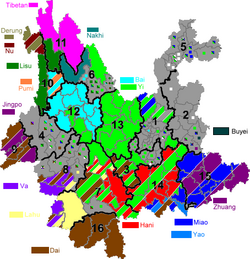
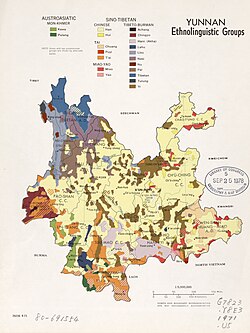
- Ethnic Diversity: Home to Han (67%), Yi (11%), Bai (3.6%), and Hani (3.4%) populations, among others.
Geography and Natural Wonders
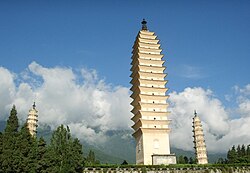
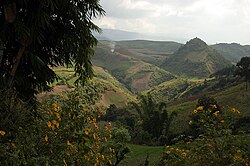
Yunnan's topography is characterized by extreme variations in elevation. The province is bordered by Myanmar, Laos, and Vietnam, making it a critical gateway for Southeast Asian trade and cultural exchange.
Mountains and Waterways
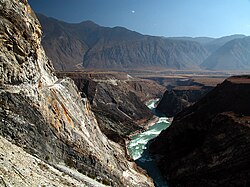
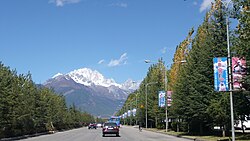
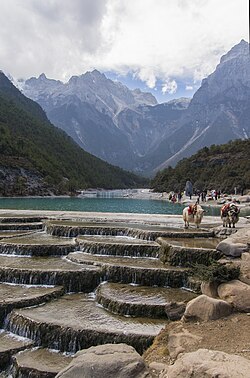
The landscape is dominated by dramatic mountain ranges, including the Meili Snow Mountains and the Jade Dragon Snow Mountain. The province is also drained by six major river systems, most notably the Salween (Nujiang), which flows through Burma into the Andaman Sea.
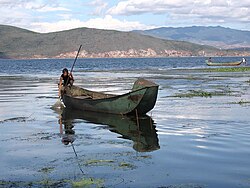
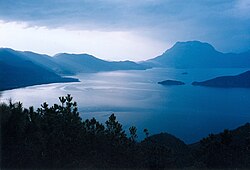
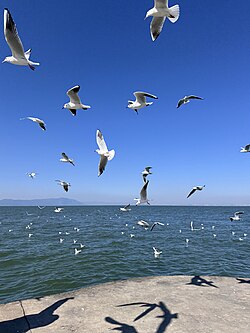
Water is central to the region's beauty, with nine major lakes exceeding 30 square kilometers. These include Dianchi Lake near Kunming, Erhai Lake in Dali, and the high-altitude Lugu Lake near the Sichuan border.
Biodiversity and Ecology
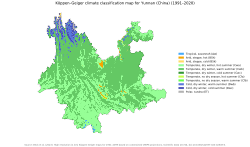
Yunnan is globally recognized as a "Center of Plant Diversity" by the IUCN and WWF. Its varied climate—mapped by the Köppen climate classification—supports a vast array of flora and fauna, leading to its designation as a "Global 200 List Priority Ecoregion" for biodiversity conservation.
History and Culture
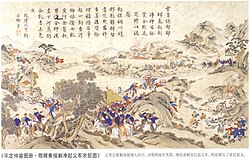
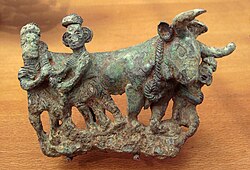
The history of Yunnan is a chronicle of powerful regional kingdoms and imperial integration. Ancient entities like the Dian Kingdom (3rd century BC) left behind sophisticated bronze sculptures, while the later Kingdom of Nanzhao and Dali Kingdom established the region as a center of power and Buddhism in the southwest.
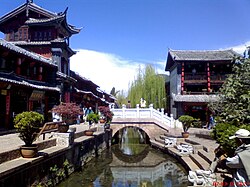
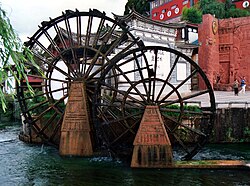
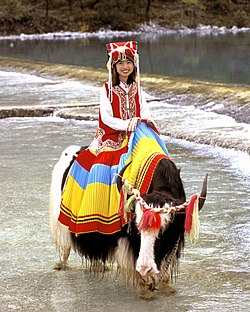
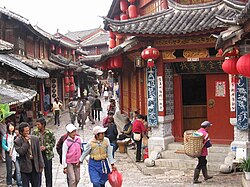
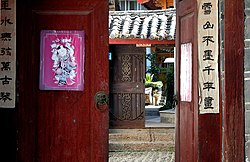
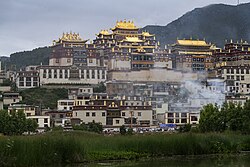
The province's cultural identity is deeply tied to its 25 minority languages and diverse ethnic groups. This heritage is visible in the architecture of the Old Town of Lijiang and the spiritual centers like the Ganden Sumtseling Monastery in Shangri-La.
Agricultural Heritage
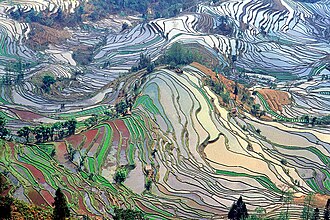
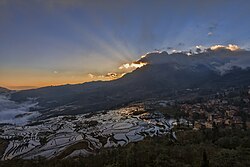
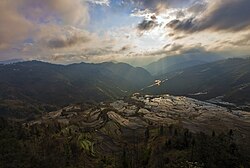
Yunnan is world-famous for its tea production, specifically Pu'er tea. Additionally, the Honghe Hani Rice Terraces represent a masterpiece of human engineering and sustainable agriculture, carved into the mountainsides over centuries.
Infrastructure and Economy
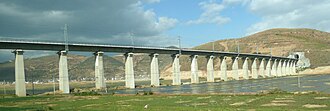
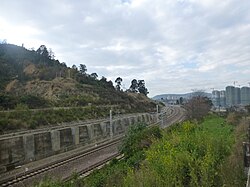
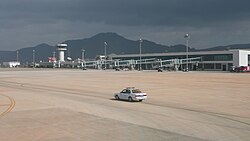
Modern Yunnan is a hub of connectivity. The province is served by an extensive network of national highways (such as NH320) and expressways connecting Kunming to Bangkok and Guangzhou. Rail transport has seen significant growth with the Dali–Lijiang Railway and the Kunming–Yuxi line.
The economy is bolstered by several Economic and Technological Development Zones, focusing on tourism, border trade, and agriculture. Key zones include the Kunming Airport Economic Zone and the Xishuangbanna Tourism and Vacation Zone.
Summary of Administrative Divisions
| Division | Type | Seat | 2020 Population |
|---|---|---|---|
| Kunming | City | Chenggong District | 8,460,088 |
| Qujing | City | Qilin District | 5,765,775 |
| Dali | Bai Autonomous Prefecture | Dali City | 3,337,559 |
| Lijiang | City | Gucheng District | 1,253,878 |
| Xishuangbanna | Dai Autonomous Prefecture | Jinghong City | 1,301,407 |
Frequently Asked Questions

What are the most famous UNESCO World Heritage Sites in Yunnan?
Yunnan hosts five UNESCO sites: the Old Town of Lijiang, the Three Parallel Rivers of Yunnan Protected Areas, the South China Karst, the Maotianshan Shales, and the Cultural Landscape of Honghe Hani Rice Terraces.
Which ethnic groups are most prominent in Yunnan?
While the Han people make up 67% of the population, the province is highly diverse, with significant populations of Yi (11%), Bai (3.6%), Hani (3.4%), Zhuang (2.7%), and Dai (2.7%).
What is the significance of Pu'er tea?
Pu'er tea is a specialty fermented tea native to Yunnan, highly valued for its unique processing methods and historical importance along the ancient Tea Horse Road.
What is the highest point in Yunnan province?
The highest elevation in the province is Kawagarbo, reaching a height of 6,740 meters (22,110 feet).
How is the climate in Yunnan described?
Yunnan has a highly varied climate due to its topography, ranging from tropical in the south to alpine in the northwest, as detailed in the Köppen climate classification map.