Kulturkampf: The Conflict Between the Prussian State and the Catholic Church
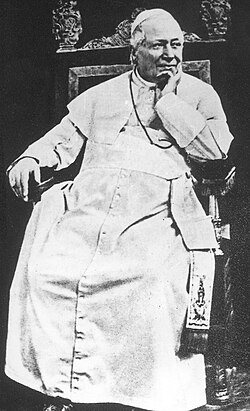
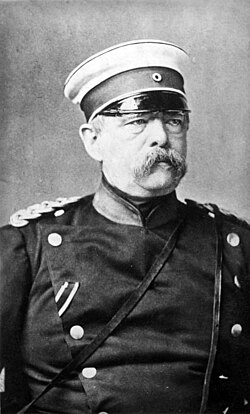
The Kulturkampf (German for "cultural struggle") was a fierce political and ideological conflict that spanned from 1871 to 1878. It pitted the newly formed German Empire, led by Chancellor Otto von Bismarck and the Kingdom of Prussia, against the Catholic Church, headed by Pope Pius IX. At its core, the struggle was a battle for authority over education, ecclesiastical appointments, and the overarching influence of religious institutions within a secularizing state.
While the term is now used broadly to describe any clash between secular governments and religious authorities—or "culture wars" between opposing ideological factions—the original Kulturkampf was a specific attempt by the Prussian state to assert supremacy over the church to consolidate national unity.
Key Facts
- Duration: The peak conflict lasted from 1871 to 1878, though tensions existed before and after.
- Primary Antagonists: Chancellor Otto von Bismarck and Pope Pius IX.
- Core Issues: State control of schools, the appointment of bishops, and the separation of church and state.
- The May Laws: A series of restrictive laws passed between 1873 and 1875 to curb Catholic influence.
- Political Outcome: The conflict inadvertently strengthened the Catholic Center Party.
- Resolution: Peace was largely achieved under the more pragmatic Pope Leo XIII.
The Roots of the Struggle
Secularisation in Germany
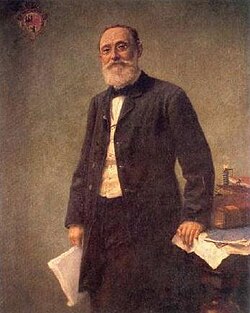
The Kulturkampf did not emerge in a vacuum. By the mid-19th century, liberal policies were gaining ground across Germany, pushing for the separation of church and state. Many German states had already begun secularisation—the process of removing religious influence from government and public institutions. For example, the state of Baden faced significant disputes with the church between 1852 and 1876.
Prussia had a history of friction with the Vatican, including disputes over civil marriage and primary schools in 1850 and the banning of the Jesuits (members of the Society of Jesus) in 1852. Earlier conflicts, such as the 1837 "Cologne Confusion" regarding mixed-faith marriages, were often viewed as defeats for the Prussian state.
Bismarck's Political Motivations
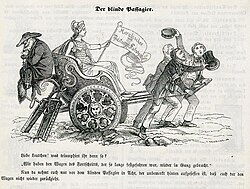
Following the unification of Germany in 1871, Bismarck viewed the Catholic Church as a potential threat to the stability of the new empire. He was particularly concerned about the Center Party, founded in 1870 to defend Catholic interests. Bismarck feared the party acted as a "long arm" of Rome and served as a unifying force for groups he distrusted, including the House of Hanover, southern German states, and the Polish ethnic minority.
The conflict also had a strong anti-Polish dimension. With over 2 million Poles in eastern Prussia, Bismarck accused Catholic priests of fostering Polish nationalism in provinces like Posen and Upper Silesia, viewing this as a direct threat to imperial consolidation.
The Escalation: 1871–1876
Bismarck sought to secure the state's sphere of influence against "incursions" by the church. In 1871, he outlined a plan to transfer school inspections to laymen, remove religious instruction from schools, and place religious affairs under the jurisdiction of the minister of justice.
The May Laws and Anti-Clericalism
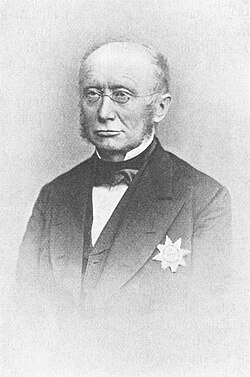
Between 1871 and 1876, the Prussian parliament and the Reichstag passed 22 laws aimed at enforcing state supremacy. The most notorious were the May Laws (also known as the Falk Laws, named after Minister of Education Adalbert Falk), enacted between 1873 and 1875. These laws gave the state significant control over the education and appointment of priests.
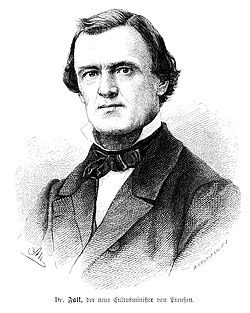
The state's approach became increasingly anti-clerical (opposed to the power of the clergy). The most severe measure was the Expatriation Law, which allowed for the banishment of individuals—a punishment considered exceptionally harsh. However, these measures often backfired; instead of weakening the Center Party, the party's presence in the Reichstag grew from 63 to 91 seats by 1873.
The Path to Peace (1878–1887)
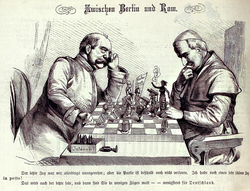
By the late 1870s, Bismarck's political priorities shifted. To gain support for his Anti-Socialist Laws and new trade tariffs, he needed to abandon his alliance with the liberals and find common ground with the Catholics.
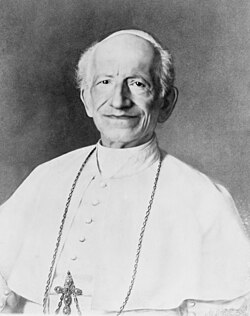
The death of Pope Pius IX in 1878 provided a diplomatic opening. His successor, Pope Leo XIII, was more conciliatory and pragmatic. Through direct negotiations and the resignation of the widely disliked Adalbert Falk in 1879, the two sides began to reconcile. A major breakthrough occurred in 1880 when the Vatican agreed to the civic registry of clerics, leading to a series of mitigation and peace laws passed through 1887.
Comparative Conflicts in Europe
While the Prussian Kulturkampf is the most famous, similar struggles occurred elsewhere:
- Austria: Rooted in "Josephinism" (the supremacy of the state in religious matters under Emperor Joseph II), Austria saw its own "May Laws" in 1868 and 1869, which restored civil marriage and moved education into government hands.
- Switzerland: The conflict peaked between 1871 and 1874, notably involving the expulsion of Bishop Gaspard Mermillod from Switzerland in 1873.
Summary of the Kulturkampf
| Feature | Details |
|---|---|
| Primary Goal | State supremacy over church appointments and education. |
| Key Legislation | The May Laws (Falk Laws) and the Expatriation Law. |
| Political Target | The Catholic Center Party and Polish nationalists. |
| Unexpected Result | Increased growth and popularity of the Center Party. |
| Resolution | Diplomatic shift under Pope Leo XIII and Bismarck's new alliances. |
Frequently Asked Questions
What does the word Kulturkampf actually mean?
Literally translated from German, Kulturkampf means "cultural struggle." In a historical context, it refers to the conflict between the Prussian state and the Catholic Church, but in modern usage, it describes any ideological conflict between secular and religious authorities.
Why did Bismarck target the Catholic Church?
Bismarck viewed the Church's influence as a threat to the unity of the new German Empire. He feared that Catholics, particularly those in the Center Party and the Polish minority, were more loyal to the Pope in Rome than to the German state.
What were the May Laws?
The May Laws were a series of restrictive regulations passed between 1873 and 1875. They aimed to bring the Catholic clergy under state control, specifically regarding their education and the process of their appointment.
Did the Kulturkampf succeed in its goals?
Largely, no. While the state passed many laws, the conflict actually strengthened the Catholic Center Party and increased the number of Catholic publications. It also inadvertently gave socialists and secularists a platform to attack all religions, which eventually concerned Bismarck himself.
How did the conflict finally end?
The conflict wound down after the death of Pope Pius IX. The new Pope, Leo XIII, was more open to negotiation, and Bismarck shifted his political focus toward fighting socialism, leading to a series of peace laws by 1887.