Koreatown: The Global Presence of Korean Ethnic Enclaves
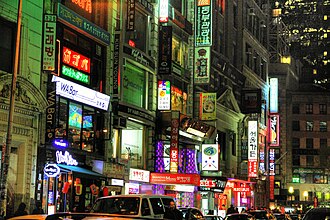
A Koreatown—also frequently referred to as "Little Korea" or "Little Seoul"—is a distinct ethnic enclave located within a city or metropolitan area outside of the Korean Peninsula. These vibrant neighborhoods serve as cultural hubs, dominated by Korean residents and characterized by a high concentration of Korean-owned businesses, cuisine, and community services.
Etymology and Origins
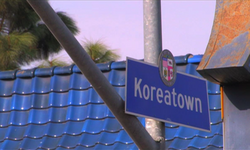
The term "Koreatown" was popularized by The New York Times in 1977 to describe the Korean neighborhood in Los Angeles. The naming convention was modeled after the long-standing term "Chinatown," which has been in use since 1606. Following this success, the Korean residents of Los Angeles successfully lobbied for formal recognition by Los Angeles County in 1980, leading to the installation of the first official Koreatown sign in 1982.
Before the term "Koreatown" became the international standard, Korean Americans often used the phrase "Korean village." This is a direct translation of the Korean term Haninchon (한인촌), which literally means "Korean people's village." In the 21st century, the name has been adopted globally, including in Canada, where Toronto officially recognized its Koreatown in 2004.
Global Demographics and Distribution
The Korean diaspora is a massive global phenomenon. As of 2021, the total overseas Korean population reached approximately 7,325,143. The distribution of these populations varies significantly by region, with the largest concentrations found in the Americas and East Asia.
| Region/Country | Approximate Population |
|---|---|
| United States | 2,546,982 |
| China | 2,461,386 |
| Japan | 824,977 |
| Canada | 241,750 |
| Uzbekistan | 177,270 |
| Vietnam | 172,684 |
| Russia | 169,933 |
| Australia | 167,331 |
Regional Highlights
The Americas
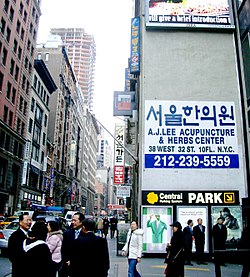
The United States hosts one of the largest Korean populations outside of Korea. In the New York metropolitan area, the 2010 census identified 218,764 Korean Americans, making it the second-largest ethnic Korean population outside the peninsula. Within New York City, approximately 100,000 Korean Americans reside, with two-thirds located in the borough of Queens. Specifically, the neighborhood of Fresh Meadows is noted for having the highest number of Korean immigrants in the city.
![The Long Island Koreatown originated in Flushing, Queens before sprawling eastward along Northern Boulevard[69][70][71][72][73] and eventually into adjacent suburban Nassau County.[70][71]](/images/40/db/40dbed78f4354fba82fe300f5650e68ddb514c1faaeec99d07d6b9f9e1ab18b6.jpg)
In New Jersey, Bergen County is home to 63,247 Korean Americans, representing 6.9% of the total population. In Manhattan, the Korean population has seen significant growth, nearly doubling to approximately 20,000 since the 2000 Census.
![Broad Avenue, Koreatown in Palisades Park, Bergen County, New Jersey,[75][76] where Koreans comprise the majority (52%) of the population[77][78][79]](/images/8e/d0/8ed09da4bed812092234aa7b8805e130419d17cbc75e84e3492cb252a339d0a2.jpg)
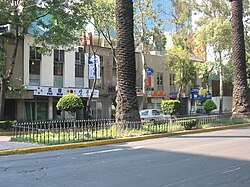
Other significant hubs in the Americas include major cities such as Los Angeles, Chicago, Atlanta, Houston, and Toronto, Canada. In Mexico, South Korean businesses can be found in areas like Florencia Street in Mexico City.
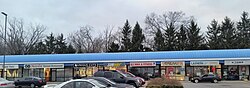
In the United States, Koreatowns often manifest as commercial clusters. For example, in Columbus, Ohio, strip malls on Bethel Road feature a variety of Korean-centric businesses, including restaurants, nail salons, beauty product stores, and grocery stores.
East Asia
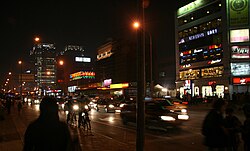
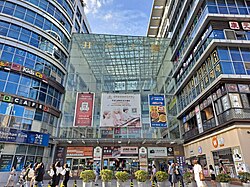
China maintains a massive Korean population, with roughly 200,000 Koreans living in Beijing. This includes approximately 120,000 Chosŏnjok (ethnic Korean citizens of China) and 80,000 South Korean migrants. Key areas include Wudaokou and Wangjing.
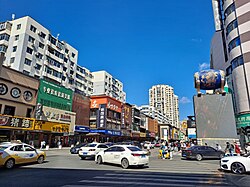
In Shanghai, there are 86,000 Koreans, including 65,000 Chosŏnjok. Shenyang also hosts a notable community, particularly in the Xita area.
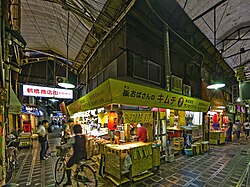
Japan's largest Korean enclave is the Ikuno Koreatown in Osaka, with a population exceeding 57,000. The Tsuruhashi area within Osaka is the largest Koreatown in Japan and is notably dominated by Jeju Islanders, while Imazato-Shinchi is seeing an increase in recent South Korean arrivals.
Southeast Asia and Oceania
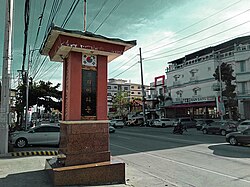
In the Philippines, the entrance to Koreatown in Angeles, Pampanga, serves as a welcome to the Filipino-Korean communities, with many establishments concentrated along the Fil-Am Friendship Highway.
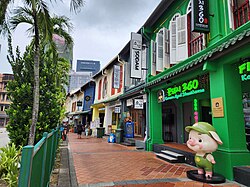
Singapore also maintains a Korean presence, with establishments located along Tanjong Pagar Road in the Central Region.
Key Facts
- Global Population: Over 7.3 million overseas Koreans were recorded in 2021.
- Term Origin: "Koreatown" was coined by the New York Times in 1977 regarding Los Angeles.
- Largest Enclave: The Ikuno Koreatown in Osaka, Japan, is the largest in the country.
- New York Hub: Queens, New York, is home to two-thirds of New York City's Korean population.
- Cultural Identity: Many enclaves are characterized by Korean signage, specialized restaurants, and grocery stores.
Frequently Asked Questions
What is the difference between Koreatown and Haninchon?
"Koreatown" is the English term used internationally, while "Haninchon" is the Korean term (한인촌) which translates to "Korean people's village."
Where is the largest Korean population outside of Korea located?
Based on 2021 data, the largest populations are found in the United States and China.
What are Chosŏnjok?
Chosŏnjok refers to ethnic Korean citizens of China, a significant demographic within the Korean communities of mainland China.
What can you typically find in a Koreatown?
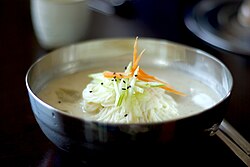
Koreatowns are characterized by Korean signage, specialized Korean restaurants, grocery stores, beauty salons, and other businesses catering to the Korean community.
Is Koreatown only found in the United States?
No, Koreatowns exist globally, with significant populations and enclaves in China, Japan, Canada, Uzbekistan, Vietnam, Russia, Australia, and many other countries.