Korean People's Army: An Overview of North Korea's Military Forces
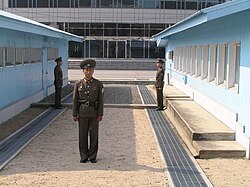
The Korean People's Army (KPA) serves as the primary military force of North Korea. As of 2021, it stands as the second largest military organization in the world. The KPA maintains a massive presence within the nation, with approximately 29.9% of the North Korean population serving in active, reserve, or paramilitary capacities. Since the Armistice Agreement of July 1953, the KPA has identified the Republic of Korea Armed Forces and United States Forces Korea, positioned across the Korean Demilitarized Zone (DMZ), as its primary adversaries.
Key Facts
- Founded: 25 April 1932 (Current form established 8 February 1948)
- Active Personnel: Approximately 1,320,000
- Reserve Personnel: Over 560,000
- Military Age: 17–30 years old
- Conscription Age: 18 years old
- Defense Budget: Approximately US$4 billion (2019 data)
Historical Foundations
The roots of the KPA trace back to 1932. Following the end of World War II, during the Soviet occupation of the northern part of the Korean peninsula, the Soviet 25th Army ordered all armed resistance groups in the north to disband on 12 October 1945. However, by 21 October 1945, a force was created using 2,000 Koreans with experience in the Soviet Red Army to organize constabulary forces with permission from Soviet military headquarters.
Organizational Structure and Leadership
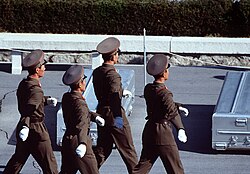
The KPA is governed by the Central Military Commission (CMC). The leadership structure is highly centralized, with Marshal Kim Jong Un serving as the Chairman of the CMC. Other key leadership roles include Vice Chairman Marshal Ri Pyong-chol, Minister of Defence Army General No Kwang-chol, and Chief of the General Staff Department Vice Marshal Ri Yong-gil.
The military is divided into several specialized service branches to manage various aspects of national defense:
- Korean People's Army Ground Force: The largest component, organized into various corps and mechanized infantry divisions.
- Korean People's Navy: Responsible for maritime operations.
- Korean People's Army Air Force: Manages aerial combat and defense.
- Korean People's Army Strategic Force: Focuses on long-range capabilities.
- Korean People's Army Special Operations Forces: Specialized units for asymmetric warfare.
- Missile Administration: Oversees missile development and technology.
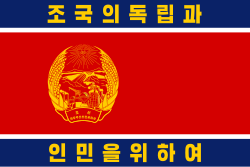
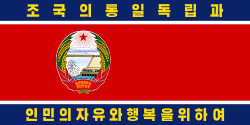
![The flag of the KPA Ground Force (in use from 1993 to 2023) was sometimes used to represent the entire Korean People's Army.[5]](/images/5d/1e/5d1e1006855ce35effef17f985e6ad5c023212edfeb4fdfe141250bb27f23eef.webp)
Ground Force Formations
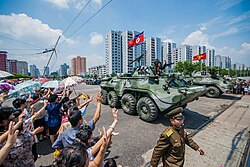
The Ground Force is organized into multiple corps located across various provinces, including the I Corps in Kangwon Province, the III Corps in South Pyongan Province, and the IX Corps in North Hamgyong Province. It also includes the Pyongyang Defense Command and several mechanized infantry divisions, such as the 108th and 425th Divisions.
Military Capabilities and Equipment
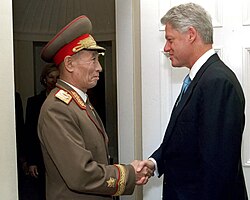
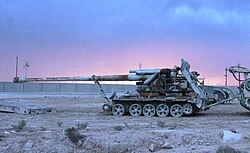
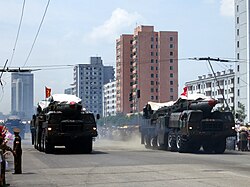
The KPA maintains a diverse array of military hardware, ranging from conventional artillery to advanced ballistic missiles. The nation utilizes both domestic suppliers, such as the Nampo Shipyard and the Nampo Kangso Missile Factory, and foreign suppliers, including China and Russia.
Nuclear and Strategic Assets
A significant aspect of the KPA's capability is its nuclear program. North Korea has conducted several nuclear tests, including those in 2006, 2009, 2013, 2016 (twice), and 2017. These developments are central to the nation's strategic posture.
Specialized Warfare and Air Power
The KPA utilizes asymmetric warfare—tactics that leverage unconventional methods to offset a conventional military disadvantage. This includes the use of special operations forces and specialized craft, such as semi-submersible infiltration vessels used in the 1980s.
![A semi-submersible infiltration craft used by North Korean special forces in the 1980s[citation needed]](/images/f9/18/f9182560fc447b9c17431bf0f15a7ed5e049334b5f0882b9546e438f9f831585.jpg)
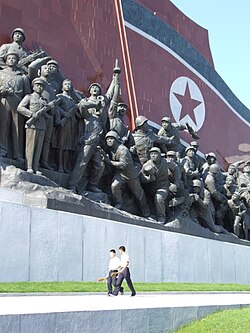
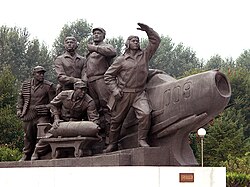
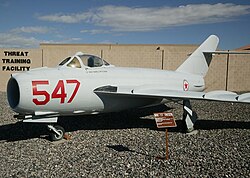
The Air Force maintains various aircraft, including fighters and anti-air capabilities. Historical displays and monuments in Pyongyang often highlight the role of airmen in the nation's military history.
Summary of KPA Statistics
| Category | Details |
|---|---|
| Active Personnel | 1,320,000 |
| Reserve Personnel | 560,000+ |
| Conscription Age | 18 |
| Military Service Age | 17–30 |
| Defense Budget (2019) | ~$4 Billion USD |
Frequently Asked Questions
What are the primary service branches of the KPA?
The KPA consists of the Ground Force, Navy, Air and Anti-Air Force, Strategic Force, Special Operations Forces, and the Missile Administration.
How is the KPA funded?
As of 2019, the military budget was approximately US$4 billion, representing roughly 26% of the nation's GDP.
Who leads the Korean People's Army?
The military is governed by the Central Military Commission (CMC), chaired by Marshal Kim Jong Un.
What is the military service requirement in North Korea?
Conscription begins at age 18, and the general military age for personnel is between 17 and 30 years old.
What are the main adversaries of the KPA?
The KPA considers the Republic of Korea Armed Forces and the United States Forces Korea to be its primary adversaries.