Kokuji: The Unique History of Japanese-Made Kanji
While most kanji used in the Japanese writing system were originally borrowed from China, there exists a special category of characters known as kokuji (国字) or wasei kanji (和製 漢字). These "national characters" were created within Japan rather than being imported. By combining existing characters in novel ways, Japanese writers developed a unique set of symbols to represent native concepts, biological species, and scientific terms.
Defining Kokuji and Wasei Kanji
It is important to distinguish between the specific terms used to describe these characters. Wasei kanji refers specifically to kanji invented in Japan. The broader term kokuji can refer to any character created outside of China, including Korean gukja (國字) or Vietnamese chữ Nôm. In a Japanese context, however, it almost exclusively refers to characters whose earliest appearance is documented in Japan.
A strict rule applies to this classification: if a character appears earlier in Chinese literature, it is not considered a kokuji, even if it was independently coined in Japan without any relation to the Chinese version. For example, while the spelling for monkfish (鮟鱇) was created in Edo-period Japan, the character 鮟 is not a kokuji because it exists as a corruption of an ancient Chinese character. However, the second character, 鱇, is a true kokuji because it has no prior history in Chinese texts.
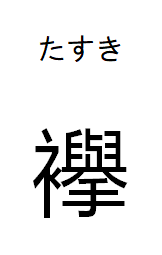
How Kokuji are Formed
Most kokuji are semantic compounds. This means they are constructed by combining two or more characters based on their meanings. This differs from the majority of Chinese kanji, which are often phono-semantic compounds (characters that combine a meaning element with a phonetic element to suggest pronunciation). Because most kokuji lack a standard Chinese on reading (the Sino-Japanese pronunciation), they rely on meaning-based construction.
Common Construction Methods
- Semantic Compounding: Combining radicals to create a new meaning. For instance, 働 (to work) combines the "person" radical (亻) with 動 (to move).
- Nature and Biology: Many kokuji were created to describe specific flora and fauna. Examples include 鰯 (sardine), 鱈 (codfish), and 榊 (the sakaki tree, formed from "tree" 木 and "deity" 神).
- Scientific and Technical Terms: During the Meiji era, new characters were coined for scientific concepts. Some were even used for SI units, such as 粁 (kilometer), though modern Japanese now primarily uses katakana or rōmaji for these terms.
Key Facts
- Origin: Kokuji are characters created in Japan, not borrowed from China.
- Readings: They usually have native kun readings, though some have on readings derived from related characters.
- Composition: Most are semantic compounds rather than phono-semantic compounds.
- Usage: They are frequently used for names of plants, animals, and specific Japanese cultural items.
- History: Some date back to the Nara period (8th century), while others were created in the 19th century.
Classification of Common Kokuji
| Category | Kanji | Reading (Romaji) | Meaning |
|---|---|---|---|
| Jōyō (Daily Use) | 働 | hataraku | to work |
| Jōyō (Daily Use) | 込 | komu | to be crowded |
| Jōyō (Daily Use) | 畑 | hatake | field of crops |
| Jōyō (Daily Use) | 峠 | tōge | mountain pass |
| Jinmeiyō (Names) | 榊 | sakaki | sakaki tree |
| Jinmeiyō (Names) | 辻 | tsuji | crossroads |
| Hyōgai (Extra) | 躾 | shitsuke | training/rearing |
Frequently Asked Questions
Do all kokuji have Chinese readings?
Generally, no. Most kokuji are designed for native Japanese words and therefore primarily have kun readings. However, some occasionally have an on reading derived from a related character, such as 腺 (gland), which uses the reading from 泉 (spring).
Why are kokuji mostly semantic compounds?
In Chinese kanji, many characters use a phonetic element to indicate pronunciation. Since most kokuji do not have a standard Chinese pronunciation, they cannot easily use the phono-semantic method, leaving semantic compounding as the primary way to create them.
Are kokuji still being created today?
While most were created in the past—ranging from the Nara period to the Meiji era—the creation of new characters for scientific purposes was a notable trend in the late 19th century.
Is 働 (work) considered a kokuji?
Yes, 働 is one of the most commonly used kokuji and is included in elementary Japanese texts and the JLPT N5 level.
What is the difference between kokuji and ateji?
Ateji refers to using kanji phonetically to represent a word. While some kokuji are created by adding radicals to ateji (like the monkfish example), a true kokuji is defined by being a character that first appeared in Japan.