Klippan Sofa: A Legacy of IKEA Design and Evolution
In the world of affordable, functional furniture, few pieces are as recognizable as the Klippan. Stylized as KLIPPAN—which translates from Swedish to "the cliff"—this sofa has remained a staple of the IKEA catalog for decades. Following IKEA's tradition of naming upholstered furniture after Swedish locations, the sofa takes its name from the Klippan Municipality in Southern Sweden.
Developed through a collaboration between IKEA's head of design, Lars Engman, and designer Noboru Nakamura, the Klippan was first launched in 1980. Since its debut, it has evolved from a simple piece of home decor into one of the company's most enduring and popular products.
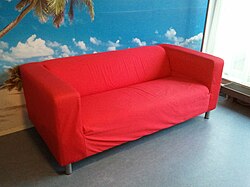
Key Facts
- Launch Year: 1980.
- Designers: Lars Engman and Noboru Nakamura.
- Naming: Named after Klippan Municipality, Sweden.
- Key Feature: Removable and interchangeable fabric covers.
- Price Trend: Cost reduced by 40% since 1980 due to production and material changes.
- Size: Standard two-seat design optimized for easy transport through doorways.
Design Evolution and Material Changes
Over the last 30 years, the Klippan has undergone several functional transformations to improve affordability and convenience. While the original 1980s models featured a solid wood frame and painted wood legs, contemporary versions utilize a more lightweight and cost-effective combination of particleboard (engineered wood made from resin and wood chips), fiberboard, and polyurethane foam. Modern legs are now constructed from steel or aluminum.
A significant milestone occurred in 2004 when the sofa was redesigned for flat-packing—the process of packaging furniture in a disassembled state to reduce shipping volume. This allowed customers to easily transport the sofa home and assemble it themselves.
Customization and Aesthetics
One of the Klippan's most enduring appeals is its versatility. The sofa is designed to be fitted with a variety of removable fabric covers. In addition to standard cotton options, IKEA offers "exclusive" collections with rotating designs that are typically retired after one year, allowing owners to refresh their interior style without replacing the entire sofa.
Scientific Testing and Public Installations
Beyond the living room, the Klippan has played a role in safety research. In 2003, the sofa was used as the standard model in a study comparing British fire safety requirements with those of mainland Europe and Sweden. Three specific units, manufactured at IKEA's workshops in Älmhult, were tested: one without flame retardant treatment, one with a phosphorus-based retardant, and one with a bromine-based retardant.
The Klippan has also appeared in larger-than-life forms. In 2005, to celebrate the opening of a new IKEA store, a massive orange Klippan was installed in Frogmoor township. This installation was one of two IKEA products replicated at five times their original size.
Klippan Specifications Summary
| Feature | Original Model (1980) | Contemporary Model |
|---|---|---|
| Frame Material | Solid Wood | Particleboard, Fiberboard, Polyurethane Foam |
| Leg Material | Painted Wood | Steel or Aluminum |
| Packaging | Standard | Flat-packed (since 2004) |
| Price Point | Baseline | 40% lower than 1980 price |
Frequently Asked Questions
Who designed the Klippan sofa?
The Klippan was developed by Noboru Nakamura and Lars Engman, who served as IKEA's product developer and head of design.
Why is the sofa called the Klippan?
It is named after the Klippan Municipality in Southern Sweden, adhering to IKEA's naming convention of using Swedish place names for upholstered furniture.
Can you change the look of a Klippan sofa?
Yes, the sofa is designed with removable and interchangeable fabric covers, including standard cotton and limited-edition exclusive collections.
How has the Klippan changed since its launch?
The sofa transitioned from a solid wood frame and wooden legs to a lightweight composite frame with metal legs. It was also redesigned in 2004 to be flat-packed for easier home assembly.
Was the Klippan ever used for safety research?
Yes, in 2003, three specially manufactured Klippans were used to compare the effectiveness of different flame retardant treatments against British and European fire safety standards.