Flat-Pack Furniture: The History and Evolution of Ready-to-Assemble Design
In the modern era of home decor, ready-to-assemble (RTA) furniture—often referred to as flat-pack or knock-down (KD) furniture—has become a staple of consumer life. This method of manufacturing involves shipping furniture as separate components packed into cartons, accompanied by assembly instructions and sometimes the necessary hardware. By shifting the labor of assembly from the manufacturer to the consumer, this model has revolutionized how we furnish our homes.
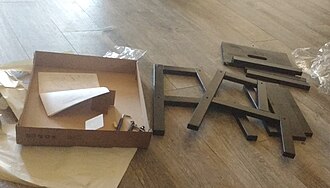
The popularity of flat-pack products stems from a dual benefit: consumers save money by performing the assembly themselves, while producers and merchants benefit from reduced storage and shipping costs. Because assembled furniture is bulky and expensive to transport, the compact nature of flat-pack kits makes them highly efficient for global logistics.
Key Facts
- Common Materials: Most RTA furniture is produced from particle board or medium-density fibreboard (MDF) coated with polymer laminates.
- Assembly Tools: Products are typically designed for simple assembly using basic tools like hex keys.
- Economic Impact: Lower production and shipping costs allow for more affordable consumer pricing.
- Industry Growth: The rise of RTA furniture has led to the development of a dedicated professional furniture assembly service industry.
The Evolution of Ready-to-Assemble Concepts
While modern flat-pack design feels contemporary, the concept of furniture that can be disassembled for transport has existed for centuries. As early as 1859, the Thonet No. 14 bentwood chair was produced specifically to be easily taken apart to save space during transit. By 1878, American patents were already describing prefabricated furniture kits designed to be assembled by both specialized and unqualified individuals.
Early 20th Century Pioneers
The early 1900s saw several attempts to commercialize kit furniture. During World War I, designer Louise Brigham helped establish early RTA business models. By 1915, a company called Home Art Masters was marketing RTA kits through mail-order catalogs, claiming their products could be quickly assembled by anyone, even a child.
Following World War II, the industry saw significant innovation. In Australia, Frederick Charles Ward founded a mail-order RTA business to provide affordable options for those with modest means. Meanwhile, in Sweden, Lena Larsson contributed to the creation of the TRIVA line for Nordiska Kompaniet in 1943, one of the earliest Swedish RTA brands.
The Rise of Modern Flat-Pack Giants
A major milestone in the industry occurred in 1953 when Ohio cabinetmaker Erie J. Sauder received a U.S. patent for "snap-together" furniture—a table designed to be assembled without the need for glue or hardware. However, perhaps the most famous origin story involves Swedish technician Gillis Lundgren. Legend has it that Lundgren, frustrated by the difficulty of transporting a table in his car, conceived the idea of flat-packing after having to saw off a table's legs to make it fit. He shared this concept with his employer at IKEA, leading to the company's launch of flat-pack furniture in 1956.
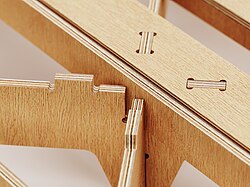
Materials and Manufacturing
To keep costs low, RTA furniture is primarily manufactured using particle board or medium-density fibreboard (MDF) rather than solid wood. To ensure the final product looks high-quality, these low-grade timbers are often coated with a polymer laminate, which replicates the appearance of various wood grains.
| Feature | Ready-to-Assemble (RTA) | Traditional Assembled Furniture |
|---|---|---|
| Shipping Volume | Low (Compact cartons) | High (Bulky items) |
| Assembly Labor | Consumer-led | Manufacturer-led |
| Primary Materials | MDF, Particle Board, Laminate | Solid Wood, Metal, etc. |
| Relative Cost | Lower | Higher |
Common Applications
Ready-to-assemble furniture is versatile and can be found in almost every room of a home or office. Common uses include:
- Living Areas: Coffee tables, bookcases, and lounge-ware.
- Workspace: Desks and office furniture.
- Storage: Wardrobes, closets, and kitchen cabinets.
- Outdoor: Patio sets, swingsets, and outdoor furniture.
- Specialty: CD/DVD storage racks and beds.
Frequently Asked Questions
What is the difference between flat-pack and RTA furniture?
The terms are often used interchangeably. Ready-to-assemble (RTA) refers to the functional nature of the furniture, while flat-pack refers to the method of packaging the components in flat boxes.
Why is flat-pack furniture cheaper than solid wood furniture?
It is cheaper due to the use of more affordable materials like MDF and particle board, as well as the reduction in shipping and storage costs achieved by packing items in compact boxes.
Can I hire someone to assemble my flat-pack furniture?
Yes, a dedicated furniture assembly service industry has developed specifically to help consumers who prefer not to assemble their own products.
What are the most common materials used in RTA furniture?
Most RTA furniture is made from particle board or medium-density fibreboard (MDF) that has been finished with a polymer laminate to mimic the look of real wood.
Who is credited with the idea of IKEA's flat-pack system?
The idea is attributed to Swedish technician Gillis Lundgren, who conceived the concept after struggling to transport a table in his car.