Ingvar Kamprad: The Visionary Founder of IKEA and His Legacy of Frugality
Ingvar Kamprad was a Swedish businessman whose entrepreneurial spirit transformed the global retail landscape. As the founder of IKEA, he built a multinational empire that, by 2008, had become the world's largest furniture seller. His journey from a young boy selling matches in Småland to a global business icon is a story of rapid expansion, unique corporate structures, and a deeply personal philosophy of simplicity.
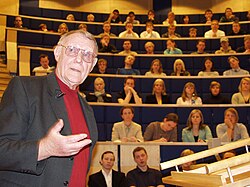
Key Facts
- Born: 30 March 1926, Pjätteryd, Sweden
- Died: 27 January 2018, Älmhult, Sweden (aged 91)
- Major Achievement: Founded IKEA in 1943 at age 17
- Business Philosophy: Extreme frugality and cost-control
- Corporate Structure: Ownership held by the Stichting INGKA Foundation
Early Life and the Birth of IKEA
Born in Pjätteryd, Sweden, to Feodor Kamprad and Berta Linnea Matilda Nilsson, Ingvar grew up on the family farm, Elmtaryd. His family history was rooted in migration; his paternal grandparents moved from the German Empire to Sweden in 1896 to escape economic hardship.
Kamprad's business acumen emerged early. At age five, he began selling matches, eventually expanding his trade to include fish, Christmas decorations, seeds, and stationery. In 1943, while attending Handelsinstitut in Gothenburg, he founded IKEA at his uncle's kitchen table. The name IKEA is an acronym representing his initials (Ingvar Kamprad) and the names of his home locations: Elmtaryd and Agunnaryd.
Expansion into Furniture
Originally a mail-order business, Kamprad diversified his portfolio in 1948 by adding furniture to his offerings. This strategic move laid the groundwork for the global retail giant the company would eventually become.
The IKEA Business Model and Wealth
One of the most distinctive aspects of Kamprad's legacy is the complex ownership structure of his company. IKEA is owned by the Dutch-registered Stichting INGKA Foundation. This foundation, named after Kamprad himself (ING + KA), owns INGKA Holding, the parent company for all IKEA stores.
This structure has led to varying reports regarding Kamprad's personal net worth. While some estimates placed his fortune as high as $58.7 billion in 2015, other reports noted that his direct ownership was minimal because he had transferred his interests to the foundation. The foundation's bylaws specifically prevent Kamprad and his family from benefiting directly from its funds.
| Category | Details |
|---|---|
| Founder of | IKEA (1943) |
| Primary Philosophy | Frugality and simplicity |
| Key Publications | A Testament of a Furniture Dealer; Leading by Design |
| Family Legacy | Four children; leadership transition to his sons |
| Estate Focus | Development of Norrland, Sweden |
A Philosophy of Frugality
Kamprad was famously known for his frugal lifestyle, a principle he integrated into the very core of IKEA's operations. He believed that cost-control allowed the company to pass savings on to customers. He famously drove an older Volvo, flew economy class, and avoided luxury status symbols.
In his 1976 manifesto, A Testament of a Furniture Dealer, he detailed his belief that businesses should rely on strength and will rather than flashy displays of wealth. This focus on operational efficiency allowed IKEA to lower prices by an average of 2–3% annually during the decade leading up to 2010, even as it continued to expand globally.
Controversies and Personal Challenges
Kamprad's life was not without significant controversy. In 1994, it was revealed that during his youth, he had been involved with the pro-fascist New Swedish Movement (Nysvenska Rörelsen) and had recruited for the Swedish Nazi group Svensk Socialistisk Samling (SSS). Kamprad later described this period as the "greatest mistake of my life," attributing his political involvement to the influences of his family in Sudet-Germany.
On a personal level, Kamprad struggled with alcoholism during his early career while working with manufacturers in Poland. He later stated that he managed the condition by undergoing "drying out" periods several times a year.
Death and Final Legacy
Ingvar Kamprad passed away from pneumonia in his sleep at his home in Småland on 27 January 2018. His will reflected his commitment to his roots; half of his estate was designated for projects in Norrland, the sparsely populated northern region of Sweden, to support young people living there. The remaining half was left to his four children.
Frequently Asked Questions
What does the name IKEA stand for?
IKEA is an acronym derived from the founder's name, Ingvar Kamprad, and the names of his birthplace and childhood village: Elmtaryd and Agunnaryd.
Who owns IKEA?
IKEA is owned by the Stichting INGKA Foundation, a Dutch-registered entity. This structure was designed to ensure the long-term stability of the company.
Why was Ingvar Kamprad known for being frugal?
Kamprad believed that extreme cost-control and simplicity were essential to keeping product prices low for consumers. He practiced this personally by avoiding luxury goods and status symbols.
What happened to Kamprad's estate after his death?
His estate was split equally: half was allocated to development projects in Norrland, Sweden, and the other half was left to his four children.
When was IKEA founded?
Ingvar Kamprad founded IKEA in 1943 when he was 17 years old.