Kingdom of the Netherlands
The Kingdom of the Netherlands is a sovereign state and a devolved unitary parliamentary constitutional monarchy. While often conflated with the country of the Netherlands in Europe, the Kingdom is actually a broader entity comprising four constituent countries spread across two continents.
Guided by the motto "Je maintiendrai" (French for "I will uphold"), the Kingdom maintains a complex but organized structure that balances the autonomy of its Caribbean territories with a unified sovereign identity under a single monarch.
Key Facts
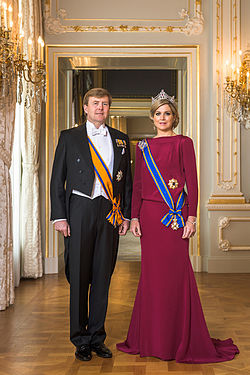
- Monarch: King Willem-Alexander.
- Capital: Amsterdam (largest city); Government seat is located in The Hague.
- Constituent Countries: The Netherlands, Aruba, Curaçao, and Sint Maarten.
- Official Languages: Dutch (primary), with English, Papiamento, and West Frisian as official regional languages.
- Total Area: 42,531 km².
- Estimated Population (2026): 18,290,379.
- Economic Status: A top-tier global economy with a nominal GDP per capita estimated at $73,091 for 2026.
The Structure of the Kingdom
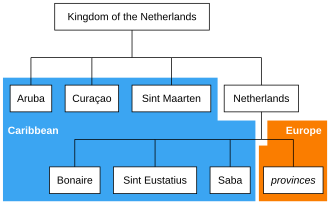
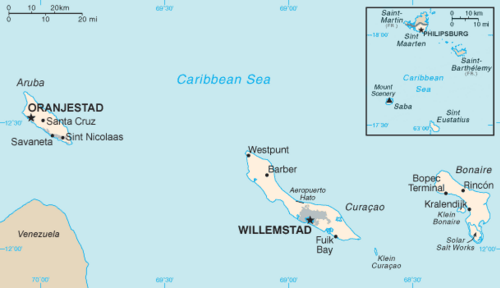
The Kingdom is composed of four non-sovereign constituent countries. The Netherlands is the largest, encompassing the European territory and three special municipalities in the Caribbean: Bonaire, Sint Eustatius, and Saba. The other three constituent countries—Aruba, Curaçao, and Sint Maarten—operate with their own governments but remain under the umbrella of the Kingdom.
Constituent Country Comparison
| Part | Currency | Major Languages | Major Religions |
|---|---|---|---|
| European Netherlands | Euro | Dutch, Frisian | No religion, Catholic, Protestant |
| Bonaire | US dollar | Papiamento, Dutch | Catholic, Protestant |
| Sint Eustatius | US dollar | English, Dutch | Protestant, Catholic, No religion |
| Saba | US dollar | English, Dutch | Catholic, Protestant, No religion |
| Aruba | Aruban florin | Papiamento, Dutch, English, Spanish | Catholic |
| Curaçao | Caribbean guilder | Papiamento, Dutch | Catholic, Protestant |
| Sint Maarten | Caribbean guilder | English, Dutch, Spanish | Protestant, Catholic |
Historical Evolution
The modern state evolved through centuries of conflict and diplomacy. After declaring independence from Spain and France in 1581, the region transitioned through various forms of government, including the Batavian Republic and the Kingdom of Holland, before the current Kingdom of the Netherlands was established on March 16, 1815.
Significant territorial changes occurred in 1830 when Belgium seceded, a move recognized in 1839. Luxembourg also became independent during this period, though it remained in a personal union with the Netherlands for a time.
Decolonization and Reform
The 20th century was marked by a shift toward autonomy for overseas territories. Suriname was a constituent country from 1954 until it became an independent republic in 1975. Similarly, the Netherlands Antilles existed as a single constituent country from 1954 until 2010.
In 2010, a major constitutional reform dissolved the Netherlands Antilles. This resulted in Curaçao and Sint Maarten becoming constituent countries (joining Aruba, which had seceded in 1986), while Bonaire, Sint Eustatius, and Saba became special municipalities of the Netherlands proper.
Governance and Institutions
The Kingdom is governed by the Charter for the Kingdom, which defines the relationship between the constituent countries. While each country manages its own internal affairs, certain "Kingdom Affairs" are handled collectively. These include:
- Defense and the maintenance of independence.
- Foreign relations.
- Netherlands nationality.
- Regulation of the flag, coat of arms, and orders of chivalry.
- General rules for the admission and expulsion of nationals and aliens.
The Council of State serves as a key advisory body. Under the Charter, Aruba, Curaçao, and Sint Maarten may request the inclusion of a member in this council to ensure their interests are represented at the Kingdom level.
International Relations
The Kingdom is a founding member of the European Union. While the European Netherlands is fully integrated, the relationship with Caribbean territories has varied. Historically, Suriname and the Netherlands Antilles held "overseas country" (OCT) status, though Suriname is now a sovereign state outside the EU.
Frequently Asked Questions
What is the difference between the Netherlands and the Kingdom of the Netherlands?
The Netherlands is one of the four constituent countries within the larger sovereign entity known as the Kingdom of the Netherlands. The Kingdom also includes Aruba, Curaçao, and Sint Maarten.
Who is the head of state for all four constituent countries?
King Willem-Alexander is the reigning monarch for the entire Kingdom of the Netherlands.
Which currencies are used within the Kingdom?
The Kingdom uses four different currencies: the Euro (Europe), the US dollar (Caribbean Netherlands), the Caribbean guilder (Curaçao and Sint Maarten), and the Aruban florin (Aruba).
What happened to the Netherlands Antilles?
The Netherlands Antilles were dissolved on October 10, 2010. Curaçao and Sint Maarten became constituent countries, while Bonaire, Sint Eustatius, and Saba became special municipalities of the Netherlands.
What are "Kingdom Affairs"?
Kingdom Affairs are specific responsibilities managed at the sovereign level for all constituent countries, including foreign relations, national defense, and nationality laws.