Kingdom of Armenia: The Rise and Fall of an Ancient Power
The Kingdom of Armenia, also known as Greater Armenia or Armenia Major, was a formidable political entity in the Ancient Near East that existed from 331 BC to 428 AD. Positioned at the crossroads of great civilizations, Armenia evolved from a regional satrapy into a sprawling empire before becoming a pivotal buffer state between the Roman and Parthian Empires.
The kingdom's trajectory was defined by three successive royal dynasties: the Orontids (331–200 BC), the Artaxiads (189 BC – 12 AD), and the Arsacids (52–428 AD). Throughout these eras, Armenia navigated the complex geopolitical tensions of antiquity, eventually becoming the first state in history to officially adopt Christianity.
Key Facts
- Duration: 331 BC to 428 AD.
- Peak Extent: Reached its zenith under Tigranes the Great (c. 70 BC) covering approximately 900,000 km².
- First Christian State: Officially embraced Christianity as the state religion around 301 AD.
- Strategic Position: Served as a contested client state between the Roman and Parthian/Sassanid Empires.
- Dynasties: Ruled by the Orontid, Artaxiad, and Arsacid houses.
The Foundations: From Satrapy to Kingdom
The roots of the Armenian kingdom lie in the Satrapy of Armenia (a provincial governorship) of the Achaemenid Empire of Iran. This territory was formed from the remnants of Urartu after the Medes conquered the region in 590 BC. For three centuries, the Orontid dynasty served as satraps under Persian rule.
The political landscape shifted dramatically following the conquest of Persia by Alexander the Great. After a brief period of Macedonian control, the Orontids returned in 321 BC, transitioning from governors to sovereign kings.
The Artaxiad Dynasty and the Armenian Empire
By 189 BC, the Artaxiad dynasty took the throne. During this era, the kingdom was briefly divided into Greater Armenia and Sophene. However, under the leadership of Tigranes the Great (95–55 BC), Armenia experienced an unprecedented surge in power.
Between 83 and 69 BC, Tigranes reincorporated Sophene and conquered vast territories of the declining Seleucid Empire. This expansion transformed the kingdom into a short-lived empire, reaching a population of roughly 10 million people and an area of 900,000 km².
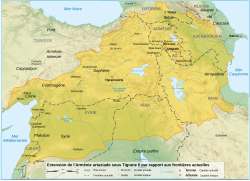
This golden age ended in 69 BC when Rome conquered the empire. Subsequent Artaxiad kings ruled as Roman client states until 12 AD, when they were overthrown due to suspected allegiances with Parthia.
The Arsacid Era and the Roman-Parthian Struggle
The Arsacid dynasty began in 52 AD with Tiridates I, a member of the Parthian royal house. For centuries, Armenia became the primary theater of conflict during the Roman-Parthian Wars. The Armenian nobility was often split into factions supporting either Rome or Parthia.
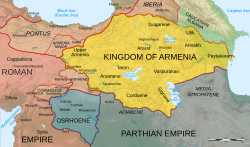
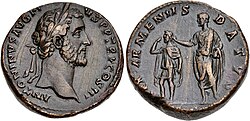
A significant diplomatic resolution occurred with the Treaty of Rhandeia in 63 AD. This agreement established a unique compromise: the Armenian kings would be of the Parthian Arsacid bloodline but would be crowned by the Roman Emperor, effectively serving as client kings to Rome.
The Adoption of Christianity
One of the most enduring legacies of the Arsacid period was the religious transformation of the state. Under Tiridates III, and following the efforts of Gregory the Illuminator, Armenia proclaimed Christianity as its state religion around 301 AD. This historic move preceded the Edict of Milan and the conversion of the Roman Empire.

Military Strength and the Ayrudzi
The Armenian military was renowned for its elite cavalry. In antiquity, the Azatavrear consisted of high-ranking nobles who formed the core of the royal court. In later periods, these horsemen were known as Ayrudzi.
The royal guard typically consisted of 6,000 heavily armored horsemen in the ancient period, though this number dropped to 3,000 in medieval times. During full-scale mobilization, the cavalry force could swell to between 10,000 and 20,000 riders, supported by light cavalry and mounted archers.
The Partition and Fall of the Kingdom
The pressure from the Sassanid Empire and the Eastern Roman Empire eventually became unsustainable. In 387 AD, the kingdom was partitioned between the two powers.
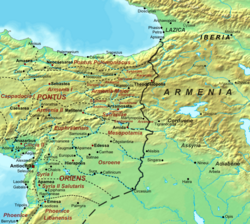
Western Armenia became the Roman province of Armenia Minor (later Byzantine Armenia), while Eastern Armenia remained a kingdom under Persian suzerainty. The royal line finally ended in 428 AD when the local nobility deposed the last Arsacid king, leading the Sassanids to install a marzban (governor) to rule the region.
Summary of the Kingdom of Armenia
| Feature | Details |
|---|---|
| Dynasties | Orontid, Artaxiad, Arsacid |
| Major Capitals | Armavir, Yervandashat, Artaxata, Tigranocerta, Vagharshapat, Dvin |
| Peak Area | ~900,000 km² (under Tigranes the Great) |
| State Religion | Zoroastrianism (until c. 301 AD), Christianity (after c. 301 AD) |
| Key Military Unit | Ayrudzi (Elite Heavy Cavalry) |
Frequently Asked Questions
Who was Tigranes the Great?
Tigranes the Great was an Artaxiad king who ruled from 95 to 55 BC. He expanded Armenia into a short-lived empire, conquering parts of the Seleucid Empire and reaching the kingdom's greatest territorial extent.
Why is Armenia's conversion to Christianity significant?
Armenia is recognized as the first state in history to officially adopt Christianity as its state religion, traditionally dated to 301 AD, which occurred before the Roman Empire's official conversion.
What was the Treaty of Rhandeia?
Signed in 63 AD, the Treaty of Rhandeia settled a dispute between Rome and Parthia by agreeing that the Armenian king would be a member of the Parthian Arsacid dynasty but would be formally invested by the Roman Emperor.
What happened to Armenia in 387 AD?
In 387 AD, the Kingdom of Armenia was split into two parts: Western Armenia (Armenia Minor), which became a Roman province, and Eastern Armenia, which remained a kingdom under Persian influence.
What were the primary capitals of the kingdom?
The kingdom utilized several capitals over time, including Armavir, Yervandashat, Artaxata, Tigranocerta, Vagharshapat (the spiritual center), and Dvin.