King Edward Point: The Remote Capital of South Georgia
Located on the rugged northeastern coast of South Georgia island, King Edward Point (KEP) serves as a vital hub for scientific research and administration. As the capital of the British Overseas Territory of South Georgia and the South Sandwich Islands, it holds a unique distinction: it is the second smallest capital in the world by population, surpassed only by Ngerulmud in Palau.
Operated by the British Antarctic Survey, the station is situated in Cumberland East Bay and remains operational year-round, providing essential support for sustainable fishing and polar studies.
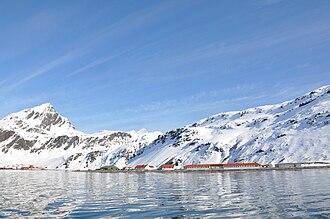
Key Facts
- Location: Cumberland East Bay, South Georgia (54°17′00″S 36°29′42″W).
- Status: Permanent research station and territorial capital.
- Operator: British Antarctic Survey.
- Population: Approximately 22 in summer and 12 in winter (2018 data).
- Climate: Tundra climate (Köppen ET) characterized by cold winters and cool summers.
- Established: 1950.
History and Development
King Edward Point was named in honor of King Edward VII. It is closely linked with the nearby settlement of Grytviken (meaning "pot cove" in Norwegian and Swedish), which was named after the tryworks used by sealers. Both locations are situated along King Edward Cove.
The settlement's infrastructure evolved over several decades to support various administrative and scientific needs:
- 1909: The local Post Office was established and has remained operational, except during the Falklands War.
- 1914: The customs warehouse and jail were constructed, remaining the oldest buildings at the point.
- 1925: Discovery House, a prefabricated laboratory, was built for biologists to study specimens from whale carcasses.
- 1929: Discovery II was opened to facilitate oceanographic research.
The region was also a site of geopolitical conflict during the Falklands War. Argentine soldiers arrived near King Edward Point on March 24, 1982, and occupied the site on April 3, before British forces retook the area in late April of that year.
Environment and Wildlife
The surrounding ecosystem is a haven for marine mammals, with elephant seals and fur seals frequently inhabiting the area. While cats were once introduced to King Edward Point, the last remaining cat died in 1980.
Climate and Weather Patterns
The region experiences a tundra climate, defined by long, harsh winters and short, cool summers. The temperature extremes are significant; the highest temperature ever recorded at the Grytviken/King Edward Point site was 28.8 °C (83.8 °F) on March 10, 1922.
| Metric | Summer (Jan) | Winter (Jul) | Annual Average/Record |
|---|---|---|---|
| Mean Daily Max (°C) | 10.0 | 1.7 | 6.4 (Yearly Mean) |
| Daily Mean (°C) | 6.3 | -1.2 | 3.0 (Yearly Mean) |
| Mean Daily Min (°C) | 2.6 | -4.0 | -0.5 (Yearly Mean) |
| Record High (°C) | 23.0 | 13.9 | 28.8 (All-time) |
| Record Low (°C) | -2.5 | -15.1 | -15.1 (Recent Low) |
Frequently Asked Questions
What is the primary purpose of King Edward Point?
It serves as a permanent research station for the British Antarctic Survey and acts as the capital of the British Overseas Territory of South Georgia and the South Sandwich Islands, focusing on activities such as supporting sustainable fishing.
How small is the population of King Edward Point?
It is one of the smallest capitals in the world, with a population of approximately 22 people during the summer and 12 during the winter.
What is the climate like at the station?
The station has a tundra climate (Köppen ET), which means it experiences long, cold winters and short, cool summers.
What wildlife can be found around the settlement?
The area is primarily inhabited by fur seals and elephant seals.
What is the historical significance of Discovery House?
Established in 1925, Discovery House was a prefabricated laboratory used by biologists for six years to collect and study specimens from whale carcasses.