Kinder Morgan Energy Partners: Infrastructure, Growth, and Operational History
Kinder Morgan Energy Partners LP (KMEP), a subsidiary of Kinder Morgan, Inc. (NYSE: KMI), is a prominent player in the North American energy landscape. Classified as an oil and gas master limited partnership (MLP)—a business structure that combines the tax benefits of a partnership with the liquidity of a publicly traded company—KMEP owns and operates a vast network of petroleum product, natural gas, and carbon dioxide pipelines. Its portfolio extends beyond pipelines to include storage facilities, terminals, power plants, and retail natural gas operations across the United States and Canada.
Key Facts
- Founded: 1997 by Richard Kinder and William Morgan.
- Core Assets: Petroleum, natural gas, and CO2 pipelines, terminals, and power plants.
- Market Position: Became part of the largest midstream energy company in North America following a $71 billion deal in 2014.
- Growth: Achieved a 26 percent compound growth rate from founding until May 2009.
- Regulatory Oversight: Primarily governed by the U.S. Department of Transportation and the Federal Energy Regulatory Commission (FERC).
Corporate Evolution and Growth
The company's origins date back to 1997, when Richard Kinder, a former Enron executive, and William Morgan purchased Enron's liquid pipeline assets for $40 million. Headquartered in Houston, Texas, the firm became known for defying the typical low double-digit returns associated with MLPs, delivering significant growth for its investors in its early years.
Strategic acquisitions have been central to the company's expansion. In May 2013, Kinder Morgan acquired Copano Energy LLC, integrating its assets into the Natural Gas and Product Pipeline sections. A pivotal shift occurred on August 10, 2014, when the company announced a $71 billion deal to move to full ownership of Kinder Morgan Energy Partners, along with Kinder Morgan Management and El Paso Pipeline Partners. This transaction, completed on November 26, 2014, established the combined entity as the largest midstream energy company in North America.
Infrastructure and Regulatory Framework
Kinder Morgan operates a diverse array of facilities designed to transport hazardous liquids and gases. These assets are subject to strict regulatory oversight to ensure safety and fair pricing.
| Facility Name | Classification |
|---|---|
| Calnev Pipeline | Hazardous Liquids |
| Central Florida Pipeline | Hazardous Liquids |
| Cypress Pipeline System | Hazardous Liquids |
| Plantation Pipe Line | Hazardous Liquids |
| Portland Jet Line | Jet Fuel/Liquids |
| Rockies Express-West Pipeline | Gas Transmission |
The majority of these pipelines are overseen by the U.S. Department of Transportation. Additionally, interstate natural gas pipelines are regulated by the Federal Energy Regulatory Commission (FERC) under the Natural Gas Act, which governs rates and facility management.
Operational Incidents and Safety Record
Despite its infrastructure scale, Kinder Morgan has faced significant challenges regarding pipeline integrity and safety, resulting in several high-profile accidents.
The Walnut Creek Gasoline Fire
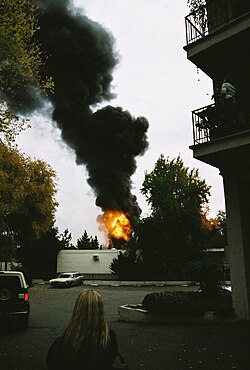
On November 9, 2004, a gasoline pipeline in Walnut Creek, California, was struck by a backhoe operated by a contractor. The resulting spill was ignited, creating an explosive fireball that killed five people (four workers and one supervisor) and injured four others. The fire also damaged nearby homes.
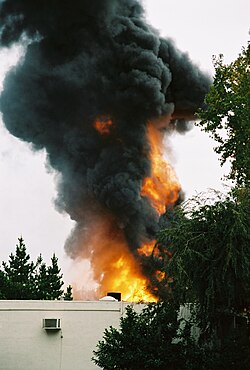
The aftermath led to severe legal and financial penalties. CalOSHA cited the company for failing to accurately stake out the pipeline location. The California State Fire Marshal imposed a $500,000 fine, and in 2007, the company was convicted on six felony charges, resulting in a $15 million fine and over $90 million in legal settlements to victims.
Environmental Spills in Canada and the U.S.
The company has dealt with several major leaks and ruptures:
- Suisun Marsh (2004): A rupture spilled approximately 1,500 barrels of diesel fuel into marshes near Suisun Bay.
- Burnaby Crude Oil Spill (2007): An excavator punctured a pipeline in British Columbia, releasing nearly 2,000 barrels of crude oil. About 600 barrels entered the Burrard Inlet, with cleanup costs exceeding $15 million. In 2011, Kinder Morgan and two contractors pleaded guilty to a 21-count indictment.
- Burnaby Mountain (2009): A leak from a storage tank resulted in a spill of nearly 1,700 barrels of crude oil.
- Abbotsford (2012): An oil spill was discovered at the Sumas terminal, though it was reported to be limited to a containment area.
Frequently Asked Questions
What is Kinder Morgan Energy Partners?
It is a subsidiary of Kinder Morgan, Inc., operating as a master limited partnership (MLP) that manages pipelines, terminals, and storage facilities for natural gas, petroleum products, and carbon dioxide in the U.S. and Canada.
How did the company become the largest midstream energy company in North America?
This was achieved through a massive $71 billion acquisition completed in November 2014, which brought Kinder Morgan Energy Partners, Kinder Morgan Management, and El Paso Pipeline Partners under full ownership of Kinder Morgan, Inc.
Who regulates Kinder Morgan's pipelines?
Most pipelines are overseen by the U.S. Department of Transportation, while interstate natural gas pipelines are regulated by the Federal Energy Regulatory Commission (FERC) under the Natural Gas Act.
What were the consequences of the Walnut Creek explosion?
The incident resulted in five deaths and significant property damage. Legally, the company faced a $500,000 fine from the State Fire Marshal, a $15 million fine following six felony convictions, and paid over $90 million in settlements to victims.
What happened during the Burnaby oil spill of 2007?
A contractor's excavator punctured a pipeline, releasing nearly 2,000 barrels of crude oil into a residential neighborhood and the Burrard Inlet. The cleanup cost over $15 million, and the company later pleaded guilty to a 21-count indictment.