Louisiana Offshore Oil Port: Powering U.S. Energy Infrastructure
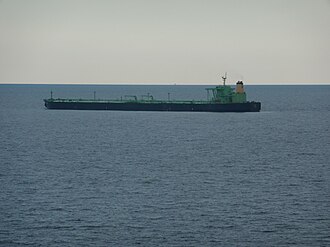
The Louisiana Offshore Oil Port (LOOP) serves as a critical artery for the United States energy sector. Located in the Gulf of Mexico, approximately 29 kilometers (18 nautical miles) off the coast of Louisiana near Port Fourchon, this deepwater port is specifically designed to handle the world's largest crude oil tankers—vessels that are typically too massive to enter U.S. inland ports.
LOOP plays a monumental role in national energy security, handling 13 percent of the nation's foreign oil. With a daily throughput of approximately 1.2 million barrels (190,000 m³), the facility connects via pipeline to 50 percent of the total refining capability in the United States.
Key Facts
- Location: 29 km (18 nautical miles) offshore from Louisiana.
- Capacity: Handles 13% of U.S. foreign oil imports.
- Daily Volume: Approximately 1.2 million barrels of crude oil.
- Vessel Limit: Can accommodate ships up to 700,000 deadweight tons.
- Refinery Reach: Connects to 50% of U.S. refining capacity.
Offshore Operations and Marine Terminal
The offloading process begins at Single Buoy Moorings (SBMs)—specialized floating mooring points that allow tankers to transfer oil via hoses. There are three SBMs located 8,000 feet (2.4 km) from the Marine Terminal. These systems are engineered to support massive tankers weighing up to 700,000 deadweight tons (635,000 metric tonnes).
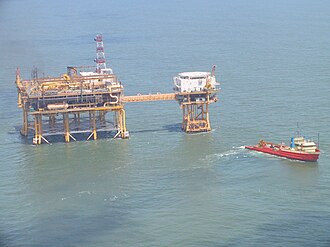
Once offloaded, the crude oil travels through a 56-inch (1.4 m) diameter submarine pipeline to the Marine Terminal, which is divided into two primary structures:
- Control Platform: This hub manages operations and includes a helicopter pad, living quarters, a control room, offices, and a vessel traffic control station.
- Pumping Platform: The industrial heart of the terminal, featuring four 7,000-hp (5 MW) pumps, power generators, and laboratory facilities for metering and sampling.
From the pumping platform, the oil is boosted toward the shore through a 48-inch (1.2 m) diameter pipeline. Because of its distance from the coast, LOOP is situated outside U.S. territorial waters. Consequently, special international sea law agreements are utilized to bring foreign vessels under U.S. jurisdiction during their visit.
Onshore Facilities and Distribution
The transition from sea to land involves two primary onshore installations. First, the Fourchon Booster Station, located just onshore in Fourchon, utilizes four 6,000-hp (4.5 MW) pumps to maintain the necessary pressure and flow of the crude oil as it moves inland.
The oil then travels 25 miles (40.2 km) to the Clovelly Dome Storage Terminal near Galliano, Louisiana. This facility utilizes underground salt domes for temporary storage before the oil is distributed to various refineries.
The Science of Salt Dome Storage
The Clovelly Dome terminal consists of eight caverns with a combined capacity of 50 million barrels (7,900,000 m³). To maintain the integrity of the salt dome and move the oil, the facility employs a 25-million-barrel (4,000,000 m³) Brine Storage Reservoir.
The reservoir contains brine—water supersaturated with salts—which prevents the salt dome from degrading. Because the supersaturated brine is denser than crude oil, it is pumped into the caverns to push the oil upward and into the surface distribution systems. This method ensures that the quality of the crude oil remains virtually unchanged during storage.
Technical Specifications Summary
| Component | Specification/Capacity | Key Feature |
|---|---|---|
| SBMs | Up to 700,000 DWT | Deepwater tanker offloading |
| Submarine Pipeline | 56-inch diameter | Connects SBMs to Marine Terminal |
| Pumping Platform | 4 x 7,000-hp pumps | Measurement and shore boosting |
| Fourchon Booster | 4 x 6,000-hp pumps | Pressure maintenance |
| Clovelly Dome | 50 million barrels | Underground salt cavern storage |
Frequently Asked Questions
Why is LOOP located so far offshore?
LOOP is located 29 kilometers offshore to accommodate the world's largest tankers, which have drafts too deep for U.S. inland ports. This location also places the facility outside U.S. territorial waters, requiring specific international legal agreements for visiting ships.
How does the salt dome storage work?
Crude oil is stored in eight massive underground caverns within a salt dome. A dense, supersaturated brine is used to push the oil out of the caverns and into the distribution system, which prevents the salt structure from degrading and preserves the oil's quality.
What is the capacity of the Clovelly Dome Storage Terminal?
The terminal can store a total of 50 million barrels of crude oil across its eight caverns and includes a 25-million-barrel brine storage reservoir.
How much of the U.S. oil supply does LOOP handle?
LOOP handles approximately 13 percent of the foreign oil imported into the United States, moving about 1.2 million barrels per day.
What is the role of the Fourchon Booster Station?
The Fourchon Booster Station uses four 6,000-hp pumps to increase the pressure and flow of the crude oil as it travels from the offshore terminal to the inland storage facility at Clovelly Dome.