US Department of Energy: Powering National Security and Scientific Innovation
The United States Department of Energy (DOE) is a pivotal federal agency tasked with managing the nation's energy policy, ensuring nuclear security, and driving cutting-edge scientific research. Established on August 4, 1977, the DOE consolidated the functions of the Federal Energy Administration (FEA) and the Energy Research and Development Administration (ERDA) to create a unified approach to energy management.
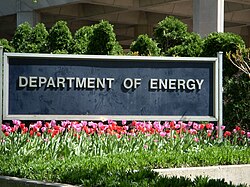
Headquartered in the James V. Forrestal Building in Washington D.C., the department operates on a massive scale, employing thousands of civil servants and contractors to maintain the United States' energy independence and global security posture.
Key Facts
- Founded: August 4, 1977.
- Current Leadership: Secretary Chris Wright and Deputy Secretary James Danly.
- Annual Budget: $45.7 billion (2023).
- Workforce: 14,382 civil servants (2018) and 93,094 contractors (2008).
- Primary Mandate: Energy policy, nuclear weapons stewardship, and advanced scientific research.
Organizational Evolution and the Genesis Mission
The DOE has undergone several structural changes to align with shifting national priorities. A significant reorganization occurred in February 2022 to better implement clean energy investments. More recently, in November 2025, a new reorganization was announced to further align the department with current administration priorities, pending Congressional authorization.
One of the most ambitious recent initiatives is the Genesis Mission, launched via executive order in November 2025. This mission leverages artificial intelligence (AI) and advanced computing across DOE national laboratories to accelerate scientific discovery and bolster national security capabilities. By December 18, 2025, the DOE had established collaboration agreements with 24 different organizations to support this AI-driven initiative.
Department Structure and Governance
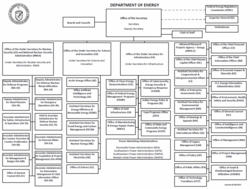
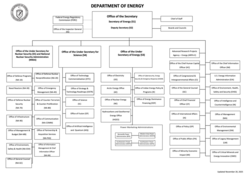
The DOE is organized into several high-level offices and under-secretariats that manage diverse portfolios, from renewable energy to nuclear warheads. Key divisions include:
- Under Secretary for Nuclear Security: Oversees the National Nuclear Security Administration (NNSA).
- Under Secretary for Science and Innovation: Manages the Office of Science and various energy efficiency and renewable energy programs.
- Under Secretary for Infrastructure: Coordinates the National Laboratory Operations Board and grid deployment.
- Loan Programs Office: Provides financial guarantees for innovative energy projects.
Specialized Agencies and Programs
The DOE also houses several autonomous or semi-autonomous entities, such as the Energy Information Administration (EIA), which provides independent energy statistics, and the Advanced Research Projects Agency-Energy (ARPA-E). Created in 2007, ARPA-E focuses on high-risk, high-reward energy technologies that are too early for private sector investment.
National Laboratories and Facilities
The backbone of the DOE's research capability is its network of national laboratories. These facilities conduct fundamental research in physics, chemistry, and materials science, while others focus on specific security missions.
| Facility Name | Primary Focus/Role |
|---|---|
| Los Alamos & Lawrence Livermore | Nuclear weapons design and research |
| Sandia National Laboratories | Non-nuclear component engineering and system integration |
| Pantex Plant | Final weapon and warhead assembly and dismantling |
| Nevada National Security Site | Nuclear weapons testing |
| Oak Ridge & Argonne | Multidisciplinary scientific research |
| Bettis & Knolls Atomic Labs | Nuclear propulsion for the U.S. Navy |
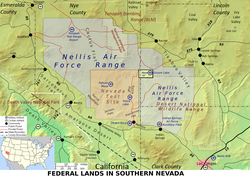
The Nevada National Security Site, formerly known as the Nevada Test Site, remains a critical location for the nation's security infrastructure.
Budgetary Allocation
The DOE's financial resources are distributed across its primary missions. Based on budget data, the largest share is dedicated to Nuclear Security, followed by Energy and Environment and Science. This distribution reflects the department's dual role as both a scientific research hub and the steward of the U.S. nuclear arsenal.
Frequently Asked Questions
What is the purpose of the Genesis Mission?
The Genesis Mission is an initiative launched in November 2025 to apply artificial intelligence and advanced computing to accelerate scientific research and enhance energy and national security capabilities.
Which facilities are responsible for U.S. nuclear weapons?
The process is split among several sites: Sandia National Laboratories handles non-nuclear engineering, the Nevada National Security Site is used for testing, and the Pantex Plant is responsible for final assembly and dismantling.
What does ARPA-E do?
The Advanced Research Projects Agency-Energy (ARPA-E) funds high-potential, high-risk research and development of energy technologies that could transform energy creation, delivery, and use.
Who currently leads the Department of Energy?
As of February 4, 2025, the Department of Energy is led by Secretary Chris Wright.
What is the role of the NNSA?
The National Nuclear Security Administration (NNSA) is a semi-autonomous agency within the DOE responsible for maintaining the safety and security of the U.S. nuclear weapons stockpile.