Kimchi: The Heart of Korean Culinary Tradition
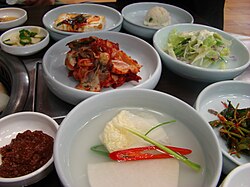
Kimchi is more than just a side dish; it is a cornerstone of Korean identity and a global symbol of fermented health. Served as banchan (traditional Korean side dishes), kimchi consists of salted and fermented vegetables, most commonly napa cabbage and Korean radish, seasoned with a variety of spices. Whether served cold or at room temperature, it provides a complex balance of spicy, sour, and savory flavors that complement almost every Korean meal.
The cultural significance of kimchi is so profound that the practice of making and sharing it, known as kimjang, has been recognized as an Intangible Cultural Heritage of Humanity by UNESCO, with submissions from both South Korea (2013) and North Korea (2015). Its global reach is further evidenced by official recognitions, such as the proclamation of "Kimchi Day" on November 22 by the Governor of Maryland in 2022.

Key Facts
- Origin: Korea.
- Primary Ingredients: Napa cabbage, Korean radish, chili powder (gochugaru), garlic, and fish sauce.
- Cultural Status: UNESCO Intangible Cultural Heritage of Humanity.
- Consumption: Adult Koreans typically consume between 50g and 200g daily.
- Nutritional Value: Rich in Vitamin A, Vitamin C, and dietary fiber.
Ingredients and Production
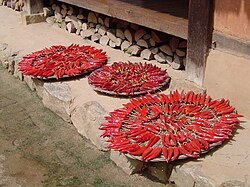
The creation of kimchi is a precise process of brining and seasoning. The primary vegetables, such as napa cabbage, are often marinated twice in salt to ensure the correct texture and preservation. The signature heat comes from gochugaru, a powder made from dried chili peppers.
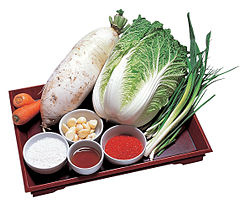
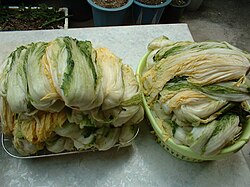
To create the seasoning paste, a sticky, glutinous paste made from rice flour is combined with chili powder, garlic, and other aromatics. This mixture is then rubbed into the salted vegetables. The resulting product undergoes fermentation, driven by microorganisms that produce the characteristic tangy odor and probiotic benefits of the dish.
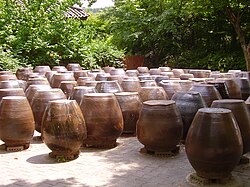
Traditionally, kimchi was stored in onggi, which are breathable earthenware jars that allow for optimal fermentation and temperature control.
Varieties and Seasonal Consumption
While many people associate kimchi solely with spicy cabbage, there are dozens of variations based on ingredients, fermentation time, and region.
Common Types of Kimchi
- Baechu-kimchi: The most iconic spicy napa cabbage kimchi.
- Baek-kimchi: A mild "white" kimchi made without chili peppers.
- Kkakdugi: Spicy cubed Korean radish, often containing fermented shrimp.
- Pa-kimchi: A pungent, spicy green onion variety.
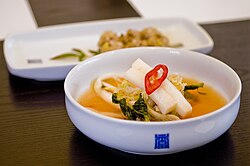
- Dongchimi: A non-spicy, watery radish kimchi popular in winter.
- Yeolmu-kimchi: A cold, watery kimchi consumed mostly in summer, often paired with oily foods.

Age and Usage
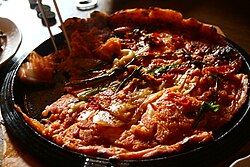
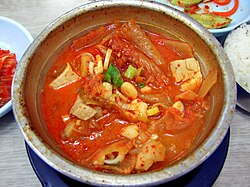
Kimchi is also categorized by its age. Geotjeori is unfermented kimchi meant to be eaten fresh, while mugeun-ji refers to aged, well-fermented kimchi. These different stages of fermentation allow kimchi to be used in various ways, from fresh salads to cooked dishes like kimchi jjigae (a hearty stew) or kimchi-buchimgae (savory pancakes).
Nutritional Profile
Kimchi is highly regarded for its nutritional density. It is low in calories but high in essential vitamins and minerals. The fermentation process enhances the availability of certain nutrients, particularly B vitamins and Vitamin C, over the first few weeks of aging.
| Variety | Calories (kcal) | Protein (g) | Carbohydrates (g) | Dietary Fiber (g) | Vitamin C (mg) |
|---|---|---|---|---|---|
| Baechu-kimchi | 18 | 2.0 | 3.9 | 3.0 | 14 |
| Kkakdugi | 33 | 1.6 | 7.4 | 2.8 | 19 |
| Gat-kimchi | 41 | 3.9 | 8.5 | 4.0 | 48 |
| Pa-kimchi | 52 | 3.4 | 11.8 | 5.1 | 19 |
| Baek-kimchi | 8 | 0.7 | 2.0 | 1.4 | 10 |
Frequently Asked Questions
What is the difference between Baechu-kimchi and Baek-kimchi?
Baechu-kimchi is the spicy version made with napa cabbage and chili powder, whereas Baek-kimchi is a "white" kimchi made without chili peppers, resulting in a milder flavor.
How is kimchi stored traditionally?
Traditionally, kimchi is stored in onggi, which are specialized earthenware jars that facilitate the fermentation process.
Is kimchi always spicy?
No. While many varieties are spicy due to the use of gochugaru, others like Baek-kimchi and Dongchimi are non-spicy or mildly seasoned.
What are the health benefits of kimchi?
Kimchi is a probiotic food rich in vitamins A, B, and C, as well as dietary fiber, which contributes to overall nutritional health.
What is the role of rice flour in kimchi?
A glutinous paste made from rice flour is used as a base for the seasoning, helping the chili and garlic paste adhere to the vegetables during the fermentation process.