Kimberly Prather and the Science of Atmospheric Aerosols
The composition of the air we breathe is a complex mixture of gases and tiny suspended particles known as aerosols. Understanding these particles is critical for evaluating their impact on human health, cloud formation, and global climate change. Dr. Kimberly Prather, a faculty member at the University of California, San Diego, within the Department of Chemistry and Biochemistry and the Scripps Institution of Oceanography, has spent her career developing the tools and theories necessary to decode these atmospheric mysteries.
Key Facts
- ATOFMS: Prather developed Aerosol Time-of-Flight Mass Spectrometry to analyze single particle composition and size with high resolution.
- Pollution Sources: Research revealed that particles between 50 and 300 nm near freeways are primarily from heavy-duty (51%) and light-duty (32%) vehicles.
- CAICE: Prather is the founding director of the NSF Center for Aerosol Impacts on Climate and the Environment.
- Sea Spray: Her team identified "film" drops (rich in microbes/organics) and "jet" drops (mainly sea salt) as the two primary types of sea spray droplets.
- Recognition: She received the 2024 National Academy of Sciences Award in Chemical Sciences.
Revolutionizing Aerosol Detection with ATOFMS
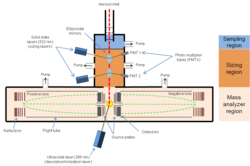
In the early 2000s, Prather focused on identifying the primary sources of fine particle pollution in California and the Northeastern United States. To achieve this, she developed Aerosol Time-of-Flight Mass Spectrometry (ATOFMS), a sophisticated technique that allows scientists to distinguish between different aerosol sources based on the size and chemical composition of single particles.
By refining this technology, Prather was able to study ultrafine particles—extremely small particles that can have significant health effects. Her work with the University of Rochester utilized a specialized ultrafine ATOFMS to analyze vehicle exhaust, discovering that the majority of particles between 50 and 300 nm alongside freeways originated from heavy-duty and light-duty vehicles. Today, ATOFMS is a standard tool used in atmospheric studies globally.
Advancing Chemical Analysis and Calibration
Between 2003 and 2006, Prather expanded the capabilities of ATOFMS to measure carbonaceous components, specifically distinguishing between organic carbon (OC) and elemental carbon (EC), including polycyclic aromatic hydrocarbons (PAHs). Her research explored how these carbons associate with sulfate, nitrate, and ammonium.
To make real-time analysis of ambient particles possible, her group implemented an artificial neural network known as ART-2a to calibrate and classify ATOFMS data. This innovation allowed for more precise apportionment of particles in the atmosphere.
From Cloud Formation to Ocean Interactions
The impact of aerosols extends beyond air quality to the very water we drink and the weather we experience. As co-lead scientist of CalWater, Prather investigated how aerosols affect the water supply on the U.S. West Coast. This research led to the ICE-L (Ice in Clouds Experiment - Layer Clouds) study, which utilized "Shirley," the first aircraft-mounted ATOFMS.
Flying over Wyoming, the team discovered that ice crystals were primarily composed of biological particles (such as fungal spores, bacteria, or plants) or dust. These findings are essential for understanding how particles influence precipitation and cloud formation.
The Role of CAICE and SOARS
In 2010, Prather founded the NSF Center for Aerosol Impacts on Climate and the Environment (CAICE). Under her leadership, the center has demonstrated that bioaerosols and dust traveling from the Sahara Desert can actually enhance precipitation in the Western United States.
Prather's current research focuses on the ocean-atmosphere interface. By using "ocean-in-the-lab" experiments, her team simulates waves and adds nutrients to study how microbes become airborne. This led to the discovery of two distinct sea spray droplet types: film drops, which are rich in organic materials and microbes, and jet drops, which consist mainly of sea salt.
To further this research, the Scripps Ocean Atmosphere Research Simulator (SOARS) became operational in 2022. This facility allows researchers to control variables like carbon dioxide, sunlight, temperature, and pollution to observe their effects on the ocean and atmosphere.
Summary of Research Contributions
| Focus Area | Key Innovation/Finding | Impact |
|---|---|---|
| Instrumentation | Development of ATOFMS | High-resolution single particle analysis worldwide |
| Urban Pollution | Vehicle exhaust analysis (50-300 nm) | Identified heavy-duty vehicles as primary source (51%) |
| Cloud Physics | ICE-L aircraft study | Linked ice crystals to dust and biological particles |
| Marine Science | Sea spray classification | Distinguished between "film" and "jet" droplets |
| Climate Simulation | SOARS Facility | Study of CO2 and pollution on ocean-atmosphere interaction |
Frequently Asked Questions
What is ATOFMS?
Aerosol Time-of-Flight Mass Spectrometry (ATOFMS) is an analytical technique developed by Dr. Prather that provides high temporal and size resolution to determine the chemical composition and size of individual aerosol particles.
How do aerosols affect precipitation?
Research from CAICE has shown that certain particles, including dust and bioaerosols traveling from as far as the Sahara, can act as nuclei that enhance precipitation in regions like the Western United States.
What is the difference between film and jet drops in sea spray?
Film drops are droplets that are rich in organic materials and microbes, whereas jet drops primarily contain sea salt and other biological species.
What is the purpose of the SOARS facility?
The Scripps Ocean Atmosphere Research Simulator (SOARS) is used to study how factors such as wind, temperature, sunlight, pollution, and carbon dioxide levels impact the interaction between the ocean and the atmosphere.
What are the primary sources of ultrafine particles near freeways?
According to Prather's research, particles between 50 and 300 nm near freeways are mainly attributed to heavy-duty vehicles (51%) and light-duty vehicles (32%).