Khudadad Khan: The First Indian Recipient of the Victoria Cross
In the annals of military history, few stories are as poignant as that of Khudadad Khan, a soldier whose extraordinary courage on the battlefields of Belgium earned him the highest honor for gallantry in the British and Commonwealth forces. Serving during the First World War, Khan became a symbol of bravery and the first British Indian subject to be awarded the Victoria Cross (VC).
The Victoria Cross is the premier award for valor in the face of the enemy. While members of the British Indian Army became eligible for the award in 1911—replacing the Indian Order of Merit first class—it was Khudadad Khan who first achieved this distinction through a feat of endurance and sacrifice that helped turn the tide of a critical engagement.
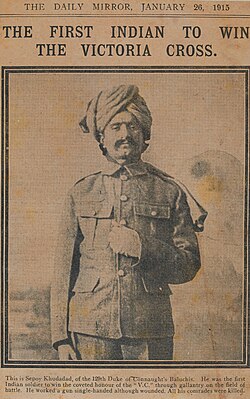
Key Facts
- Full Name: Khudadad Khan
- Award: Victoria Cross (VC)
- Unit: 129th Duke of Connaught's Own Baluchis
- Conflict: First World War (Western Front)
- Key Action: Defense of Hollebeke, Belgium, on October 31, 1914
- Historical Milestone: First Indian recipient of the Victoria Cross
- Final Rank: Subedar
Early Life and Military Service
Khudadad Khan was born on October 20, 1888, in the village of Dab, located in the Chakwal District of the Punjab Province in British India (modern-day Pakistan). Born into a Punjabi Muslim Rajput family of the Minhas clan, he joined the British Indian Army as a Sepoy (a private soldier) in the 129th Duke of Connaught's Own Baluchis.
In 1914, his battalion was part of the I Corps (British India) deployed to France and Flanders to reinforce British forces on the Western Front—the main theater of war in Western Europe. Khan's early experiences in the conflict included the defense of Lille before the city was eventually overrun by German forces.
The Heroism at Hollebeke
The defining moment of Khan's military career occurred during the First Battle of Ypres in October 1914. The 129th Baluchis were rushed to the frontline to support British troops who were under severe pressure. On October 31, near the village of Gheluvelt in the Hollebeke Sector, two companies of the Baluchis faced a massive German assault.
Outnumbered and suffering heavy casualties, the Baluchis fought desperately. Khan's machine-gun team was one of only two that remained operational throughout the day, providing critical cover that prevented a total German breakthrough. As the battle raged, a shell disabled the other gun, leaving Khan's team as the sole line of defense.
Eventually, the German forces overran Khan's position. Every member of his gun detachment was killed by bullets or bayonets except for Khan. Despite being severely wounded, he continued to operate his machine gun until he was finally overwhelmed. Left for dead by the enemy, Khan managed to crawl back to his regiment under the cover of night.
His tenacity, and that of his fellow soldiers, delayed the German advance long enough for reinforcements to arrive and secure the line, preventing the German Army from capturing vital ports.
Recognition and Official Citation
The official citation published in the London Gazette on December 7, 1914, noted that Sepoy Khudadad remained at his post even after his commanding officer was wounded and his teammates had fallen. Because of his injuries, he was unable to receive the medal in December 1914. Instead, King George V personally presented the Victoria Cross to Khan on January 26, 1915, during a visit to the troops in France.
| Detail | Information |
|---|---|
| Date of Birth | October 20, 1888 |
| Date of Death | March 8, 1971 (Aged 82) |
| Place of Birth | Dab, Punjab Province, British India |
| Place of Burial | Chak No. 25, Mandi Bahauddin, Pakistan |
| VC Presentation Date | January 26, 1915 |
| Retirement Rank | Subedar (1929) |
Later Life and Lasting Legacy
Following his recovery at the Royal Pavilion military hospital in Brighton, Khan continued his service and eventually retired as a Subedar in 1929, returning to the Punjab. He remained a respected figure, visiting Britain several times, including for the Victoria Cross centenary review parade in Hyde Park in 1956.
At the time of his death on March 8, 1971, he was the last surviving British Indian World War I veteran who had served on the Western Front. Today, his legacy is preserved through a statue at the entrance of the Pakistan Army Museum in Rawalpindi and a play titled Wipers by Ishy Din, which dramatizes his courage.
His Victoria Cross is currently housed in the Ashcroft Gallery at the Imperial War Museum in London, although some historical reports suggest the original medal may have been stolen in Rawalpindi in 1950, leading to debates regarding the authenticity of the displayed piece.
Frequently Asked Questions
Who was Khudadad Khan?
Khudadad Khan was a soldier in the British Indian Army's 129th Duke of Connaught's Own Baluchis and the first Indian subject to be awarded the Victoria Cross for his bravery during World War I.
What act of bravery earned him the Victoria Cross?
During the First Battle of Ypres on October 31, 1914, at Hollebeke, Belgium, Khan continued to operate his machine gun despite being wounded and seeing all five of his teammates killed, successfully delaying a German breakthrough.
When did he receive the Victoria Cross?
He was presented with the medal by King George V on January 26, 1915, during a royal visit to the troops in France.
Where is Khudadad Khan buried?
He is buried in Chak No. 25, Mandi Bahauddin, in Pakistan.
Where can the Victoria Cross be seen today?
The medal is on display at the Ashcroft Gallery in the Imperial War Museum in London, though there have been historical reports that the original may have been stolen in 1950.