Khosrow I: The Philosopher King of the Sasanian Empire
Khosrow I, known to history by the epithet Anushirvan (meaning "the Immortal Soul"), reigned as the Sasanian King of Kings from 531 to 579 CE. A figure of immense intellectual and political influence, he inherited a reinvigorated empire and transformed it into a powerhouse of the late antique world through sweeping administrative reforms and strategic military campaigns.
His legacy is preserved not only in the archaeological record but also in the great literary traditions of the East, including the Persian epic Shahnameh ("Book of Kings") and the Arabic histories of al-Tabari. To many, he remains the archetype of the "Philosopher King," balancing the brutal necessities of empire with a profound patronage of the arts and sciences.
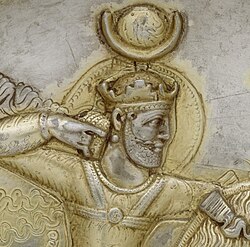
Key Facts
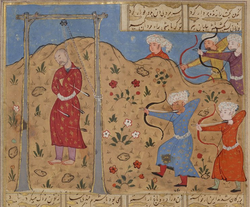
- Reign: September 13, 531 – February 579 CE.
- Dynasty: House of Sasan.
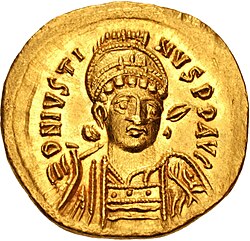
- Major Conflict: Prolonged wars with the Byzantine Empire under Justinian I and Justin II.
- Key Achievement: Implementation of comprehensive tax, military, and administrative reforms.
- Intellectual Hub: Patron of the Academy of Gondishapur.
- Religion: Zoroastrianism.
The Struggle for Stability: Accession and Early Diplomacy
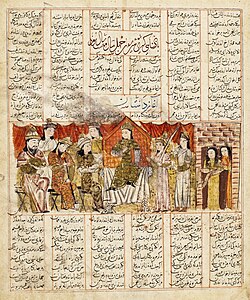
Khosrow I succeeded his father, Kavad I, in 531 CE during a period of intense conflict with the Byzantine Empire. Recognizing that his domestic position was insecure, Khosrow initially sought a conciliatory approach to foreign policy. This led to the Perpetual Peace of 532 CE.
Under this agreement, the Byzantine Emperor Justinian I paid 11,000 pounds of gold to the Sasanians, ostensibly to support the defense of the Caucasus passes against northern barbarians. While the treaty included the exchange of occupied forts and the recognition of mutual equality between the two rulers, the peace was fragile.
Military Campaigns and the Byzantine Rivalry
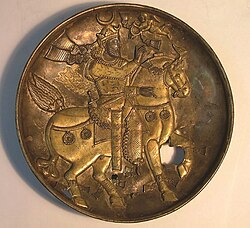
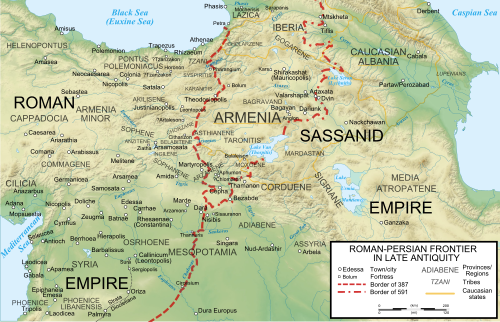
The peace did not last. Encouraged by Ostrogoth envoys and dissatisfied with the actions of the Ghassanids (Byzantine clients), Khosrow declared war in 540 CE. He launched a devastating invasion of Syria, sacking the major city of Antioch and deporting its population to Persia.
The Lazic War
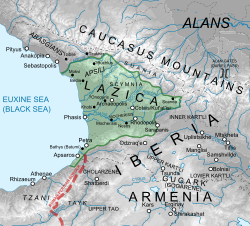
In 541 CE, Khosrow invaded Lazica, turning it into an Iranian protectorate. This sparked the Lazic War, a grueling conflict characterized by shifting fronts. While Mesopotamia and Syria saw a temporary halt in fighting by 545 CE, the struggle for Lazica continued until a fifty-year peace treaty was finally signed in 562 CE, which saw the Iranians leave Lazica in exchange for annual gold payments.
Expansion in the East and South
Beyond the Roman frontier, Khosrow focused on securing the empire's eastern borders. He reconquered regions in Tokharistan that had been lost during the reign of Peroz I. He also engaged in diplomatic maneuvers with the Turkic Khaganate, eventually marrying a Turkic princess, Qaqim-khaqan, to stabilize the frontier.
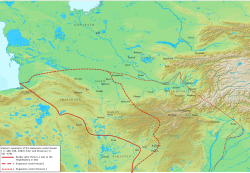
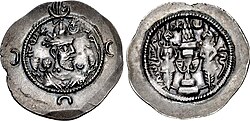
![Later imitation of a drachm of Khosrow I from the Surkhan Darya valley, Tokharistan, a region that was lost during the reign of Peroz I, but was later reconquered by Khosrow I[69]](/images/bd/47/bd4732b21819d1b95f715d76ed4a5f6a9d90436857bb079d7480872678190b7c.jpg)
Internal Reforms and Governance
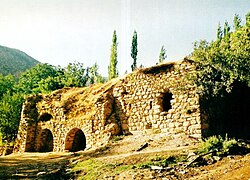
Khosrow I is perhaps most famous for his internal restructuring of the Sasanian state. He implemented rigorous tax reforms and administrative changes that increased the efficiency of the empire's revenue collection and governance.
His military reforms focused on improving equipment and organization, ensuring the Sasanian army could withstand both the professional legions of Rome and the nomadic incursions from the steppes. These efforts were complemented by massive construction projects, including the fortification of the frontier at Derbent and the Great Wall of Gorgan.
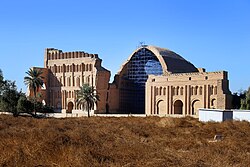
The Philosopher King and Cultural Legacy
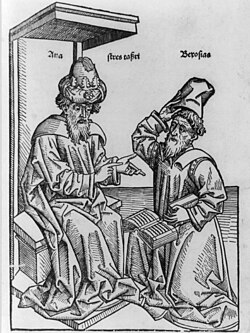
Khosrow I was a renowned patron of knowledge. He established the Academy of Gondishapur as a center for philosophy, medicine, and science, where scholars from various backgrounds converged. He is credited with overseeing the translation of foreign texts, including the Indian Panchatantra, translated by Borzuya.
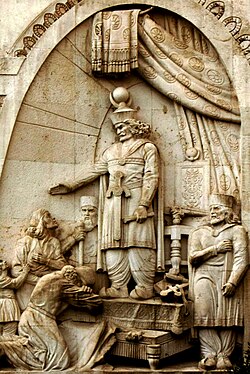
His court was a hub of intellectual exchange, where he engaged with viziers like Bozorgmehr and explored the complexities of philosophy. This image of the enlightened ruler persists in modern Iranian culture, as seen in statues commissioned during the Pahlavi dynasty.
Summary of Khosrow I's Reign
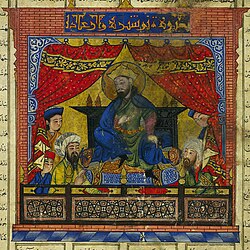
![King Khosrow sits before the chessboard, while his vizir and the Indian envoy of Kannauj are playing chess. Shahnama, 10th century CE.[109]](/images/a8/19/a819dd5e202bd0a782877cdd7db6b2026b2dda55959b9067fa933948e1202c95.jpg)
| Category | Details |
|---|---|
| Period | 531 – 579 CE |
| Key Adversary | Byzantine Empire (Justinian I, Justin II) |
| Major Treaties | Perpetual Peace (532), Fifty-Year Peace (562) |
| Territorial Focus | Syria, Lazica, Tokharistan, Yemen |
| Cultural Contribution | Academy of Gondishapur, translation of Indian texts |
| Successor | Hormizd IV |
Frequently Asked Questions
Why was Khosrow I called Anushirvan?
The epithet Anushirvan translates to "the Immortal Soul," reflecting his enduring legacy as a just and wise ruler in Persian tradition.
What was the significance of the Perpetual Peace of 532?
It was a diplomatic agreement where the Byzantine Empire paid 11,000 pounds of gold to the Sasanians to secure peace, allowing Khosrow I to consolidate his power internally before resuming conflicts.
What were the Lazic Wars?
The Lazic Wars were a series of conflicts between the Sasanian and Byzantine Empires over control of Lazica (modern-day Georgia), ending in 562 CE when the Sasanians withdrew in exchange for annual payments.
How did Khosrow I contribute to science and philosophy?
He was a great patron of learning who supported the Academy of Gondishapur and encouraged the translation of intellectual works from India and other regions into Middle Persian.
Who succeeded Khosrow I?
He was succeeded by his son, Hormizd IV, in February 579 CE.