Sasanian Empire: The Last Great Iranian Empire of Antiquity
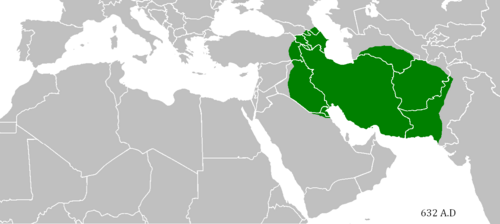
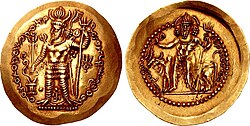
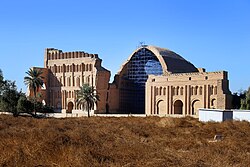
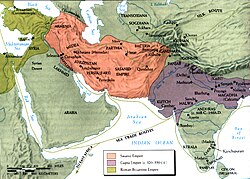
The Sasanian Empire (224–651 AD), known in Middle Persian as Ērānšahr, represented the final peak of ancient Iranian civilization before the arrival of Islam. Emerging from the ruins of the Parthian Empire, the Sasanians established a highly centralized feudal monarchy that positioned itself as the primary rival to the Roman and Byzantine Empires. From its capital at Ctesiphon, the empire projected power across Mesopotamia, Central Asia, and the Caucasus, leaving an indelible mark on the art, religion, and governance of Late Antiquity.
The empire was characterized by its devotion to Zoroastrianism, its sophisticated military machine, and a rigid social hierarchy that balanced the power of the Shahanshah (King of Kings) with a powerful landed nobility.
Key Facts
- Duration: 224 AD to 651 AD.
- Official Religion: Zoroastrianism.
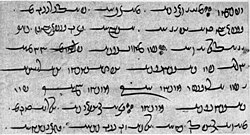
- Official Language: Middle Persian.
- Capitals: Istakhr (224–226) and Ctesiphon (226–637).
- Peak Area: Approximately 3,500,000 square kilometers.
- Major Rivals: The Roman Empire and the Byzantine Empire.
Origins and the Rise of the Dynasty (205–310)
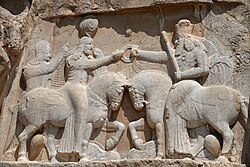
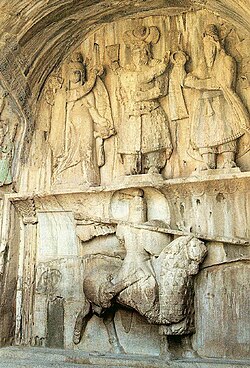
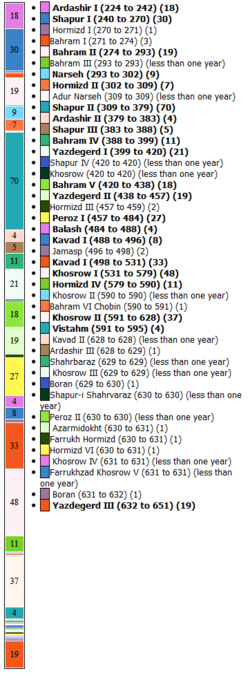
The Sasanian dynasty began with Ardashir I, who overthrew the Parthian Empire in 224 AD following the Battle of Hormozdgan. Ardashir I sought to restore the glory of the Achaemenids, reviving Zoroastrianism as the official state religion and assembling the Zend Avesta, the sacred collection of Zoroastrian texts.
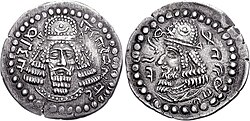
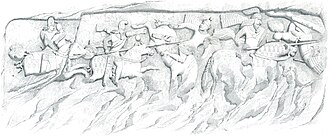
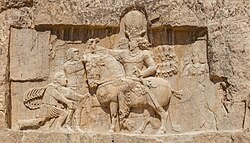
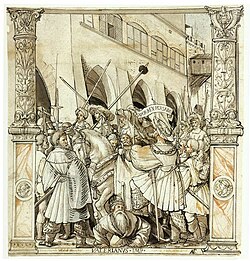
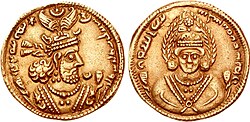
Ardashir's successor, Shapur I "the Great," expanded the empire's reach and prestige. His reign is most famous for the decisive victory at the Battle of Edessa in 260 AD, where he captured the Roman Emperor Valerian—a rare and humiliating event in Roman history.
The early era also saw the rise of Mani, the founder of Manichaeism, a syncretic religion that attempted to blend elements of Zoroastrianism, Buddhism, and Christianity, spreading rapidly across the empire's territories.
![The spread of Manichaeism (300–500)[40]](/images/b5/b3/b5b3cde02f9809bd61dd6d854110733b97c18050a3b605b5d3a2376f6c68586f.png)
The Golden Eras and Imperial Stability
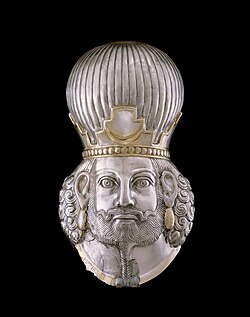
The First Golden Era (309–379)
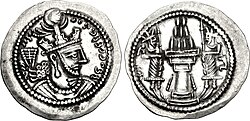
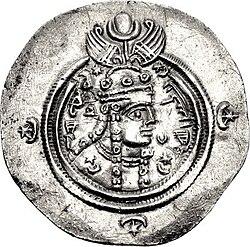
Under Shapur II, the empire experienced a period of significant strength. Shapur II focused on securing the frontiers, engaging in prolonged conflicts with Rome and managing the volatile borders of Armenia. Despite some setbacks, such as the victory of joint Roman-Armenian forces at Bagavan in 371 AD, the empire remained a dominant global power.
The Intermediate Era (379–498)
Following Shapur II, the empire entered a period of fluctuating stability. While rulers like Bahram IV and Yazdegerd I navigated complex diplomatic waters, Yazdegerd II adopted harsher policies toward minority religions, particularly Christianity. This led to the Battle of Avarayr in 451 AD, where Armenian subjects fought for the right to profess Christianity, eventually leading to the Nvarsak Treaty of 484 AD which granted religious freedom.
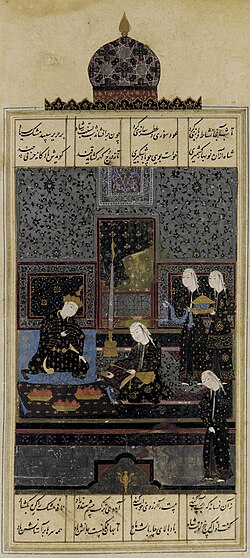
The Second Golden Era (498–622)
The empire reached a new zenith under Khosrow I and later Khosrow II. This period was marked by administrative reforms and a massive expansion of influence. Khosrow II took advantage of Byzantine civil wars to overrun Syria and capture Antioch in 611 AD, bringing the Sasanian Empire to its greatest territorial extent.
Decline and Final Collapse (622–651)
The overextension of the military and the exhaustion of the national treasury under Khosrow II created internal fragility. To fund his wars, Khosrow overtaxed the population, leading to widespread discontent. Simultaneously, the Byzantine Emperor Heraclius launched a daring counter-offensive between 622 and 627 AD, sacking the great Zoroastrian temple at Ganzak and pushing the Persians back.
A period of civil war and instability (628–632) left the empire vulnerable. The final blow came from the Rashidun Caliphate. Despite the efforts of Yazdegerd III, the Sasanian army suffered crushing defeats at the Battle of al-Qadisiyyah (636 AD) and the Battle of Nihawand (642 AD). By 651 AD, the empire had fallen, and Yazdegerd III was killed while as a fugitive.
Government, Society, and Military
![Early Alchon Huns coin based on the coin design of Shapur II, adding the Alchon Tamgha symbol and Alchono (αλχοννο) in Bactrian script on the obverse. Dated 400–440.[60]](/images/28/e6/28e66a2b32123e341c875c5a5f813a0bf52e09c1d8d1851b02d3b14e08150faa.jpg)
The Sasanian state was a feudal monarchy. At the top was the Shahanshah, supported by a rigid four-tier class system:
- Asronan: The priests.
- Arteshtaran: The warriors.
- Wastaryoshan: The commoners.
- Hutukhshan: The artisans.
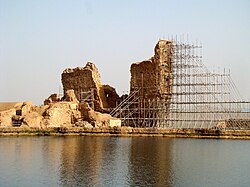
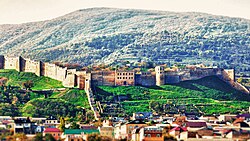
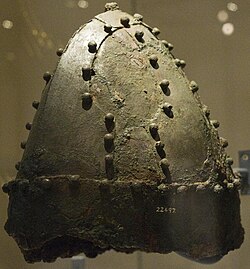
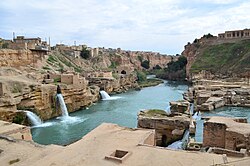
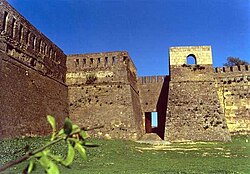
The military was renowned for its heavy cavalry, known as cataphracts, who wore scale armor and utilized lances in combat. The empire also invested heavily in infrastructure, such as the Walls of Derbent to defend against northern incursions and the Shushtar Historical Hydraulic System for irrigation.
Culture, Science, and Religion
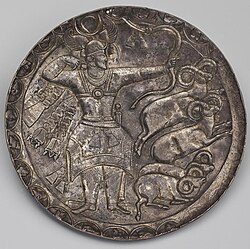
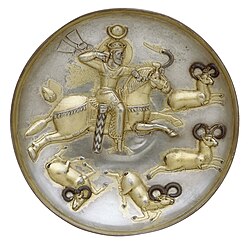
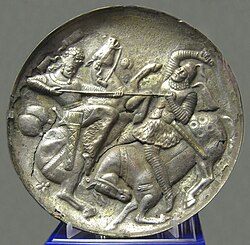
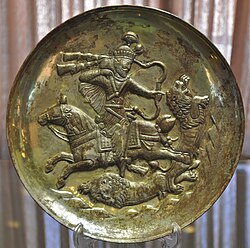
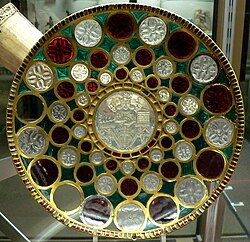
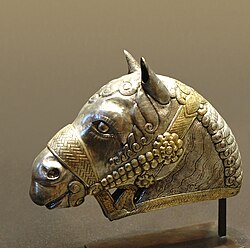
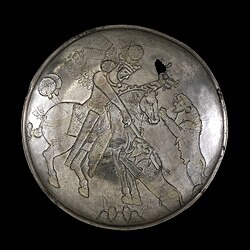
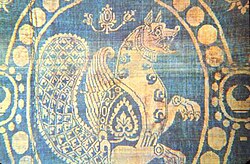
Sasanian culture was a blend of traditional Iranian values and cosmopolitan influences. Education flourished at the "Grand School" in the capital, which grew from 50 to over 30,000 students within a century. In the arts, the Sasanians were masters of silverwork, producing intricate plates depicting royal hunts and mythical creatures like the Simurgh.
![A Sasanian silver plate featuring a simurgh. The mythical bird was used as the royal emblem in the Sasanian period.[143]](/images/5c/8b/5c8b6b1240a852a2bd98322bb9f26e8e331ddaaa42b43716bab2ef5a9d563656.jpg)
Religion was central to Sasanian identity. While Zoroastrianism was the state faith, the empire was a crossroads for other beliefs. The Sasanians also reformed the calendar, adding five "Gatha days" to the traditional 12-month Zoroastrian calendar to align it more closely with the solar year without disturbing religious observances.
| Era | Key Ruler(s) | Defining Characteristic | Major Event |
|---|---|---|---|
| Origins | Ardashir I, Shapur I | Establishment & Expansion | Capture of Emperor Valerian (260) |
| First Golden Era | Shapur II | Frontier Consolidation | Armeno-Sasanian Wars |
| Intermediate Era | Yazdegerd I, Bahram V | Religious Tension | Battle of Avarayr (451) |
| Second Golden Era | Khosrow I, Khosrow II | Territorial Apex | Capture of Antioch (611) |
| Collapse | Yazdegerd III | Internal Decay & Conquest | Battle of Nihawand (642) |
Frequently Asked Questions
![Foreign dignitary drinking wine, on ceiling of Cave 1, at Ajanta Caves, possibly depicting the Sasanian embassy to Indian king Pulakesin II (610–642), photograph and drawing[122]](/images/26/70/267049a141c15f2394d4cbe25c4f153fc939468102018086eb86b85fb1c6230e.jpg)
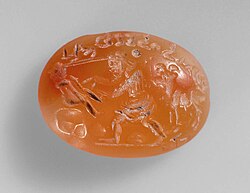
![Seal of a Sassanian nobleman holding a flower, c. 3rd–early 4th century AD[157]](/images/73/cb/73cbd0925f101c8c0e8384811020f00967720de31ad49f6f5a4c711a89ea9875.jpg)
Who founded the Sasanian Empire?
The empire was founded by Ardashir I, who overthrew the Parthian Empire in 224 AD after the Battle of Hormozdgan.
What was the official religion of the Sasanians?
Zoroastrianism was the official state religion, though the empire also hosted communities of Christians, Jews, Buddhists, and followers of Manichaeism.
How did the Sasanian Empire fall?
The empire collapsed due to a combination of internal exhaustion from wars with the Byzantines, overtaxation of the peasantry, and the decisive military conquests of the Rashidun Caliphate in the 7th century.
What was the significance of Ctesiphon?
Ctesiphon served as the imperial capital for most of the empire's history and grew into one of the most populous and commercially rich metropolises in the world between 570 and 622 AD.
Who was the most successful Sasanian military leader?
Shapur I is often cited for his immense success, most notably for defeating and capturing the Roman Emperor Valerian at the Battle of Edessa.