Kenosha Streetcar System: A Blend of Historic Transit and Modern Urbanism
At the turn of the 21st century, Kenosha revitalized its waterfront by integrating a modern electric streetcar system into the HarborPark development on the shores of Lake Michigan. By utilizing historic PCC streetcars—a standardized design of streamlined electric cars—the city created more than just a transit link; it established a global model for urban planners. Today, the system is a cornerstone of local tourism, utilized by approximately 30% of all visitors to Kenosha.
Engineering and Infrastructure
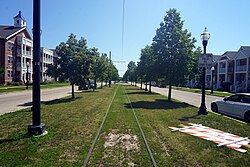
The construction of the line began in the autumn of 1998 with the installation of the track sub-base. In a sustainable engineering move, the city used crushed concrete sourced from the foundations of the 1870-era Simmons Bedding Company and American Motors Corporation office and plant buildings. By the fall of 1999, crews had installed 115-pound-per-yard (57 kg/m) continuously welded rail over modern concrete ties, though standard wooden ties were used at grade crossings.
To power the fleet, an electric overhead line system was completed in April 2000. This system operates on 600-volt direct current (DC), energized by a modern solid-state substation.
The 'Red Rocket' Fleet
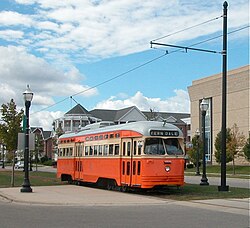
The heart of the system is its fleet of historic PCC A15-class streetcars, affectionately known as the "Red Rockets." These vehicles have a complex manufacturing history: they were built in 1951 in Fort William, Ontario, by the Canadian Car and Foundry Company under license from the Transit Research Corporation. The car bodies were originally manufactured by the St. Louis Car Company, shipped to Canada, and later remanufactured and rebodied from the windows down in 1991.
Each car features a unique livery—a specific paint scheme—that pays homage to a historic North American transit system that once operated PCC cars. The fleet includes representatives from:
- 4610 'Toronto' (originally 4541), the first car delivered on May 4, 2000.
- 4606: Chicago Surface Lines
- 4609: Pittsburgh Railways Company
- 4615: Johnstown Traction Company
- 4616: Cincinnati Street Railways
- 4617: San Francisco Municipal Railway
- 2185: Southeastern Pennsylvania Transportation Authority (SEPTA)
Fleet Expansions
In October 2011, the city's fleet grew through a gift from John DeLamater, who donated two additional cars previously owned by the East Troy Electric Railroad. Car 4617, built for Toronto in 1951 and rebuilt in 1986, arrived on October 10. Car 2185, built in 1948 for the Philadelphia Transport Company and later used by SEPTA until 1992, arrived on October 12.
Impact on Urban Development
Beyond transportation, the streetcar system is a primary driver of Transit-Oriented Development (TOD)—the creation of compact, walkable, mixed-use communities centered around high-quality transit. Along with Metra service, the streetcar supports the HarborPark Plan, which includes over 400 upscale urban housing units alongside various retail, commercial, and recreational facilities.
The project serves as a proof-of-concept for reintroducing zero-emission electric transit into Midwestern cities. While the current two-mile downtown route carries over 63,000 passengers annually, expansion efforts have seen mixed results. A 2005 vote to study expansion into the Uptown business district and the southwest was followed by a 2014 approval for a north-south crosstown line; however, the latter was cancelled in 2015 due to unanticipated cost overruns.
| Feature | Specification/Detail |
|---|---|
| Power System | 600-volt DC via solid state substation |
| Rail Type | 115 lb/yd continuously welded rail |
| Annual Ridership | Over 63,000 passengers |
| Route Length | 2 miles (Downtown) |
| Vehicle Class | PCC A15-class streetcars |
Key Facts
- The system officially opened with a ceremonial dedication on June 17, 2000.
- The first car to break the memorial ribbon was 4610 'Toronto', piloted by former 1932 motorman Richard Lindgren.
- The fleet consists of cars built by the Canadian Car and Foundry Company and the St. Louis Car Company.
- The system is used by 30% of Kenosha's visitors.
- The infrastructure utilized recycled concrete from 19th-century industrial buildings.
Frequently Asked Questions
When did the Kenosha streetcar begin regular service?
Regularly scheduled service began on Monday morning, June 19, 2000, two days after the official opening ceremony.
What are PCC streetcars?
PCC streetcars are a historic class of streamlined electric transit vehicles. The Kenosha fleet specifically uses A15-class cars that were remanufactured and rebodied to maintain their operational viability.
How does the streetcar contribute to the local economy?
The system is a major tourist attraction and a key component of the city's transit-oriented development, supporting the HarborPark area's housing, retail, and commercial growth.
Why was the north-south crosstown line cancelled?
Although the city council approved the expansion in 2014, the project was cancelled in 2015 because of unanticipated cost overruns.
What makes the paint schemes on the cars special?
Each streetcar is painted in a unique livery that represents a different historic North American transit system that previously operated PCC cars, such as those from Chicago, Pittsburgh, and San Francisco.