Juniperus communis: The Resilient Common Juniper of the Northern Hemisphere
The Juniperus communis, commonly known as the common juniper, is a remarkable evergreen conifer that holds the distinction of having the largest geographical range of any woody plant. Spanning the cool temperate regions of the Northern Hemisphere, this versatile species thrives from the Arctic tundra to high-altitude mountains, making it a cornerstone of many northern ecosystems.
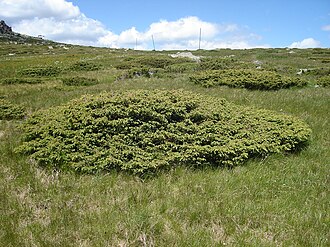
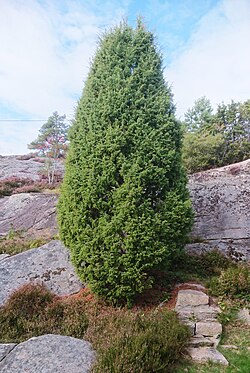
As a member of the Cupressaceae (cypress) family, the common juniper exhibits incredible morphological diversity. Depending on its environment, it can appear as a tall tree reaching up to 16 metres (52 feet) or as a low, prostrate shrub hugging the ground in harsh, exposed locations.
Key Facts
- Scientific Name: Juniperus communis
- Distribution: Holarctic (Northern Hemisphere), including North America, Europe, and Asia.
- Lifespan: Extremely long-lived; male specimens can exceed 2,000 years.
- Reproduction: Dioecious (male and female cones on separate plants) and wind-pollinated.
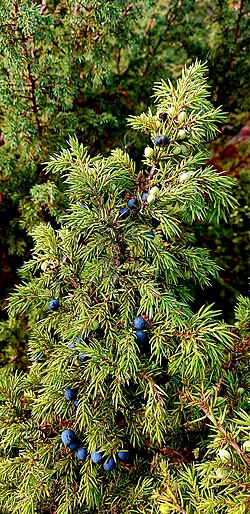
- Fruit: Berry-like cones known as juniper berries, which turn purple-black when ripe.
- Conservation Status: Least Concern (IUCN 3.1).
Botanical Characteristics and Biology
The common juniper is characterized by its needle-like leaves arranged in whorls of three. These green leaves feature a single white stomatal band (a pore-like structure used for gas exchange) on their inner surface. Unlike many other members of its genus, it does not develop scale-like adult foliage.
Because the species is dioecious, meaning individual plants are either male or female, it relies on the wind to transfer pollen from male cones to female cones. The male cones are small, yellow, and typically shed their pollen in March or April. The female cones, which we recognize as "berries," take approximately 18 months to ripen. These fleshy, blue-black cones are dispersed by birds, which consume the scales and pass the hard, unwinged seeds through their droppings.
Longevity and Growth Patterns
Dendrochronological studies—the scientific method of dating tree rings—have revealed that some juniper specimens are among the oldest woody plants in Europe. In the Lapland region of Finland, within the Arctic Circle, researchers have identified a specimen aged at 1,647 years.
Subspecies and Variations
Due to its vast range, Juniperus communis is highly variable. Botanists categorize these variations into several subspecies, though genetic data does not always align perfectly with physical appearance:
- subsp. communis: Typically an erect shrub or small tree found at low to moderate altitudes.
- subsp. alpina: An alpine juniper that grows as a prostrate, ground-hugging shrub in subarctic or high-altitude zones.
- Other variations: Include var. depressa in North America and var. hemisphaerica in Mediterranean mountains.
Practical Uses: From Culinary to Craft
The common juniper is a multi-purpose species with significant cultural and economic value.
Culinary and Beverage Traditions
The "berries" are highly prized for their astringent, blue-black flavor. While too bitter to eat raw, they are used dried to flavor meats, sauces, and stuffings. They are also essential in the production of various spirits and beers:
- Gin: The name itself is derived from an Old French word meaning "juniper."
- Traditional Ales: Used in Finnish sahti, Norwegian farmhouse ales, and Swedish brännvin.
- Regional Spirits: Flavors the Slovak Borovička and Dutch Jenever.
Craftsmanship and Woodworking
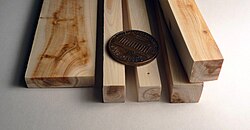
While the tree is generally too small for large-scale lumber, its wood is highly valued for specific crafts. In Scandinavia, it is used for dairy containers and butter knives. In Estonia, the dense, slow-growing wood is prized for its decorative growth rings and aroma, often used for eating utensils. In France, juniper burl wood is a popular material for making high-quality knife handles, such as those for Laguiole pocketknives.
Chemistry and Medicine
The essential oil extracted from juniper berries is rich in monoterpene hydrocarbons, including α-pinene, myrcene, and limonene. Historically, various cultures, including the Navajo, have used the berries for medicinal purposes. Modern science has also found value in the species; fungi found within juniper leaves have yielded ibrexafungerp, an FDA-approved treatment for fungal infections.
Summary of Juniperus communis
| Feature | Details |
|---|---|
| Family | Cupressaceae |
| Leaf Type | Needle-like, whorls of three |
| Fruit Type | Berry-like cones (juniper berries) |
| Primary Uses | Culinary flavoring, spirits, ornamental, crafts |
| Key Chemical Compounds | α-pinene, myrcene, sabinene, limonene |
Frequently Asked Questions
How long can a common juniper live?
Male specimens are particularly long-lived and can survive for more than 2,000 years.
Why are juniper berries used in gin production?
The berries provide a distinct flavor profile; in fact, the word "gin" is derived from an Old French term meaning juniper.
Is the common juniper considered an endangered species?
No, the IUCN classifies Juniperus communis as "Least Concern," and NatureServe lists it as "Secure."
What is the difference between the subspecies?
The main differences lie in growth habit and habitat; for example, subsp. communis is often an erect shrub, while subsp. alpina is a prostrate, ground-hugging plant adapted to alpine or subarctic conditions.
Can juniper wood be used for construction?
Because the trees are relatively small, they are not used for general lumber, but they are used for specialized items like small containers, knives, and shipbuilder's trenails due to their toughness.