Johnson & Johnson: A Legacy of Medical Innovation and Global Healthcare
Johnson & Johnson (J&J) is a global leader in the pharmaceutical, biotechnology, and medical technology sectors. Headquartered in New Brunswick, New Jersey, the company has evolved from a small family venture into one of the world's most influential healthcare corporations. Ranked No. 48 on the 2025 Fortune 500 list and 42nd in the Forbes Global 2000, J&J is distinguished as one of only two U.S.-based companies to hold a prime AAA credit rating from S&P Global.
Key Facts
- Founded: 1886 by Robert Wood Johnson, James Wood Johnson, and Edward Mead Johnson.
- Core Divisions: Innovative Medicine and MedTech.
- 2025 Financials: Revenue of US$ 94.19 billion with a net income of US$ 26.80 billion.
- Workforce: 138,200 employees globally as of 2025.
- Market Status: Publicly traded on the NYSE as JNJ; a component of the DJIA and S&P 500.
The Evolution of a Healthcare Giant
Founding and Early Innovations (1873–1942)
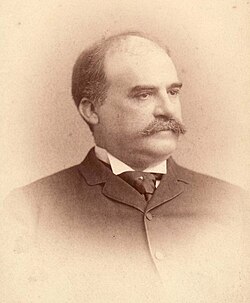
The company's roots trace back to Robert Wood Johnson, who trained as a pharmaceutical apprentice in Poughkeepsie, New York. After co-founding a medicated plaster business in 1873, Johnson was inspired by Joseph Lister's work on antiseptic surgery—a method of preventing infection during surgical procedures. This led to the 1886 founding of Johnson & Johnson alongside his brothers, James and Edward.
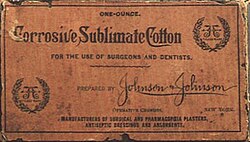
Starting with just 14 employees, the company pioneered ready-to-use sterile surgical dressings. By 1894, J&J expanded into consumer care with the launch of Johnson's Baby Powder. The company also played a critical role in public health and disaster relief, donating surgical dressings during the Spanish-American War and providing aid during the 1900 Galveston hurricane and 1906 San Francisco earthquake.
Innovation continued into the 1920s when Earle Dickson created the first commercial adhesive bandage, leading to the launch of the Band-Aid brand in 1921. By 1931, the company entered the contraceptive market with Ortho-Gynol, the first prescription contraceptive gel.
Modern Expansion and Strategic Shifts
Throughout the mid-to-late 20th century, J&J expanded its global footprint and diversified its portfolio. In recent years, the company has undergone a significant structural transformation. In May 2023, J&J spun off its consumer health division—which included household names like Neutrogena, Tylenol, and Listerine—into a separate public company called Kenvue. By 2024, J&J had fully divested its remaining stake in Kenvue to focus exclusively on high-growth healthcare sectors.

COVID-19 Response and Recent Acquisitions
During the 2020 pandemic, J&J partnered with the U.S. government to produce 100 million doses of the Janssen COVID-19 vaccine, an adenovirus-based vaccine. More recently, the company has aggressively expanded its MedTech and pharmaceutical capabilities through multi-billion dollar acquisitions, including Ambrx Biopharma ($2 billion), Shockwave Medical ($13.1 billion), and Proteologix ($850 million) in 2024.
Business Structure and Global Reach
Johnson & Johnson currently operates through two primary business segments:
- Innovative Medicine: This division focuses on pharmaceutical research and development, accounting for 64% of 2025 revenues. Key subsidiaries include Janssen Pharmaceuticals and Actelion.
- MedTech: This division focuses on medical devices and technology, contributing 36% of 2025 revenues. It encompasses surgery, orthopaedics, interventional solutions, and vision care through subsidiaries like DePuy Synthes and Ethicon.
The company maintains a dominant global presence, with the majority of its revenue generated in the United States, followed by Europe and the Asia-Pacific/Africa regions.
| Metric | Value |
|---|---|
| Total Revenue | US$ 94.19 Billion |
| Net Income | US$ 26.80 Billion |
| Total Assets | US$ 199.2 Billion |
| Total Equity | US$ 81.54 Billion |
| Employee Count | 138,200 |
Legal Challenges and Corporate Responsibility
Despite its success, J&J has faced significant legal hurdles. The company has dealt with numerous product recalls, including hip-replacement devices and Tylenol odor issues. It also settled a $2.2 billion case in 2013 regarding the illegal marketing of the drug Risperdal.
More recently, the company has faced thousands of lawsuits alleging that its talc-based baby powder contained asbestos and caused ovarian cancer. While J&J has offered multi-billion dollar settlements, some attempts to resolve these via bankruptcy filings were rejected by the courts in 2025.
Additionally, J&J has a unique legal status regarding the use of the Red Cross symbol. While the Geneva Conventions reserve the emblem for specific uses, a U.S. legal clause allows J&J to continue using its pre-1905 trademark for medicinal plasters.

Frequently Asked Questions
What happened to the J&J consumer brands like Tylenol and Band-Aid?
These brands were moved into a separate company called Kenvue, which became a public company in May 2023. Johnson & Johnson has since sold its remaining stake in Kenvue to focus on Innovative Medicine and MedTech.
What are the two main business segments of Johnson & Johnson today?
The company is divided into Innovative Medicine (pharmaceuticals and biotechnology) and MedTech (medical devices and technology).
Why is Johnson & Johnson allowed to use the Red Cross symbol?
Because J&J registered the Red Cross as a trademark in 1905 before certain U.S. laws protected the emblem for the American Red Cross and the military, a legal clause permits this pre-existing use to continue.
How did J&J contribute to the fight against COVID-19?
J&J developed the Janssen COVID-19 vaccine and entered an agreement with the U.S. government to produce 100 million doses.
Who is the current leader of Johnson & Johnson?
As of 2023, Joaquin Duato serves as the Chairman and CEO of the company.