Beth Israel Medical Center: A History of Healing in New York City
For over a century, Beth Israel Medical Center served as a cornerstone of healthcare in Manhattan. From its humble beginnings as a sanctuary for immigrant populations to its role as a massive tertiary teaching hospital, the institution mirrored the social and demographic evolution of New York City. Known for its commitment to community care and medical education, it provided essential services to some of the city's most diverse neighborhoods before its eventual closure in 2025.
Key Facts
- Founded: 1889 by a group of 40 Orthodox Jews.
- Original Mission: To provide culturally sensitive care, including kosher food and Yiddish-speaking staff, for Jewish immigrants.
- Peak Capacity: Reached a maximum of 1,368 beds.
- Location: Its final primary campus was located at First Avenue and 16th Street, facing Stuyvesant Square.
- Closure: Officially closed on April 9, 2025.
Founding and the Lower East Side Era
The story of Beth Israel began in 1889 with the formation of the Beth Israel Hospital Association. Incorporated in 1890, the hospital was established by 40 Orthodox Jews who each contributed 25 cents to create a facility dedicated to immigrant Jews living in the tenement slums of the Lower East Side. The name "Beth Israel" is Hebrew for "House of Israel."
During this era, the Lower East Side was one of the most densely populated places on Earth, with waves of immigrants from Russia and Eastern Europe facing severe health crises, particularly tuberculosis. While other facilities existed, new arrivals often found them unwelcoming. Beth Israel filled this gap by offering medical providers who spoke Yiddish and adhered to religious customs and kosher dietary laws.
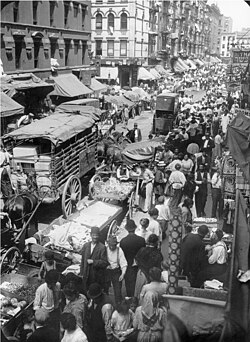
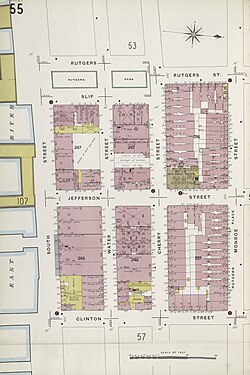
The hospital grew rapidly through several relocations. After starting as a dispensary on Henry Street in 1890 and moving through various rented spaces on East Broadway, it finally acquired land at Jefferson and Cherry Streets around 1895. A new building opened there in 1902, costing $115,000. By the late 1910s, the facility had expanded to 150 beds and had established one of the nation's first social service departments in 1907.
Expansion and the Move to Stuyvesant Square
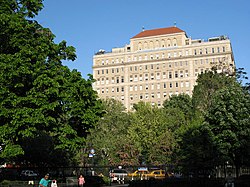
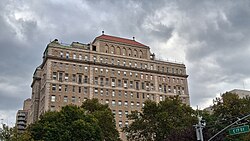
As financial support grew, the institution planned a larger, more modern facility. On March 12, 1929, the hospital moved to its iconic location at First Avenue and 16th Street. This 13-story building was the tallest hospital building in the world at the time of its opening, featuring 500 beds and private rooms for all patients regardless of their economic status.
![When it opened in 1929, the 13-story Stuyvesant Square building was the tallest hospital building in the world.[8]](/images/69/a2/69a2e3195f3d703629771a4f70937d5ef5a46f6845292f01ca5998f264f1efa5.jpg)
Throughout the mid-20th century, the hospital expanded its reach and capabilities. In 1930, it merged with the Jewish Maternity Hospital, and by 1935, it began affiliations with medical colleges, including the University and Bellevue Hospital Medical College. In 1964, it purchased the 455-bed Manhattan General Hospital, leading to its renaming as the Beth Israel Medical Center on March 10, 1965.
A Hub for Specialized Care and Education
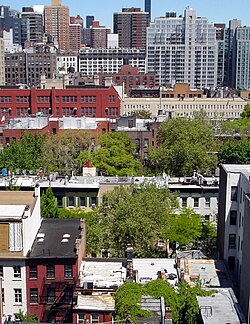
By the latter half of the century, Beth Israel had evolved into a full-service tertiary teaching hospital—a facility providing specialized consultative care. It served a broad demographic across Lower Manhattan, including Chinatown, Gramercy, the West Village, and Chelsea. It also became a teaching site for several institutions, including the Albert Einstein College of Medicine and the Phillips Beth Israel School of Nursing.
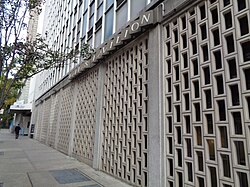
Notably, by 1988, the center operated the largest network of heroin-treatment clinics in the United States, managing 23 facilities and 7,500 patients. Its physical presence also became a cultural landmark; the Linsky Pavilion façade appeared in various television sitcoms, including Friends.

The Mount Sinai Era and Financial Decline
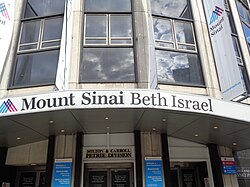
In the late 1990s, the center joined the Continuum Health Partners network. In 2013, Continuum merged with The Mount Sinai Medical Center to form the Mount Sinai Health System. Consequently, the facility was rebranded as Mount Sinai Beth Israel and became an affiliate of the Icahn School of Medicine at Mount Sinai.
Despite its prestige, the hospital faced severe financial headwinds. Changing federal reimbursement structures and medical advances that reduced the need for long hospital stays led to declining occupancy. By 2016, Mount Sinai announced plans to downsize the facility significantly. Although a decision to close was briefly reversed following the COVID-19 pandemic, the financial losses proved insurmountable.
Legal Battles and Final Closure
In October 2023, Mount Sinai announced its intention to close the hospital, citing that operations were at only 20% capacity and that the facility had lost $1 billion over the previous decade. This sparked intense opposition from the Community Coalition to Save Beth Israel Hospital, which filed lawsuits to prevent the closure.
The legal battle lasted nearly two years. While a temporary restraining order was issued in early 2024, subsequent lawsuits were dismissed by the New York Supreme Court. On April 8, 2025, the Appellate Division cleared the way for the closure. Mount Sinai Beth Israel officially ceased operations at 8:00 am on Wednesday, April 9, 2025.
Hospital Overview Summary
| Feature | Details |
|---|---|
| Founded | 1889 |
| Final Name | Mount Sinai Beth Israel |
| Peak Bed Capacity | 1,368 (2008) |
| Primary Location | First Avenue and 16th Street, Manhattan |
| Key Affiliations | Icahn School of Medicine, NYU College of Medicine, Albert Einstein College of Medicine |
| Closure Date | April 9, 2025 |
Frequently Asked Questions
Why was Beth Israel Hospital originally founded?
It was founded in 1889 to serve Jewish immigrants in the Lower East Side tenements who required medical care that respected their cultural and religious needs, including kosher food and Yiddish-speaking physicians.
What was the significance of the 1929 building?
The move to First Avenue and 16th Street in 1929 provided a 500-bed facility that was the tallest hospital building in the world at the time and introduced private rooms for all patients regardless of their income.
What led to the eventual closure of the hospital?
The closure was driven by significant financial losses—approximately $1 billion over a decade—and low occupancy rates (around 20%), compounded by changes in federal healthcare reimbursement and medical practices.
Did the hospital provide any specialized services?
Yes, it was a full-service tertiary teaching hospital. Notably, it once operated the largest network of heroin-treatment clinics in the U.S. and offered diverse programs in fields ranging from surgery to music therapy and acupuncture.
Who opposed the closure of Mount Sinai Beth Israel?
The closure was opposed by various community organizations and elected officials, most notably the Community Coalition to Save Beth Israel Hospital, which pursued legal action to keep the facility open.