Johnnie Ray: The Emotional Pioneer and Father of Rock and Roll
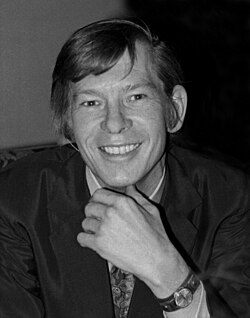
Long before the arrival of Elvis Presley, a singer from Oregon was redefining the boundaries of popular music with raw emotion and an electric stage presence. Johnnie Ray was not just a chart-topping vocalist; he was a catalyst for change in the music industry. By blending jazz and blues influences with a highly animated performance style, Ray bridged the gap between traditional pop and the explosive birth of rock and roll.
Critics and fellow musicians have long recognized his impact. Tony Bennett famously referred to Ray as the "father of rock and roll," noting how his willingness to display vulnerability and passion on stage paved the way for the genre's future icons.
Key Facts
- Full Name: John Alvin Ray
- Active Years: 1942–1989
- Key Genres: Jazz, blues, rock and roll, and traditional pop
- Major Hits: "Cry" and "The Little White Cloud That Cried"
- Legacy: Cited as a major precursor to rock and roll due to his emotional delivery and stage personality.
Early Life and Rise to Fame
Born on January 10, 1927, in Dallas, Oregon, Johnnie Ray faced early challenges, including being partially deaf. Despite this, his passion for music led him to start singing professionally at the age of 15 on radio stations in Portland. His journey to stardom took him to Detroit, where he performed in small, predominantly African-American nightclubs. It was in these venues that he honed the soulful, blues-influenced style that would eventually captivate the world.
In 1949, Ray was discovered, leading to a contract with Okeh Records (a subsidiary of Columbia Records) in 1951. He skyrocketed to fame with his 1952 debut album, Johnnie Ray, and a 78 rpm single featuring "Cry" and "The Little White Cloud That Cried," both of which hit the Billboard Top Hot 100.
Career Evolution and Cinematic Ventures
By the mid-1950s, Ray was a global phenomenon. His versatility as a singer, songwriter, and pianist allowed him to dominate the charts with a string of hits. In 1954, he expanded his reach into cinema, appearing in the film There's No Business Like Show Business alongside stars like Marilyn Monroe and Ethel Merman.
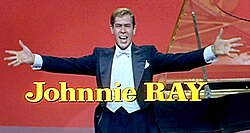
While his popularity in the United States began to wane around 1957—leading to his record label dropping him in 1960—Ray found enduring success abroad. His fanbases in Australia and the United Kingdom remained fiercely loyal, supporting him through his final global concert tour in 1989.
The American Revival
The 1970s saw a modest revival of Ray's career in the U.S. Although he had not released a record in over a decade, he made several high-profile television appearances, including three guest spots on The Tonight Show Starring Johnny Carson between 1972 and 1973. However, this resurgence was short-lived, and his final American television appearance occurred in 1977 on an episode of Sha Na Na.
Personal Life and Later Years
Ray's personal life was often more private than his public persona. He was married to Marilyn Morrison Ray in 1954, though the relationship ended in divorce.
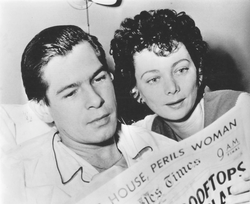
In his later years, biographers Jonny Whiteside and Tad Mann noted that Ray lived a relatively solitary life after his manager, Bill Franklin, ceased contact with him in the late 1970s. He maintained a close friendship with his road manager, Tad Mann, and actress Jane Withers, who were frequent guests at his Los Angeles home.
Johnnie Ray passed away on February 24, 1990, at the age of 63, leaving behind a legacy as one of the most emotionally expressive performers of the 20th century.
Career Summary
| Category | Details |
|---|---|
| Instruments | Vocals, Piano |
| Primary Labels | Okeh, Columbia |
| Notable Collaborators | The Four Lads, Doris Day, Frankie Laine |
| Key Film Role | Steve Donahue in There's No Business Like Show Business |
| Global Reach | Strongest late-career following in UK and Australia |
Frequently Asked Questions
Why is Johnnie Ray called the "father of rock and roll"?
He is given this title because his jazz and blues-influenced music, combined with his highly animated and emotional stage presence, served as a major precursor to the rock and roll movement.
What were Johnnie Ray's most successful songs?
His most iconic hits include "Cry" and "The Little White Cloud That Cried," both of which reached the Billboard Top Hot 100 in the early 1950s.
Did Johnnie Ray act in movies?
Yes, he appeared in several films, most notably There's No Business Like Show Business (1954), Sally (1956), and Rogue's Gallery (1968).
Where was Johnnie Ray most popular in his later career?
While his popularity declined in the United States after 1960, he maintained a very strong and loyal fanbase in the United Kingdom and Australia until his final tour in 1989.
What instruments did Johnnie Ray play?
In addition to being a celebrated vocalist, Johnnie Ray was a skilled pianist.