John Nash: The Mathematician Who Transformed Game Theory and Economics
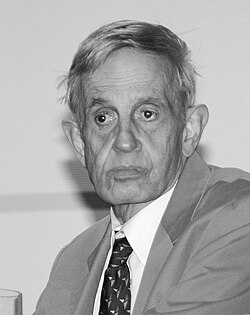
John Forbes Nash Jr. was a towering figure in 20th-century mathematics and economics. An American polymath, Nash made fundamental contributions to a diverse array of fields, including game theory, real algebraic geometry, differential geometry, and partial differential equations. His work provided the theoretical foundation for how individuals and organizations make decisions in competitive environments, earning him some of the highest honors in academia.
Beyond his intellectual achievements, Nash's life was marked by a profound personal struggle with schizophrenia, a journey of recovery, and an eventual return to the academic spotlight. His legacy is defined not only by his equations but by his resilience and the enduring impact of his theories on modern science.
Key Facts
- Born: June 13, 1928, in Bluefield, West Virginia.
- Died: May 23, 2015, at the age of 86.
- Major Awards: Nobel Memorial Prize in Economic Sciences (1994) and the Abel Prize (2015).
- Core Contribution: Defined the Nash equilibrium, a central concept in non-cooperative games.
- Education: BS and MS from Carnegie Institute of Technology; PhD from Princeton University.
Academic Foundation and Early Career
Nash's academic journey culminated at Princeton University, where he studied under doctoral advisor Albert W. Tucker. In 1950, he produced a concise but revolutionary 28-page dissertation titled Non-Cooperative Games. This work introduced the properties of the Nash equilibrium, which describes a situation in a game where no player can benefit by changing their strategy if the other players keep theirs unchanged.
Following his PhD, Nash expanded his research into cooperative games and other mathematical domains. Between 1945 and 1996, he published 23 scientific papers, demonstrating a preference for selecting his own unique paths and problems rather than following academic trends.
Scientific Contributions
Game Theory and Economics
Nash's most famous work focused on non-cooperative games. By defining the equilibrium point, he provided a mathematical framework for analyzing strategic interactions. This contribution was so pivotal that he shared the 1994 Nobel Memorial Prize in Economic Sciences with John Harsanyi and Reinhard Selten.
Pure Mathematics
While widely known for economics, Nash was a prolific mathematician. His contributions spanned several complex areas:
- Differential Geometry: He developed the Nash embedding theorem and the Nash–Moser theorem.
- Partial Differential Equations: His work in this field, specifically regarding parabolic and elliptic equations, earned him the 2015 Abel Prize, shared with Louis Nirenberg.
- Real Algebraic Geometry: He contributed to the study of Nash functions and the resolution of Hilbert's nineteenth problem.
Personal Struggles and Recovery
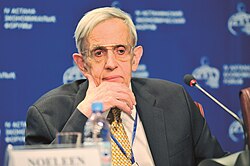
In 1959, Nash began experiencing symptoms of mental illness. He was diagnosed with schizophrenia and spent several years in psychiatric hospitals. This period of his life significantly interrupted his research and academic presence. However, after 1970, his condition slowly improved, and by the mid-1980s, he was able to return to academic work.
Summary of Achievements
| Field | Key Contribution/Concept | Major Award |
|---|---|---|
| Economics / Game Theory | Nash equilibrium, Nash bargaining game | Nobel Memorial Prize (1994) |
| Mathematics | Partial differential equations | Abel Prize (2015) |
| Geometry | Nash embedding theorem, Nash functions | Member of National Academy of Sciences (1996) |
| General Theory | Nash inequality, Nash–Moser theorem | John von Neumann Theory Prize (1978) |
Frequently Asked Questions
What is a Nash equilibrium?
A Nash equilibrium is a concept in game theory where the players of a game have chosen their strategies in such a way that no player can benefit by changing their strategy while the other players keep theirs unchanged.
Which awards did John Nash receive?
John Nash received the John von Neumann Theory Prize in 1978, the Nobel Memorial Prize in Economic Sciences in 1994, and the Abel Prize in 2015. He was also elected as a member of the National Academy of Sciences in 1996.
What was the subject of John Nash's PhD thesis?
His 1950 doctoral thesis, written at Princeton University, was titled "Non-Cooperative Games" and focused on the definition and properties of equilibrium points in n-person games.
Did John Nash contribute to fields other than economics?
Yes, Nash made significant contributions to pure mathematics, specifically in differential geometry, real algebraic geometry, and partial differential equations.
How did mental illness affect his career?
Nash began showing signs of schizophrenia in 1959, leading to years of hospitalization. While this paused his professional output for a time, his condition improved after 1970, allowing him to return to academic research by the mid-1980s.