John Gould: The Father of Australian Ornithology
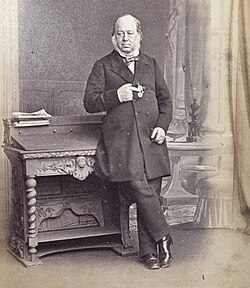
John Gould (1804–1881) was a towering figure in 19th-century natural history. An English ornithologist and master of taxidermy, Gould is best remembered for his monumental illustrated monographs on birds and his pivotal role in identifying the specimens that helped Charles Darwin formulate the theory of evolution by natural selection. Through a combination of scientific rigor and commercial acumen, Gould transformed the study of birds into a visually stunning and widely accessible discipline.
Throughout his career, Gould collaborated with several talented artists to bring his observations to life. Most notably, his wife, Elizabeth Gould, provided the essential lithographic plates for many of his early works. Other contributors included Edward Lear, Henry Constantine Richter, Joseph Wolf, and William Matthew Hart.
Key Facts
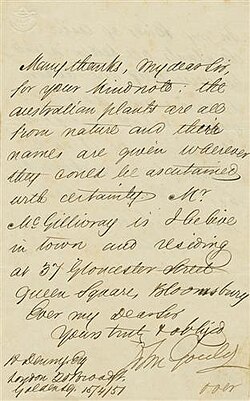
- Primary Field: Ornithology (the scientific study of birds).
- Major Contribution: Identified the Galápagos finches, providing critical evidence for Darwin's theory of evolution.
- Australian Legacy: Authored The Birds of Australia, earning him the title of the father of bird study in Australia.
- Prolific Output: Published 41 volumes containing approximately 3,000 plates.
- Professional Start: Began his career as a gardener and taxidermist before becoming the first curator at the Zoological Society of London.
Early Life and Professional Beginnings
Born on September 14, 1804, in Lyme Regis, England, John Gould was the son of a gardener. With limited formal education, Gould followed in his father's footsteps, training as a gardener from age 14 to 20 under J. T. Aiton at the Royal Gardens of Windsor. During this period, he developed a profound interest in nature and became an expert in taxidermy—the art of preserving animal skins.
In 1824, Gould established his own taxidermy business in London. His technical skill quickly gained recognition, leading to his appointment in 1827 as the first curator and preserver at the museum of the Zoological Society of London. This position placed him at the center of the scientific community, granting him first access to new avian collections arriving from across the globe.
Major Works and Scientific Research
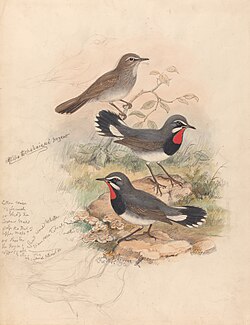
Gould's career was defined by his massive, high-quality monographs. In 1830, he published A Century of Birds from the Himalaya Mountains, featuring text by Nicholas Aylward Vigors and illustrations by Elizabeth Gould. This was followed by the five-volume Birds of Europe (completed in 1837).
Gould's publications were produced in a large imperial folio format with magnificent colored plates. Despite the high costs of production, he successfully marketed these works via advance subscriptions, eventually amassing a significant fortune. In total, he published 41 volumes and roughly 3,000 plates.
The Australian Expeditions
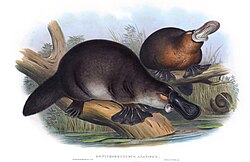
In 1838, John and Elizabeth Gould sailed to Australia to conduct the first comprehensive study of the continent's avifauna. Accompanied by collector John Gilbert, they explored Tasmania, Sydney, and the Liverpool Range. This journey resulted in the seven-volume The Birds of Australia (1840–1848), which included 600 plates. Of the species described, 328 were entirely new to science and named by Gould.
Passion for Hummingbirds
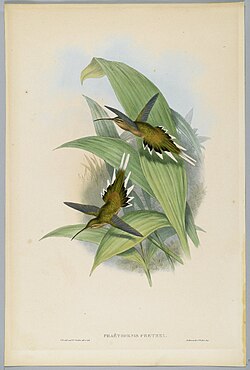
Gould maintained a lifelong fascination with hummingbirds, accumulating a collection of 320 species. Interestingly, he had never seen a live hummingbird until 1857, when he traveled to the United States. He first observed a ruby-throated hummingbird in Philadelphia's Bartram's Gardens and later saw many more in Washington D.C. Although he attempted to bring live specimens back to England, they survived only a few months due to his lack of knowledge regarding their specific care requirements.
Collaboration with Charles Darwin
One of the most significant moments in scientific history occurred in January 1837, when Charles Darwin presented bird specimens from the HMS Beagle voyage to the Zoological Society of London. Gould was tasked with their identification.
Gould discovered that birds Darwin had categorized as blackbirds or gross-bills were actually a unique group of 12 species of ground finches. He further identified that the mockingbirds and a "wren" were distinct species unique to specific islands. Additionally, Gould identified a separate species of rhea, which he named Rhea darwinii. This precise identification was a cornerstone for Darwin's development of the theory of evolution by natural selection, and Gould's work is explicitly referenced in On the Origin of Species.
![The Zoology of the voyage of H.M.S. Beagle : under the command of Captain Fitzroy, R.N., during the years 1832 to 1836, edited and superintended by Charles Darwin. [Album view] Pl. no. 7, Pyrocephalus nanus held by the State Library of New South Wales digital reference number a1417005h](/images/eb/fb/ebfbdab4f3e553b32ff871cb3867c011c643b0524a47b0698e1a4aa0536c931c.jpg)
Summary of Major Publications
| Publication Title | Date Range | Key Focus | Notable Detail |
|---|---|---|---|
| A Century of Birds from the Himalaya Mountains | 1830–1832 | Himalayan Birds | Illustrated by Elizabeth Gould |
| The Birds of Europe | 1832–1837 | European Birds | 5 volumes |
| The Birds of Australia | 1840–1848 | Australian Birds | 328 new species named |
| The Mammals of Australia | 1849–1861 | Australian Mammals | 3 volumes |
| Monograph of the Trochilidae | 1849–1861 | Hummingbirds | 5 volumes, 360 plates |
| The Birds of Great Britain | 1873 | British Birds | 367 coloured lithographs |
Frequently Asked Questions
How did John Gould contribute to Charles Darwin's theory of evolution?
Gould identified that the birds Darwin collected in the Galápagos Islands were not random varieties but a series of distinct, closely related species of finches and mockingbirds. This evidence of species diversification based on geography was essential for Darwin's theory of evolution by natural selection.
Who was Elizabeth Gould and what was her role?
Elizabeth Gould was John Gould's wife and a talented artist. She drew and lithographed the plates for many of his most important early works, including The Birds of Europe and 84 plates for The Birds of Australia, before her death in 1841.
Why is John Gould considered the father of bird study in Australia?
He produced the first comprehensive illustrated account of Australian birds in his seven-volume work, The Birds of Australia. His extensive documentation and naming of hundreds of new species laid the foundation for Australian ornithology.
What was John Gould's professional background before ornithology?
Gould began his career as a gardener, apprenticing at the Royal Gardens of Windsor. He later became an expert in taxidermy, which led to his first professional role as a curator at the Zoological Society of London.
Did John Gould ever see the hummingbirds he studied?
For much of his professional life, he studied them only as specimens. He did not see a live hummingbird until 1857 during a trip to the United States, where he observed ruby-throated hummingbirds in Philadelphia and Washington D.C.