John Culshaw: The Visionary Producer Who Redefined Classical Recording
John Culshaw was more than a recording producer; he was an architect of sound. Throughout his career, primarily with the Decca recording company, Culshaw transformed the act of capturing music from a mere documentation of a performance into a sophisticated art form. By leveraging emerging technologies and a meticulous attention to detail, he created immersive auditory experiences that redefined how the world listened to classical music.
Early Life and Musical Foundations
Born in Southport, Lancashire, to Percy Ellis Culshaw and Dorothy Royds, Culshaw's early years were marked by a tension between his academic environment and his inner passions. He attended Merchant Taylors' School in Crosby and later King George V Grammar School in Southport. Upon leaving school in 1940 at age 16, he began working as a clerk for the Midland Bank in Liverpool, a profession for which he had little aptitude.
In May 1942, Culshaw joined the Fleet Air Arm, where he trained as a navigator and eventually became a lieutenant and radar instructor. Despite the demands of military service, he remained obsessed with music. Largely self-taught, Culshaw spent his spare time writing music criticism. After numerous rejections, his first major success came in March 1945 with an article on Sergei Rachmaninoff for The Gramophone, which opened doors to BBC broadcasts and classical music journalism.
The Decca Years and the Rise of the Producer
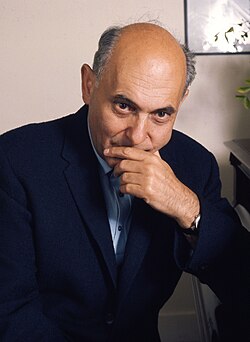
Culshaw joined Decca in November 1946, initially focusing on musical analyses and biographies. He published a well-received biography of Rachmaninoff in 1949, followed by works on concertos and modern music. By 1947, he transitioned into producing classical sessions, working with luminaries such as Ida Haendel, Eileen Joyce, Kathleen Ferrier, and Clifford Curzon. It was during this period, in 1948, that he began his pivotal collaboration with the pianist and conductor Georg Solti.
In 1950, Culshaw produced the first long-playing (LP) versions of the Savoy Operas. His passion for Richard Wagner led him to the Bayreuth Festival in 1951, where he recorded Parsifal (released in 1952) and Lohengrin (1953). These experiences solidified his desire to bring Wagner's complex visions to the recording studio.
The Capitol Interlude
From 1953 to 1955, Culshaw headed the European programme for Capitol Records. While he successfully recorded a Brahms Requiem with Solti and performances by Eduard van Beinum and the Concertgebouw Orchestra of Amsterdam, he found the experience frustrating. Bureaucracy at Capitol's Los Angeles headquarters prevented him from signing key artists like Otto Klemperer or persuading Kirsten Flagstad to end her retirement.
Furthermore, Capitol ignored the impending shift toward stereophony (the reproduction of sound in more than one channel to create a spatial effect). When EMI took over Capitol in 1955 and shuttered its classical activities, Culshaw returned to Decca in the autumn of that year.
Revolutionizing Sound: The Decca Ring Cycle
Upon his return, Culshaw became the manager of Decca's classical recording division. He embraced stereophonic technology to create what he termed the "theatre of the mind." Culshaw believed that studio recordings should not simply mimic a live performance—which he viewed as technically flawed—but should use production techniques to conjure the visual action in the listener's imagination.
This philosophy culminated in the landmark studio recording of Wagner's Ring cycle, beginning with Das Rheingold in 1958. Culshaw's commitment to authenticity was unprecedented; he hired eighteen actual anvils for the score's requirements and used steerhorns instead of the trombones typically used in opera houses. The recording featured the Vienna Philharmonic and a star-studded cast, including Birgit Nilsson, Hans Hotter, and Dietrich Fischer-Dieskau.
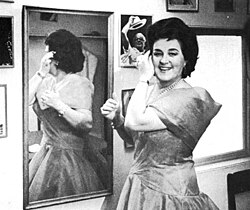
The Decca Ring was a commercial and critical phenomenon, famously outselling popular artists like Elvis Presley. In 1999, a Gramophone reader poll named it one of the ten greatest recordings ever made.
Collaborations with Britten and Karajan
Culshaw's influence extended beyond Wagner. He maintained a close relationship with Benjamin Britten, producing the first complete recording of Peter Grimes (which he planned in detail for producer Erik Smith) and later recording Albert Herring, A Midsummer Night's Dream, and Billy Budd. He considered the 1963 recording of Britten's War Requiem to be his finest work, uniting soloists from former enemy nations: Galina Vishnevskaya (Russia), Dietrich Fischer-Dieskau (Germany), and Peter Pears (England).
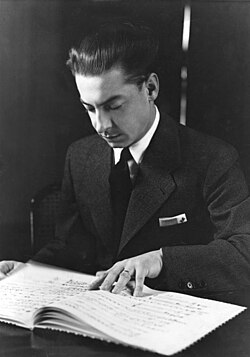
He also produced many of Herbert von Karajan's most enduring sets, including Tosca, Carmen, and Holst's The Planets. Through a partnership with RCA, Culshaw also supervised Sir Thomas Beecham's version of Handel's Messiah and worked with legendary artists like Arthur Rubinstein and Leontyne Price.
Key Facts
- The "Theatre of the Mind": Culshaw's philosophy that studio recordings should use sound to create visual imagery for the listener.
- The Decca Ring: A groundbreaking studio recording of Wagner's cycle that topped a 1999 poll of the greatest recordings ever made.
- Technical Precision: He insisted on using authentic instruments, such as eighteen anvils and steerhorns, to match Wagner's exact score.
- Britten Partnership: Produced essential works by Benjamin Britten, including the first stereo recording of a modern opera (Peter Grimes).
- Diverse Portfolio: Worked with a vast array of conductors and singers, from Georg Solti and Herbert von Karajan to Renata Tebaldi and Jussi Björling.
| Period | Organization | Key Achievements / Focus |
|---|---|---|
| 1942–1946 | Fleet Air Arm | Navigator/Radar Instructor; began music journalism. |
| 1946–1953 | Decca | Biographies; first LP Savoy Operas; Bayreuth recordings. |
| 1953–1955 | Capitol Records | European programme head; recordings with van Beinum. |
| 1955–1980 | Decca | Manager of Classical Division; The Ring Cycle; Britten and Karajan sets. |
Frequently Asked Questions
What was John Culshaw's "theatre of the mind"?
It was the belief that a sound recording should not just be a document of a live event, but a carefully produced piece of art that uses subtle audio techniques to help the listener visualize the action and setting of the opera.
Why was the Decca Ring cycle so significant?
It was one of the first complete studio recordings of the cycle, praised for its "stupendous" sound quality and strict adherence to Wagner's musical instructions, and it achieved massive commercial success, even outselling pop stars of the era.
Which composer did John Culshaw dislike?
Culshaw had a strong physical and artistic aversion to Gustav Mahler, describing Mahler's music as "repulsive" and stating that it made him feel physically sick.
How did Culshaw contribute to the works of Benjamin Britten?
He produced several of Britten's operas and the War Requiem. He was instrumental in persuading Decca to record the first complete version of Peter Grimes, the first modern opera recorded in stereo.
What was Culshaw's role at Capitol Records?
He headed the European programme from 1953 to 1955, though he found the experience frustrating due to corporate bureaucracy and the company's failure to adopt stereophonic technology.