Joe-Pye Weed: A Comprehensive Look at the Eutrochium Genus
Commonly known as Joe-Pye weed, the genus Eutrochium represents a group of striking, herbaceous flowering plants native to North America. Belonging to the Asteraceae family—the same family as daisies and sunflowers—these plants are celebrated for their pigmented flowers and distinctive foliage. Whether growing wild in the United States and Canada or serving as a centerpiece in ornamental gardens, Joe-Pye weeds are a vital part of the temperate landscape.
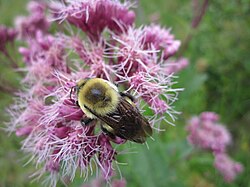
Key Facts
- Native Range: United States and Canada.
- Family: Asteraceae (the daisy/sunflower family).
- Primary Characteristics: Pigmented flowers and non-dissected foliage.
- Leaf Arrangement: Most species feature whorled leaves (leaves arranged in a circle around the stem).
- Common Uses: Widely cultivated as ornamental landscape plants.
Taxonomic History and Classification
The scientific classification of Joe-Pye weed has been a subject of significant botanical revision. Originally, these plants were classified under the genus Eupatorium. However, the history of their naming is complex, involving several shifts in scientific consensus.
From Eupatorium to Eutrochium
As early as the 19th century, botanist Constantine Samuel Rafinesque proposed separating these plants into their own genus, Eutrochium. This idea was later revisited in 1970 by researchers Robert M. King and Harold Robinson, who proposed the name Eupatoriadelphus. While Eupatoriadelphus gained wide acceptance for a time, the classification shifted again in 1987 when King and Robinson reincluded the group within Eupatorium.
The modern classification was solidified following chloroplast DNA analysis published by Edward E. Schilling et al. in 1999. This genetic research confirmed that Joe-Pye weeds should be recognized as the distinct genus Eutrochium. Today, Eutrochium is recognized as the senior synonym, distinguishing these purple-flowering plants from the white-flowered species typically found in the revised Eupatorium genus.
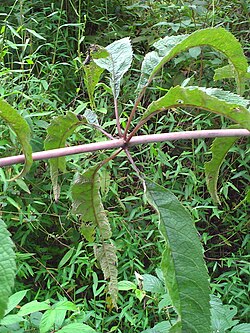
Distinguishing Features
While Eutrochium and Eupatorium are close relatives within the subtribe Eupatoriinae, they can be distinguished by two primary physical traits:
- Flower Color: Eutrochium species typically produce pigmented (often purple) flowers, whereas Eupatorium species are mostly white-flowered.
- Leaf Structure: Eutrochium mostly features whorled leaves, while Eupatorium typically has opposite leaves.
Common Species and Cultivars
Several distinct species make up the Eutrochium genus, each with unique characteristics and habitats. Most are highly valued in horticulture.
| Scientific Name | Common Name(s) |
|---|---|
| Eutrochium dubium | Coastal plain Joe-Pye weed |
| Eutrochium fistulosum | Hollow Joe-Pye weed |
| Eutrochium maculatum | Spotted Joe-Pye weed |
| Eutrochium purpureum | Sweet Joe-Pye weed, Queen of the meadow, Purple boneset |
| Eutrochium steelei | Steele's Joe-Pye weed |
In the gardening world, many species have been developed into cultivars—specific varieties selected for particular traits. For example, gardeners often use compact versions like E. dubium ‘Little Joe’ or E. maculatum ‘Little Red’ to fit smaller landscape spaces.
Historical and Medicinal Context
Beyond their beauty, Joe-Pye weeds have a storied history. The name itself is linked to a peer-reviewed study suggesting the plant was named after Schauquethqueat, a Mohican sachem who lived in Stockbridge, Massachusetts, between approximately 1740 and 1785, and who took the Christian name Joseph Pye.
Historically, various sources have claimed the plant possessed medicinal properties, specifically for treating typhus outbreaks and addressing kidney stones or other urinary tract ailments. While these uses are part of the plant's cultural history, they remain part of traditional lore.
Frequently Asked Questions
What is the difference between Joe-Pye weed and Eupatorium?
While closely related, Eutrochium (Joe-Pye weed) generally has pigmented flowers and whorled leaves, whereas Eupatorium species are typically white-flowered and have opposite leaves.
Are Joe-Pye weeds good for gardens?
Yes, most species except for E. steelei are widely cultivated as ornamental landscape plants due to their attractive flowers and various available cultivars.
Where do Joe-Pye weeds grow naturally?
They are native to North America, specifically throughout the United States and Canada.
What does "whorled leaves" mean?
Whorled leaves refers to a leaf arrangement where multiple leaves emerge from the same node around the stem, forming a circle.
Is there a specific reason for the name "Joe-Pye"?
Research suggests the name may be derived from a Mohican sachem named Schauquethqueat, who was known by the Christian name Joseph Pye.