Jinotega: The Coffee Capital and City of Mists
Nestled in a long valley in north-central Nicaragua, Jinotega is a city defined by its dramatic landscapes and agricultural prowess. Located 142 km north of Managua at an elevation of 1,000 meters (3,300 ft), the city is famously known as the Ciudad de las Brumas (City of Mists) due to the clouds that frequently drift through the valley. From its deep indigenous roots to its status as a global coffee powerhouse, Jinotega serves as a vital cultural and economic hub for the region.
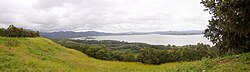
The city is the capital of the Department of Jinotega and is surrounded by the cool climate of the Dariense Isabelia ridge. Its geography is characterized by a network of rivers and the artificial Lake Apanas, which spans 51 square kilometers and provides essential hydropower to much of Nicaragua.
Key Facts
- Primary Industry: Produces 80% of Nicaragua's coffee.
- Nickname: The City of Mists (Ciudad de las Brumas).
- Elevation: 1,000 meters (3,300 ft) above sea level.
- Population: Approximately 56,910 in the city and 150,146 in the municipality (2022 estimate).
- Key Infrastructure: Lake Apanas provides hydropower via the Centro América Plant.
Etymology and Origins
The name Jinotega is subject to linguistic debate. Many believe it derives from the Nahuatl word xiotenko, meaning "place next to the jiñocuajo trees." The jiñocuajo (Bursera simaruba) is a balsamic tree revered by the Nahuas and Chorotegas for its medicinal properties and as a symbol of wisdom and eternity.
However, some historians, such as Eddy Kühl Aráuz, argue that the name does not come from Nahuatl, as the original inhabitants spoke the Misumalpa language. Others, including historian Julián Guerrero, suggest the word is Chorotegan, while linguist Walter Lehmann linked the local indigenous languages to the Macro-Chibcha family.
History and Evolution
Pre-Colonial and Colonial Eras
Before Spanish arrival, Jinotega was a settlement in a cauldron-shaped valley. Its original inhabitants are debated, with theories suggesting descendants of the Mayangna, Chorotega, or Matagalpa peoples. These early societies were skilled in gold working and pottery, and they governed themselves under a king advised by a council of elders.
Spanish colonization began around 1524. While a 1581 census showed the town remained entirely indigenous, it was claimed as Spanish territory and named "San Juan de Jinotega" in 1606. Permanent Spanish settlement began around 1690, and the town was officially elevated to a village in 1851 and a town in 1883.
Modern Conflict and Resilience
Due to its remote location and proximity to the Honduran border, Jinotega has historically been a center for conflict. Between 1927 and 1934, it saw intense battles between Augusto C. Sandino's troops and U.S. occupation forces. In the late 1970s, it became a key battleground for the Sandinista National Liberation Front (FSLN) against the regime of Anastasio Somoza Debayle. The region later experienced further strife during the 1980s civil war between the Sandinista government and the Contra rebels.
Economy and Infrastructure
The Coffee Powerhouse
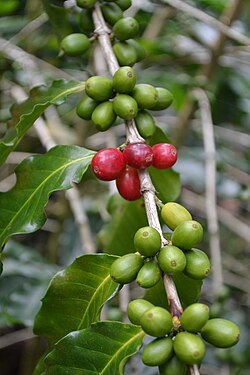
Jinotega is the undisputed capital of coffee in Nicaragua. The department produces 65% of the nation's coffee, with the city area contributing to a total of 80% of national production. This high-quality coffee is exported to the United States, Canada, Russia, and Europe.
The industry is dominated by small and medium producers (90%) and has won numerous international awards, including five wins in the prestigious Cup of Excellence. This success is attributed to the region's optimal agro-ecological conditions.
Commerce and Energy
Historically, the city attracted European investors, particularly from Germany and Britain. In the early 20th century, German businessman Heinrich Gülke introduced the first motor vehicle to the city and established a Viennese-style casino. In the 1960s, industrialization grew with the establishment of coffee and corn processing factories.
Energy is managed by Distribuidora del Norte (DISNORTE). The Centro América Plant utilizes two turbines with a capacity of 25 MW each to supply electricity, though rural access remains limited compared to the urban center.
Regional Overview
| Category | Details |
|---|---|
| Coordinates | 13°5′18.207″N 85°59′57.838″W |
| Founded | 1891 |
| Climate Type | Aw (Tropical Savanna) |
| Main Exports | Coffee, Cocoa |
| Higher Education | UNAN, UPONIC, UNN, and INATEC |
| Sister City | Ulm, Germany |
Frequently Asked Questions
Why is Jinotega called the "City of Mists"?
It is colloquially known as the Ciudad de las Brumas because of the frequent and magnificent whisks of clouds that feather through the top of the valley.
What is the significance of the jiñocuajo tree?
The jiñocuajo (Bursera simaruba) is a balsamic tree that natives attributed with great medicinal properties. It was revered by the Nahuas and Chorotegas as a tree of eternity and wisdom.
How much of Nicaragua's coffee comes from Jinotega?
Jinotega produces 80% of Nicaragua's coffee, making it the primary supplier for the country and a major exporter to international markets.
What is the purpose of Lake Apanas?
Lake Apanas is an artificial lake covering 51 square kilometers that provides hydropower to a significant portion of Nicaragua via the Centro América Plant.
Who are some notable people from Jinotega?
Notable figures include Benjamín Zeledón, who fought against U.S. Marines in 1912; former President Bartolomé Martínez Hernández; and musician Otto de la Rocha.