Jeonbuk State: A Journey Through South Korea's Cultural Heartland
Located in the southwest of the Korean Peninsula within the Honam region, Jeonbuk State (officially the Jeonbuk Special Self-Governing Province) is a land where ancient tradition meets modern autonomy. Bordered by South Chungcheong to the north, the Gyeongsang provinces to the east, and Jeonnam-Gwangju to the south, this region serves as a vital cultural and agricultural hub for South Korea.
Originally known as North Jeolla Province, the region underwent a significant administrative transformation on January 18, 2024. It became the third province in South Korea—following Jeju and Gangwon—to be designated as a special self-governing province. This new status grants the state increased autonomy, allowing the local government to tailor its own tourism and immigration policies and approve projects involving environmental impact assessments.
Key Facts
- Capital: Jeonju, the largest city in the state.
- Status: Special Self-Governing Province (as of January 2024).
- Geography: Covers 8,069.05 km², representing 8.1% of South Korea's total area.
- Economy: Nominal GDP of KRW 64 trillion (US$ 51 billion) as of 2023.
- Population: 1,769,607 (December 2022).
- Administrative Structure: Comprised of 6 cities and 8 counties.
A Deep Dive into History
The history of Jeonbuk is a tapestry of shifting dynasties and tribal states. During the Proto-Three Kingdoms period, it was the center of Mahan, housing 15 of the 54 tribal states. This later transitioned into the Baekje Kingdom, which utilized the Jeongbang administrative system to govern the area.
Following the fall of Baekje in 660, the region saw a period of Tang dynasty control before being integrated into Unified Silla in 676. By 892, the area became the heart of Hubaekje (Later Baekje), with Jeonju serving as its capital for approximately 50 years until it was conquered by Wang Geon of the Goryeo Dynasty in 936.
The name "Jeolla-do" was established in 1018 during the reign of King Hyeonjong of Goryeo, making it the first of the Eight Provinces system to celebrate a 1,000th anniversary (in 2018). Throughout the Joseon Dynasty, the region remained a critical administrative center until the modern era, where repeated reorganizations led to the current structure of six cities and eight counties.
Geography and Natural Landscapes
Jeonbuk's landscape is defined by a mix of rugged mountains and coastal plains. To the east, the region is bordered by impressive peaks, including the 1,732-meter Bangyabong Peak of Sobaeksan, as well as Toggibong, Myeongseungbong, and Baegunsan.
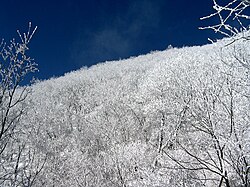
To the west, the state opens up to the Yellow Sea, providing critical maritime access and shaping the local economy and climate.
Economy, Industry, and Education
The economy of Jeonbuk is predominantly driven by the service industry, which accounts for 68.3% of its economic activity. This is followed by mining (21.2%) and construction (9.7%). Despite the rise of services, agriculture remains a cultural cornerstone, with the region producing high-quality rice, barley, ginseng, peaches, and dried persimmons.
Industrial development accelerated in the 1960s with the construction of the Honam Expressway, which linked the port city of Gunsan and the city of Iksan with the capital, Jeonju. Today, the region is also a center for higher learning, hosting institutions such as Chonbuk National University and Wonkwang University.
Cultural Heritage and Tourism
Jeonbuk is widely regarded as the soul of Korean tradition. The capital, Jeonju, is world-famous for its Hanok Village, where traditional Korean houses are preserved in a stunning architectural ensemble.
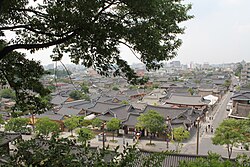
Beyond the capital, the state offers a wealth of historical sites. Iksan is home to the Mireuksaji Pagoda and the newly opened Iksan Ancient City World Heritage Center (opened October 1, 2024), a multi-use cultural space dedicated to the region's global heritage.
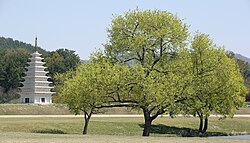
The region is also a hub for the arts, hosting the Jeonju International Sori Festival, which focuses on Pansori (traditional narrative singing), and the Jeollabuk-do World Calligraphy Biennale.
| Category | Key Locations | Notable Features |
|---|---|---|
| Special City | Jeonju | Hanok Village, Provincial Capital |
| Major Cities | Iksan, Gunsan, Jeongeup, Gimje, Namwon | Mireuksaji Pagoda, Modern History Museum |
| Key Counties | Wanju, Gochang, Buan, Sunchang, Imsil, Muju, Jinan, Jangsu | Byeonsanbando National Park, Imsil Cheese Village |
Frequently Asked Questions
What is the difference between North Jeolla Province and Jeonbuk State?
They are the same region. On January 18, 2024, North Jeolla Province was renamed Jeonbuk State and granted "special self-governing province" status to increase its administrative autonomy.
What is the significance of the Jeonju International Sori Festival?
It is a world-class music festival based on Pansori, a Korean Intangible Cultural Heritage. It aims to promote Korean music globally and facilitate musical exchange between nations.
What are the primary industries in Jeonbuk?
The service industry is the dominant sector (68.3%), followed by mining and construction. The region is also well-known for agricultural products like ginseng, rice, and dried persimmons.
Which historical kingdoms once ruled this region?
The region was originally part of the Mahan tribal states, then absorbed by the Baekje Kingdom. It later served as the center for Hubaekje before becoming part of the Goryeo and Joseon Dynasties.
How can visitors travel within Jeonbuk?
The region is well-connected via the Honam Expressway. Visitors can fly into Gunsan Airport, with shuttle services available to transport travelers to Jeonju and other intercity bus networks serving the various counties.