Jeju Special Self-Governing Province
Known as the "Hawaii of South Korea," Jeju Special Self-Governing Province is a breathtaking region comprising Jeju Island and its surrounding islets. This volcanic paradise is celebrated for its dramatic landscapes, unique cultural heritage, and a distinct administrative status that grants it significant autonomy within South Korea.
From the towering peak of Hallasan to the deep blue waters of the Korea Strait, Jeju offers a blend of natural wonder and historical depth. Whether it is the sight of yellow rapeseed fields in spring or the legendary stories of the haenyeo (female divers), the province remains one of the most captivating destinations in East Asia.

Key Facts

- Administrative Status: Special Self-Governing Province since July 1, 2006.
- Capital: Jeju City.
- Geography: A volcanic region featuring Hallasan, the island's central peak.
- Population: 670,858 (as of November 2020).
- Economy: Nominal GDP of KRW 26 trillion (US$ 21 billion) as of 2023.
- Unique Culture: Home to the Jeju language and the iconic Dol hareubang stone statues.
Geography and Natural Wonders

Jeju's landscape is defined by its volcanic origins. The island is dominated by Hallasan, a massive shield volcano that serves as the central peak. The coastline is equally striking, featuring the Daepo Jusangjeolli Cliff and the famous Seongsan Ilchulbong (Sunrise Peak), a volcanic tuff cone that rises sharply from the sea.

The province is also home to the Manjanggul Lava Tube, an 8 km long subterranean passage, and several stunning waterfalls, including Cheonjiyeon and Jeongbang. The interior of the island is dotted with volcanic craters like Sangumburi and lush forests that provide a sanctuary for diverse wildlife.

The natural beauty is complemented by the vibrant colors of the landscape, most notably the vast rapeseed fields that bloom across the island.

History and Governance

Jeju's history is recorded in texts such as the Tamna Ginyun, which spans over 934 years from the Goryeo to the Joseon period. Historically, the island was known as the Kingdom of Tamna before becoming part of the Korean peninsula's administrative structure.

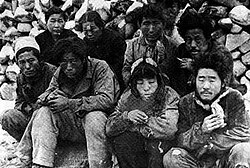
The 20th century brought significant turmoil, including the Japanese occupation and the Jeju uprising of 1948, a period of intense conflict and tragedy for the local population.
Administratively, Jeju was separated from South Jeolla Province on August 1, 1946. In 2006, it was designated as a Special Self-Governing Province to allow for more flexible local governance. Today, it is divided into two primary cities: Jeju City and Seogwipo.

Society and Culture

Jeju possesses a culture distinct from mainland Korea, influenced by its isolation and environment. One of the most recognizable symbols is the Dol hareubang (stone grandfather), carved volcanic rock statues believed to offer protection.

The island's architecture is also unique, characterized by doldam (stone walls) used to protect fields from the wind, and bangsatap (stone towers) built to ward off evil spirits. Traditional homes often featured jeongnang, a simple wooden gate system used to communicate the owner's presence or absence to visitors.

Socially, Jeju is noted for its historically matriarchal family structures, epitomized by the haenyeo. These professional female divers harvest seafood from the ocean floor without the use of oxygen tanks, representing a powerful symbol of Jeju's resilience and strength.
Economy and Tourism

Tourism is a primary driver of Jeju's economy. The province attracts millions of visitors with attractions such as Aqua Planet Jeju, the largest public aquarium in South Korea, and the O'Sulloc Tea Museum. For those seeking leisure, the beaches of Jungmun and Hyeopjae are world-class destinations.

The local cuisine is another major draw, with Jeonbokjuk (abalone porridge) being a signature delicacy that highlights the island's rich marine resources.

Infrastructure has kept pace with growth, featuring the Jeju World Cup Stadium and the bustling Jeju Port, which connects the island to the mainland and international trade routes.

Provincial Overview
The following table provides a summary of the key administrative and demographic data for the province.
| Category | Detail |
|---|---|
| Total Area | 1,849 km² (Ranked 9th in South Korea) |
| Population (2020) | 670,858 |
| Nominal GDP (2023) | KRW 26 trillion (US$ 21 billion) |
| Per Capita GDP | US$ 31,150 |
| HDI (2017) | 0.888 (Very High) |
| Official Symbols | Rhododendron (Flower), Camphor Laurel (Tree), Woodpecker (Bird) |
Frequently Asked Questions
What is the significance of the Dol hareubang?
Dol hareubang are traditional stone statues carved from volcanic basalt. They are iconic symbols of Jeju Island and were historically placed at the entrances of villages to serve as guardians and protectors.
Who are the haenyeo of Jeju?
The haenyeo are professional female divers who harvest shellfish and other seafood from the ocean. They are famous for diving to significant depths without breathing apparatus, reflecting a unique matriarchal cultural heritage.
What makes Jeju a "Special Self-Governing Province"?
This status, granted in 2006, provides the province with greater autonomy in administrative, financial, and legislative matters compared to standard provinces in South Korea, allowing it to better manage its unique needs and tourism industry.
What are the must-visit natural sites in Jeju?
Key sites include Hallasan (the central volcano), Seongsan Ilchulbong (Sunrise Peak), the Manjanggul Lava Tube, and the various waterfalls such as Cheonjiyeon and Jeongbang.
What is the traditional language of the region?
While Korean is the official language, the region has its own distinct Jeju language (or dialect), which preserves many archaic forms of Korean and unique local expressions.