Jeju Island: South Korea's Volcanic Paradise
Jeju Island, known in Korean as Jejudo, is the largest island in South Korea, accounting for approximately 1.83% of the nation's total land area. Often referred to by the nicknames Samdado ("Island of Three Abundances") and Sammudo ("Island of Three Lacks"), this oval-shaped landmass is a geological marvel shaped by volcanic activity. From its towering central peak to its unique coastal features, Jeju offers a landscape unlike any other in East Asia.
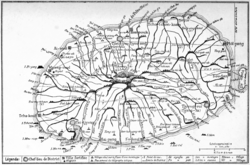
Key Facts
- Highest Point: Hallasan (1,950 m)
- Total Area: 1,826 km²
- Island Shape: Oval, measuring 73 km east-to-west and 31 km north-to-south
- Primary Feature: A volcanic landscape dominated by Hallasan and approximately 360 oreum (small extinct volcanoes or parasitic cones)
- Major Settlement: Jeju City
Geographic Profile and Landscape
The geography of Jeju is defined by its volcanic origins. At its heart lies Hallasan, a massive volcano standing at 1,950 meters, making it the highest mountain in South Korea. The island's terrain slopes gently away from this central peak, creating a diverse topography that includes various coastal landmarks.
The coastline stretches 258 km, featuring distinct landmarks at its cardinal points: Gimnyeong Beach to the north, Songak Mountain to the south, Suwolbong to the west, and Seongsan Ilchulbong to the east. Scattered across the landscape are roughly 360 oreum—small parasitic cones formed by volcanic eruptions. Many of these, such as Geomunoreum, Yongnuni Oreum, and Geum Oreum, have become significant natural attractions.
Geological Composition
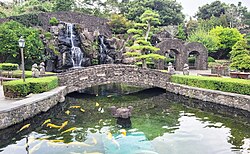
The island is composed largely of basalt, a dark, fine-grained volcanic rock. Historically, this basalt has been a fundamental building material for the local population, deeply integrating the island's geology into its human architecture and culture.
Climate and Environment
Jeju experiences a varied climate that changes significantly based on elevation. While coastal areas enjoy a relatively temperate environment, the higher elevations of Hallasan experience much harsher conditions. For instance, while coastal temperatures in summer can reach record highs of 37.5°C, the higher altitudes of Witse Oreum see much lower mean daily maximums.
| Location | Avg. Annual Precipitation (mm) | Avg. Annual Sunshine Hours | Yearly Mean Temp (°C) |
|---|---|---|---|
| Jeju City (Ildo 1-dong) | 1,502.3 | 1,834.5 | 16.2 |
| Gosan-ri | 1,182.9 | 2,002.7 | 15.7 |
| Seogwipo (Jeongbang-dong) | 1,989.6 | 2,074.6 | 16.9 |
| Hallasan (Seongpanak) | 4,381.0 | N/A | 10.9 |
Biodiversity and Scientific Significance
The unique environment of Jeju has led to the classification of several species named after the island. Scientific names such as quelpartensis, jejuensis, and chejuensis are used to identify various plants and animals endemic to or specifically associated with the region, including certain species of spiders, ants, moths, and lilies.
Frequently Asked Questions
What are 'oreum' on Jeju Island?
Oreum are small extinct volcanoes or parasitic cones. There are approximately 360 of these volcanic features scattered across Jeju, many of which are popular hiking and tourist destinations.
What is the highest point on the island?
The highest point is Hallasan, a volcano that reaches an elevation of 1,950 meters (6,400 ft) and is the highest mountain in South Korea.
What does the nickname 'Samdado' mean?
Samdado translates to "Island of Three Abundances," a traditional nickname for the island.
How does the climate change with altitude on Jeju?
The climate varies significantly with elevation. Coastal areas are warmer and receive less precipitation than the high-altitude regions of Hallasan, which can experience much higher rainfall and significantly lower temperatures.
What is the largest city on Jeju Island?
The largest settlement on the island is Jeju City, which has a population of approximately 501,791.