Japan–North Korea Relations: A History of Tension and Diplomacy
The international relationship between Japan and North Korea (the Democratic People's Republic of Korea or DPRK) is one of the most strained in East Asia. Characterized by a complete lack of formal diplomatic ties, the two nations exist in a state of mutual hostility and deep-seated tension. Japan does not recognize the DPRK as a sovereign state, instead recognizing the Republic of Korea (South Korea) as the sole legitimate government on the Korean Peninsula.
From the ideological divides of the Cold War to modern-day nuclear threats and the painful legacy of state-sponsored abductions, the trajectory of their interaction has fluctuated between brief periods of rapprochement and severe diplomatic freezes.
Key Facts
- Diplomatic Status: No formal diplomatic relations exist between Japan and North Korea.
- Core Disputes: Major points of contention include the abduction of Japanese citizens, North Korea's nuclear program, and colonial-era reparations.
- Security Threats: Japan views North Korean ballistic missile launches over its territory as a critical national security threat.
- De Facto Representation: The General Association of Korean Residents in Japan (Chongryon) serves as North Korea's unofficial embassy.
- Public Sentiment: Public opinion in Japan is overwhelmingly negative toward North Korea, driven by security concerns and historical grievances.
Historical Foundations and the Cold War
The roots of the current friction lie in the late 19th and early 20th centuries. Following victories in the First Sino-Japanese War in 1894, Japan established control over Korea, eventually annexing it in 1910. This period of colonial rule involved forced Japanization, including Sōshi-kaimei, a policy requiring ethnic Koreans to adopt Japanese names and language.
Following World War II, the two nations fell into opposing Cold War blocs: Japan allied with the United States, while North Korea aligned with the Soviet Union. Despite this, the 1950s saw a surprising push for economic cooperation. In 1955, North Korean Foreign Minister Nam Il called for cultural and economic ties to reduce dependence on the Soviet Union and prevent a close alliance between Japan and South Korea.
During this era, North Korea helped establish Chongryon, an organization for ethnic Koreans in Japan that continues to act as a de facto embassy. Between 1959 and 1961, a Red Cross agreement facilitated the voluntary repatriation of approximately 50,000 to 120,000 Korean residents from Japan to North Korea via Soviet ships.
The Cycle of Normalization and Deterioration
Relations shifted throughout the 1960s and 70s. North Korea strongly denounced the 1965 Treaty on Basic Relations between Japan and South Korea. While Prime Minister Kakuei Tanaka attempted a policy of "equidistance" between the two Koreas in the 1970s, Japan eventually returned to a policy favoring South Korea.
By the early 1990s, formal normalization talks began. In 1991, Japan offered a formal apology for its 1910–1945 colonial rule. However, these negotiations stalled over the issue of historical compensation. North Korea demanded reparations for colonial-era damages and post-WWII losses, while Japan insisted that Pyongyang first resolve nuclear inspection disputes with South Korea.
The Abduction Crisis and Security Threats
One of the most emotionally charged issues in bilateral relations is the abduction of Japanese citizens. Between 1977 and 1983, North Korean agents kidnapped Japanese nationals. For decades, North Korea denied these claims, but in 2002, leader Kim Jong Il admitted to 13 abductions.
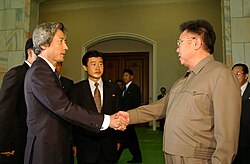
This admission caused widespread outrage in Japan, as previous reports of kidnappings had been dismissed as conspiracy theories. Prime Minister Junichiro Koizumi visited Pyongyang in 2002 and 2004 to press for the return of these citizens.
Simultaneously, North Korea's nuclear and missile programs have escalated tensions. The 1998 launch of a Taepodong-1 missile over Japanese territory was seen as a direct act of defiance. In recent years, multiple ballistic missile tests landing in Japanese waters have led Japan to implement strict sanctions and enhance its ballistic missile defense systems.
Recent Developments (2024)
Despite decades of hostility, early 2024 saw a surprising shift. In January, Kim Jong Un sent a telegram of condolence to Prime Minister Fumio Kishida following the Sea of Japan earthquake—the first time Kim had sent condolences after a natural disaster or a telegram to Kishida. This opened a window for potential high-level talks focusing on the return of abductees and sanctions relief.
However, this optimism was short-lived. By March 2024, North Korean Foreign Minister Choe Son Hui reaffirmed Pyongyang's refusal to communicate with Japan, stating that dialogue with Tokyo was of "no significance."
Summary of Japan–North Korea Relations
| Issue | Japan's Position | North Korea's Position |
|---|---|---|
| Diplomatic Recognition | Recognizes only South Korea as legitimate. | Seeks recognition and relief from isolation. |
| Abductions | Demands full return of all kidnapped citizens. | Admitted to some in 2002; currently dismisses dialogue. |
| Colonial Reparations | Linked to nuclear transparency and abductee resolution. | Demands monetary compensation for 1910–1945 rule. |
| Security | Views missiles as a critical national security threat. | Uses missile tests as political defiance/deterrence. |
Frequently Asked Questions
Why does Japan not recognize North Korea?
Japan recognizes the Republic of Korea (South Korea) as the sole legitimate government of the Korean Peninsula and maintains that formal recognition of the DPRK is contingent upon the resolution of key issues, including the abduction of Japanese citizens and the denuclearization of the North.
What were the abductions of Japanese citizens?
Between 1977 and 1983, North Korean agents kidnapped Japanese nationals from their homes or beaches. These individuals were taken to North Korea for various purposes, including training espionage agents. North Korea admitted to 13 of these abductions in 2002.
What is Chongryon?
Chongryon is the General Association of Korean Residents in Japan. It is an advocacy organization for ethnic Koreans in Japan who identify with North Korea and serves as the DPRK's de facto embassy in the absence of formal diplomatic ties.
How has the public in Japan reacted to North Korea?
Public opinion is overwhelmingly negative. A 2014 BBC poll found that 91% of Japanese people view North Korea's influence negatively, and a 2026 poll indicated that 87% believe North Korea poses a threat to national security.
What is the current status of normalization talks?
While there were brief signals of readiness for high-level talks in early 2024, North Korea's Foreign Ministry officially rejected communication with Japan by March 2024, leaving the normalization process stalled.