Chōsen Gakkō: The History and Struggle of Ethnic Korean Schools in Japan
The Chōsen gakkō (朝鮮学校) are a network of ethnic schools in Japan serving the Zainichi Korean community—ethnic Koreans living in Japan. These institutions provide a vital space for preserving Korean language, culture, and identity in a foreign land. While they serve as educational hubs, they are also deeply entwined with the complex geopolitical relationship between Japan and North Korea.
As of 2012, the network consisted of 135 schools, including 38 kindergartens, 54 elementary schools, 33 middle schools, and 10 high schools, alongside Korea University. These schools primarily serve the approximately 150,000 Zainichi Koreans affiliated with Chongryon (the General Association of Korean Residents in Japan). By 2013, these institutions educated nearly 9,000 ethnic Korean students.
Key Facts
- Affiliation: Operated under the guidance of Chongryon, which has strong ties to North Korea.
- Funding: Historically supported by North Korean financial aid and parental tuition.
- Student Body: Primarily Zainichi Koreans seeking to maintain their ethnic identity.
- Current Status: Facing significant financial strain and legal challenges regarding government tuition subsidies.
Historical Background and Early Struggles
The roots of these schools lie in the Japanese occupation of Korea (1905–1945). During this era, many Koreans migrated to Japan, some voluntarily and others by force. The colonial government actively suppressed Korean identity, restricting the use and teaching of the Korean language.
Following the end of colonial rule in 1945, while two million Koreans returned home, roughly 600,000 remained in Japan. This population sought to establish their own educational systems to preserve their heritage.
However, the early years were marked by conflict. Under the American Occupation administration, the Japanese Ministry of Education was instructed to close ethnic Korean schools. This led to widespread protests and peaked with the Hanshin Education Incident on April 24, 1948. During this event, 1,732 people were arrested, and police forcibly evicted students from Chōsen schools, nailing the doors shut.
Revival and the North Korean Connection
The schools were initially established in October 1945 by the League of Koreans (Choryŏn), but the organization was disbanded in 1949 due to its socialist ties. After the Korean War armistice, the organization was restarted as Chongryon, allowing the schools to reopen.
In the decades following the Korean War, North Korea's economy initially grew faster than South Korea's. Pyongyang utilized Chongryon to funnel significant funds into the Chōsen gakkō. According to a 2021 press release from Pyongyang, North Korea has provided over ₩ 500 billion (approximately US$ 437.08 million) in financial support since the schools' inception.
Modern Challenges and Social Pressures
Rise in Anti-Korean Sentiment
The social climate shifted dramatically in September 2002 when Japanese media reported that the North Korean government had abducted Japanese citizens during the 1970s and 1980s. This revelation sparked fear and hostility toward the Chongryon community.
Students often faced harassment, leading many to wear Western-style uniforms while commuting and changing into their Korean uniforms only upon arriving at school. This protective measure added a financial burden, as each set of uniforms cost approximately ¥ 40,000 (US$ 364.46).
Financial Crisis and School Closures
The schools currently face a severe financial crisis. The Japanese government has withdrawn tuition fee funding, leaving many families to struggle with costs. For example, Tokyo Korean Junior and Senior High School charges ¥ 400,000 (US$ 3,644.65) per year, a sum that is prohibitive for lower-income families.
This lack of support has led to closures. The Higashiosaka Chōsen Chukyu gakkō closed in March 2018, and three additional schools in Osaka prefecture closed in 2023 due to a lack of funding from both Tokyo and Pyongyang.
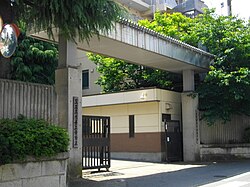
![Tokyo Korean 1st Elementary and Junior High School [ja] (東京朝鮮第一初中級学校)](/images/41/e0/41e000d1517ceb0723de5ff16c5b527ec71b5c351f7653928047d8e3eae73c13.jpg)
Discrimination and Hate Speech
The schools have also been targets of hate speech. In November 2019, a former member of the far-right group Zaitokukai was fined ¥ 500,000 (US$ 4,555.81) for labeling Chōsen schools as "spy training centers." Furthermore, during the early stages of the COVID-19 pandemic, the Japanese government excluded Chōsen gakkō from the distribution of face masks to kindergartens, prompting international outcry and donations from South Korean civic groups.
Summary of Chōsen Gakkō Infrastructure
| Institution Type | Number of Schools | Primary Affiliation |
|---|---|---|
| Kindergartens | 38 | Chongryon |
| Elementary Schools | 54 | Chongryon |
| Middle Schools | 33 | Chongryon |
| High Schools | 10 | Chongryon |
| Higher Education | 1 (Korea University) | Chongryon |
Frequently Asked Questions
What are Chōsen gakkō?
Chōsen gakkō are ethnic schools in Japan that provide education to the Zainichi Korean community, focusing on the preservation of Korean language and culture.
Why are these schools linked to North Korea?
The schools are operated by Chongryon, an organization with strong ties to the North Korean government, which has historically provided significant financial support to the institutions.
What was the Hanshin Education Incident?
Occurring on April 24, 1948, it was a peak of conflict where Japanese police forcibly closed Korean ethnic schools and arrested 1,732 people following instructions from the American Occupation administration.
Why are many Chōsen schools closing?
Closures are primarily driven by financial difficulties resulting from the Japanese government's withdrawal of tuition subsidies and a decrease in financial support from Pyongyang.
How has the 2002 abduction report affected students?
The reports of Japanese citizens being abducted by North Korea increased anti-Korean sentiment, leading some students to hide their identity by wearing Western clothes while traveling to school to avoid harassment.