Jacobite Rising of 1689: The Struggle to Restore the House of Stuart
The Jacobite rising of 1689 was a pivotal conflict in Scottish history, spanning from March 1689 to February 1692. This uprising was the first in a series of attempts to restore the House of Stuart to the throne following the deposition of James VII (and II of England) during the Glorious Revolution of 1688. While it began as a quest to reinstate a Catholic monarch, it quickly became entwined with the religious and political tensions of the era.
This Scottish revolt was not an isolated event but a minor theater of the Nine Years' War, a wider European conflict. Its primary strategic goal was to support the Williamite War in Ireland (1689–1691). Despite early tactical successes, the rising ultimately failed to threaten the new administration of William II and Mary II, ending in a government victory.
Key Facts
- Duration: March 1689 – February 1692.
- Primary Goal: To restore James VII to the throne.
- Key Victory: The Jacobites won the Battle of Killiecrankie, though their leader was killed.
- Turning Point: The death of Viscount Dundee and limited resources crippled the movement.
- Final Pacification: The Highlands were not fully subdued until after the Massacre of Glencoe in February 1692.
The Road to Revolution: Background and Causes
James II & VII ascended to power in February 1685. Despite his Catholicism, he initially enjoyed widespread support. In Ireland, Catholics hoped for the return of confiscated lands and the repeal of penal laws. In Protestant England and Scotland, many supported him to avoid the instability of bypassing the natural heir, leading to the failure of early rebellions like the Monmouth Rebellion and Argyll's Rising.
However, tensions rose as James attempted to repeal the Scottish Test Act—a law requiring obedience to the monarch regardless of religion. This alienated moderate supporters and favored dissident Presbyterians. The situation worsened with the Edict of Fontainebleau in 1685, which exiled 200,000 French Protestants, fueling fears of a Catholic counter-reformation across Europe.
Two critical events triggered a full-scale crisis: the birth of James' son, James Francis Edward Stuart, which established a long-term Catholic succession via primogeniture (the right of the firstborn child to inherit), and the prosecution of the Seven Bishops, which appeared to be an attack on the Church of England and the Scottish kirk (the Church of Scotland).
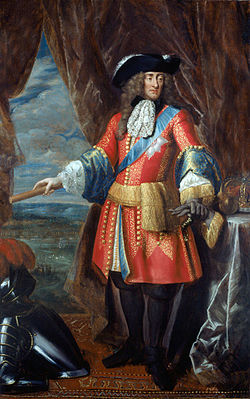
By 1688, William of Orange landed in England with 14,000 men to secure English resources for his war against France. James fled into exile on December 23, and by February 1689, William and Mary were declared joint monarchs.
The Scottish Convention and the Outbreak of War
In March 1689, a Scottish Convention was convened to determine the settlement of the throne. The delegates were deeply divided between Presbyterians and Episcopalians. When James VII sent a letter demanding obedience and threatening punishment, it backfired, strengthening the Presbyterian majority.
On April 11, the Convention ended James' reign and passed the Claim of Right Act, establishing Parliament as the primary legislative power in Scotland. William and Mary accepted the throne on May 11, 1689.
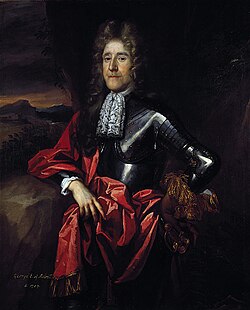
Meanwhile, John Graham, 1st Viscount Dundee, began recruiting troops in the Highlands to launch a Jacobite offensive. His efforts were intended to complement actions in Ulster, but he lacked the necessary resources for a sustained campaign.
Military Campaigns: From Killiecrankie to Glencoe
The government forces were led by the experienced Hugh Mackay, who commanded approximately 3,500 men, including the veteran Dutch Scots Brigade. Dundee assembled roughly 1,800 Highland levies, but the nature of Highland warfare—characterized by short-term mobilization—meant many clansmen returned home when immediate battle did not occur.
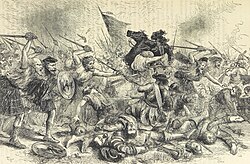
The conflict reached a peak at the Battle of Killiecrankie on July 27, 1689. The Jacobites achieved a resounding victory, inflicting nearly 2,000 casualties on Mackay's forces. However, the victory was pyrrhic; nearly a third of the Jacobite army was killed, including Viscount Dundee himself.
Following Dundee's death, Alexander Cannon took command. Without siege equipment to capture ports or cavalry for open-field maneuvers, the Jacobites struggled. After a failed assault on Dunkeld in August, the army dispersed for the winter. In May 1690, Thomas Buchan's forces were scattered at the Battle of Cromdale.
The conflict gradually wound down as Lord Stair offered Jacobite chiefs £12,000 to swear allegiance to William. This led to the Declaration of Achallader in June 1691. The period of unrest finally concluded with the Massacre of Glencoe in February 1692.
| Feature | Scottish Government | Jacobites |
|---|---|---|
| Commanders | Hugh Mackay, Thomas Livingstone | Viscount Dundee, Alexander Cannon, Thomas Buchan |
| Max Strength | 5,000 – 10,000 | 4,000 – 5,000 |
| Estimated Losses | 2,000 – 2,500 | 1,500 – 2,000 |
| Outcome | Victory | Defeat |
Aftermath and Religious Shift
The rising solidified William's reliance on Presbyterian support. In October 1690, the General Assembly of the Church of Scotland met for the first time since 1653, effectively eliminating episcopacy (government of the church by bishops). This led to the removal of nearly two-thirds of all ministers over the following 25 years.
While some ministers returned under later Acts of Indulgence, a segment of the political class remained outside the kirk, eventually forming the Scottish Episcopal Church in 1711. This church became a stronghold for Jacobite support in future uprisings, particularly in Perthshire and Aberdeenshire.
Frequently Asked Questions
What was the primary goal of the Jacobite rising of 1689?
The primary goal was to restore James VII (and II of England) to the throne after he was deposed during the Glorious Revolution of 1688.
Why was the Battle of Killiecrankie considered a pyrrhic victory?
Although the Jacobites won a resounding tactical victory and inflicted heavy casualties on the government forces, they lost nearly a third of their own army, including their key leader, Viscount Dundee.
How did the birth of James Francis Edward Stuart affect the conflict?
His birth created the prospect of a long-term Catholic dynasty through primogeniture, which alarmed Protestant leaders and made the removal of James VII a necessity to prevent a permanent Catholic monarchy.
What was the significance of the Massacre of Glencoe in this context?
The Massacre of Glencoe in February 1692 marked the point at which the Highlands were finally considered pacified by the government, effectively ending the 1689 rising.
What was the long-term religious impact of the rising in Scotland?
The rising led to the 1690 Settlement, which eliminated episcopacy in the Church of Scotland and paved the way for the later establishment of the Scottish Episcopal Church, which remained a source of Jacobite support.