IUPAP: Advancing Global Physics and International Scientific Cooperation
The International Union of Pure and Applied Physics (IUPAP) is a premier international non-governmental organization dedicated to the worldwide development of physics. Established in 1922, IUPAP serves as a critical bridge between the global scientific community and the application of physics to solve pressing problems facing humanity. By fostering international cooperation, the Union ensures that scientific progress transcends national borders.
Headquartered in Geneva, Switzerland, with an administrative office in Trieste, IUPAP operates as a member of the International Science Council. Its mission extends beyond theoretical research, actively promoting the use of physics for sustainable development. A notable example of this commitment was IUPAP's lead role in promoting the International Year of Basic Sciences for Sustainable Development, which was officially proclaimed by the United Nations General Assembly for the year 2022.
Key Facts
- Founded: 1922 (First General Assembly held in 1923 in Paris).
- Purpose: To stimulate international cooperation and the global development of physics.
- Membership: 56 territorial members worldwide.
- Governance: Led by an Executive Council and currently presided over by Silvina Ponce Dawson.
- Affiliation: Member of the International Science Council.
Governance and Specialized Commissions
To manage the vast breadth of the field, IUPAP is organized into specialized and affiliated commissions. These bodies provide expert guidance on everything from fundamental constants to the application of physics in medicine and education.
Specialized Commissions
The Union maintains 20 specialized commissions (C1 through C20) covering diverse areas, including:
- Fundamental Standards: Symbols, Units, Nomenclature, Atomic Masses & Fundamental Constants (C2).
- Theoretical and Mathematical: Statistical Physics (C3), Particles and Fields (C11), and Mathematical Physics (C18).
- Applied and Interdisciplinary: Biological Physics (C6), Semiconductors (C8), and Physics for Development (C13).
- Astrophysics and Space: Astrophysics (C19) and Plasma Physics (C16).
Affiliated Commissions
IUPAP also works with affiliated bodies to broaden its reach, such as the International Commission for Optics (AC1), the International Commission on General Relativity and Gravitation (AC2), and the International Association of Physics Students (AC5).
Scientific Exchange and Recognition
IUPAP facilitates the exchange of knowledge through a structured system of sponsored conferences, categorized by their scope and scale:
- General Conferences (Type A): Broad overviews of entire fields, typically attracting 750–1000 attendees every two to three years.
- Topical Conferences (Type B): Focused on specific sub-fields (e.g., nuclear spectroscopy), attracting 300–600 individuals.
- Special Conferences (Type C): Targeted scientific meetings.
- Workshops in Developing Countries (Type D): Initiatives designed to bolster scientific capacity in emerging regions.
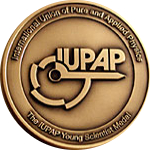
Beyond conferences, the Union recognizes excellence through various prestigious awards. These include the Early Career Scientist Prize (formerly the Young Scientist Prize), the Boltzmann Medal for statistical physics, and the Shakti Duggal Award for cosmic ray physics.
Organizational Overview
Since its inception with 13 founding members, IUPAP has grown into a global network. The following table summarizes the core organizational details.
| Attribute | Details |
|---|---|
| Official Language | English |
| Current President | Silvina Ponce Dawson (2025-2027) |
| Main Governing Organ | Executive Council |
| Total Territorial Members | 56 |
| Legal Status | Active International Non-Governmental Organization |
Frequently Asked Questions
What is the primary mission of IUPAP?
IUPAP's mission is to assist in the worldwide development of physics, foster international cooperation among physicists, and apply physics to solve problems of global concern to humanity.
How many members does IUPAP have?
IUPAP currently consists of 56 territorial members. It began in 1922 with 13 founding members, including the United Kingdom, United States, France, and Japan.
What are the different types of IUPAP conferences?
Conferences are divided into four types: Type A (General), Type B (Topical), Type C (Special), and Type D (Workshops in Developing Countries).
Who is the current President of IUPAP?
The current President is Silvina Ponce Dawson of Argentina, serving the 2025-2027 term.
What is the Early Career Scientist Prize?
Originally adopted as the Young Scientist Prize in 2005 and renamed in 2021, this prize is awarded by all IUPAP commissions to recognize outstanding work by scientists early in their careers.