Iron Cross: History and Evolution of Germany's Most Famous Military Decoration
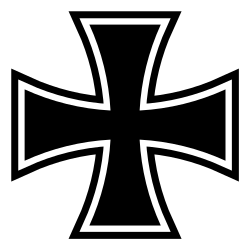
The Iron Cross (German: Eisernes Kreuz, abbreviated as EK) is one of the most recognized military symbols in history. Characterized by its distinct black cross pattée—a type of Christian cross with arms that narrow toward the center—and a white or silver outline, the decoration has served as a mark of bravery and leadership across several eras of German history.
Originally derived from the insignia of the medieval Teutonic Order, the Iron Cross evolved from a royal Prussian award into a national symbol of the German Empire and later the Third Reich. Today, while the medal itself is no longer awarded, the cross remains the official emblem of the Bundeswehr, the modern German armed forces.
Key Facts
- Origin: Established by King Frederick William III of Prussia on March 17, 1813.
- Design: Based on the 13th-century insignia of the Teutonic Order.
- Eras of Issue: Awarded during the Napoleonic Wars (1813), Franco-Prussian War (1870), World War I (1914), and World War II (1939).
- Modern Use: Serves as the official emblem for the Bundeswehr on aircraft, tanks, and uniforms.
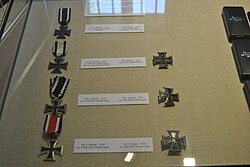
- Hierarchy: Generally issued in grades, starting from 2nd Class, then 1st Class, and ascending to the Knight's Cross and Grand Cross.
The Origins and Early Prussian Era
The Iron Cross was created during the Napoleonic Wars to honor bravery during the Wars of Liberation. King Frederick William III backdated the award to March 10, the birthday of his late wife, Queen Louise, who became the first posthumous recipient.
In its early years, the award followed a strict hierarchy: a soldier had to earn the Iron Cross 2nd Class before they could be eligible for the 1st Class. By 1817, 670 individuals had received the 1st Class decoration.
![Black Cross of the Teutonic Order (Leechkirche [de], Graz)](/images/b8/c9/b8c909fb970e78e853ede66c5a6c3307c59a3fb7847cf4065a5c0269afdce8bc.jpg)
The Franco-Prussian War (1870)
The award was reauthorized in 1870 during the conflict with France. To honor long-term service, recipients who remained in the military until 1895 were permitted to wear a Jubiläumsspange (Jubilee clip), featuring the number "25" on oak leaves to mark a quarter-century of service.
The World Wars and the Imperial Era
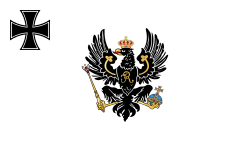
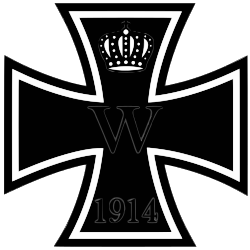
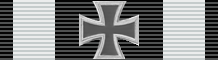
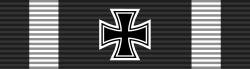
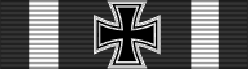
By the start of World War I in 1914, Emperor Wilhelm II reauthorized the cross. Although it remained a Prussian award, it was treated as a general German decoration due to Prussia's dominance in the Empire. During this period, three primary grades existed: the 2nd Class (EKII), the 1st Class (EKI), and the Grand Cross for senior generals.
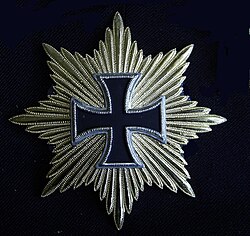
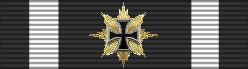
The most prestigious version, the Star of the Grand Cross (or Blücher Star), was extremely rare, awarded only to Field Marshals Gebhard Leberecht von Blücher in 1813 and Paul von Hindenburg in 1918.
The 1939 Version and Nazi Germany
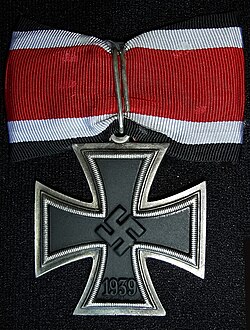
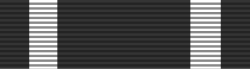
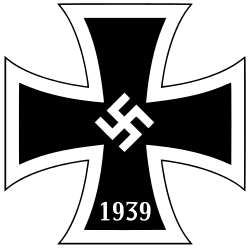
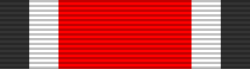
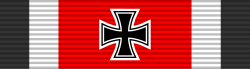
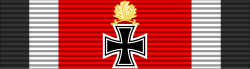
Adolf Hitler restored the Iron Cross in 1939, transitioning it from a Prussian to a national German decoration. The Nazi regime modified the design by superimposing a swastika on the medal. The ribbon was also changed to include red, reflecting the colors of Nazi Germany (black, white, and red) rather than just the Prussian black and white.
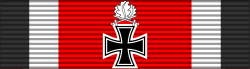
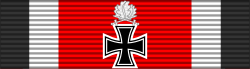
During World War II, the hierarchy expanded to include the Knight's Cross, which replaced the Pour le Mérite (the "Blue Max") as the premier award for bravery. The Knight's Cross had several higher tiers, including those with Oak Leaves, Swords, and Diamonds.
Female Recipients and Civilians
While primarily a military award, the Iron Cross was occasionally given to civilians in military roles. Notable female recipients included test pilots Hanna Reitsch and Melitta Schenk Gräfin von Stauffenberg. Additionally, numerous female auxiliaries of the German Red Cross were decorated for bravery during bombings and campaigns.
Design Variations and Technical Details
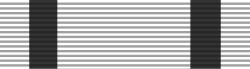
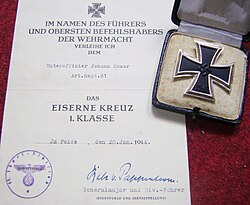
To distinguish between different eras, each Iron Cross was annotated with the year of its issuance (e.g., "1914" or "1939"). However, the reverse side of the 1870, 1914, and 1939 versions all featured the year "1813" to honor the award's origin.
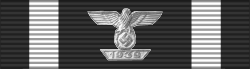
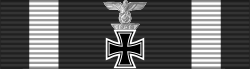
For veterans who earned the cross in multiple wars, special clasps (Spange) were used. A soldier who held the 1914 cross and earned the 1939 version would wear a 1939 Clasp pinned above the original medal.
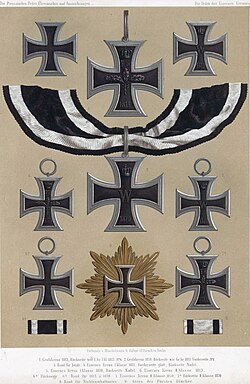
Summary of Iron Cross Versions
| Era/Year | Primary Authority | Ribbon Colors | Key Design Feature |
|---|---|---|---|
| 1813 | Kingdom of Prussia | Black with white bands | Initials "FW" (Frederick William III) |
| 1870 | Kingdom of Prussia | Black with white bands | Initial "W" (Wilhelm I) |
| 1914 | German Empire | Black with white bands | Initial "W" (Wilhelm II) |
| 1939 | Nazi Germany | Black, White, and Red | Swastika symbol |
| 1957 | West Germany | Varies | Trifoliate oak leaves (de-nazified) |
Post-War Legacy and Modern Use
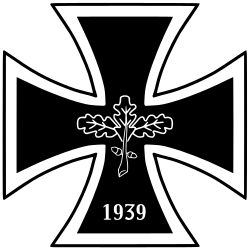
Following World War II, German law banned the display of Nazi insignia. In 1957, the West German government authorized replacement medals for WWII veterans, replacing the swastika with a trifoliate oak-leaf cluster.
While there were petitions to revive the Iron Cross as a bravery award for modern soldiers in Kosovo and Afghanistan, the German government instead created the Ehrenzeichen der Bundeswehr (Badge of Honor of the German Armed Forces) in 2008. Despite this, the Iron Cross remains the official symbol of the German military, appearing on armored vehicles and aircraft.
Cultural Impact
Beyond the military, the Iron Cross has entered popular culture. Since the late 20th century, it has been adopted as a fashion statement within heavy metal subcultures and outlaw motorcycle communities.

Frequently Asked Questions
Who was the first person to receive the Iron Cross?
The first recipient was Queen Louise of Prussia, who received the award posthumously on the date of her birthday, March 10, 1813.
What is the difference between the 1st Class and 2nd Class Iron Cross?
The 2nd Class was the entry-level award, typically worn on a ribbon. The 1st Class was a higher honor that had to be earned after the 2nd Class and was pinned directly to the uniform breast.
Why does the modern Bundeswehr still use the Iron Cross?
The Bundeswehr uses the cross as a traditional military emblem. It represents the continuity of German military history while being stripped of any political or Nazi-era associations.
What was the Knight's Cross?
The Knight's Cross was an intermediate grade introduced in 1939 to replace the Prussian Pour le Mérite. It was worn around the neck and could be upgraded with Oak Leaves, Swords, and Diamonds for exceptional bravery.
How were the medals distinguished by year?
Medals were annotated with the year of the conflict they were issued for (e.g., 1914 or 1939) on the front, while the reverse usually featured "1813" to signify the year the decoration was first established.