Military Awards and Decorations: A History of Honor and Valor
Military awards and decorations serve as enduring symbols of honor, recognizing individuals for military heroism, outstanding achievement, or meritorious service. While often appearing as a medallion suspended from a ribbon, these distinctions represent a deep tradition of acknowledging bravery and dedication in the face of adversity.
It is important to distinguish between military and civil decorations. While some orders of chivalry maintain both civil and military divisions, civil awards given to military personnel are not classified as military decorations. Similarly, while police and fire brigade awards may be modeled after military honors, they remain distinct professional distinctions.
In practical application, these honors are often displayed as miniature medals or medal ribbons. When multiple awards are worn together, they are mounted on a collective bar known as a barrette.
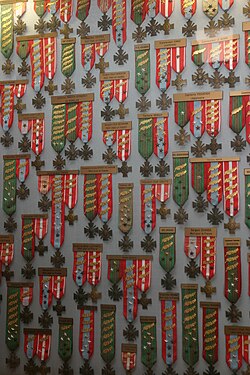
Key Facts
- Purpose: To mark honor for heroism, meritorious service, or outstanding achievement.
- Composition: Typically consists of a medallion and a ribbon.
- Oldest Active Award: Sweden's "For Valour in the Field" and "For Valour at Sea" (instituted 1789).
- Modern Display: NATO militaries typically wear service ribbons for everyday occasions rather than full medals.
- Legal Status: Forging medals is illegal in most countries and can lead to imprisonment.
The Evolution of Military Honors
The practice of awarding distinctions for bravery dates back to ancient civilizations. In the Egyptian Old Kingdom, the Order of the Golden Collar was utilized, while the New Kingdom recognized merit with the Order of the Golden Fly. Other ancient cultures employed different symbols; the Romans and Celts used the torc (a neck ring) or the hasta pura, a specialized spear without a tip.
Cultural expressions of honor also included permanent markings, such as the tattoos worn by the Dayaks. By the early Middle Ages, these traditions evolved into the use of necklaces and bracelets, which eventually became richly jeweled necklaces featuring pendants or medals.
Historic European Decorations
Several European awards stand as some of the oldest military decorations still in existence. Sweden's För tapperhet i fält ("For Valour in the Field") and För tapperhet till sjöss ("For Valour at Sea") were instituted by King Gustav III on May 28, 1789, during the war against Russia. Although technically active, they have not been awarded since 1915.
Close behind is the Austro-Hungarian Tapferkeits Medaille (Honour Medal for Bravery), instituted by Emperor Joseph II on July 19, 1789. Additionally, Poland's War Order of Virtuti Militari (Latin for "For Military Valour"), first awarded in 1792, remains a significant historical decoration.
Contemporary Use and Classification
Modern military honors are categorized based on the nature of the achievement and the scope of the award. These generally fall into the following categories:
- Orders of Merit: High-level distinctions for exceptional service.
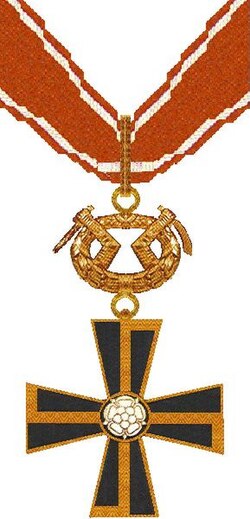
- Bravery Awards: Recognitions of courage, often shaped as a cross, star, or medal.
- Distinguished Service Awards: Honors for outstanding professional achievement.
- Campaign and Service Medals: Awards given for participation in specific conflicts or lengths of service.
- Unit Awards: Honors given to entire groups, including battle honours, campaign streamers, unit citations, or fourragères (braided cords worn on the shoulder).
| Category | Common Forms | Purpose |
|---|---|---|
| Individual Valor | Cross, Star, Medal | Heroism and bravery in action |
| Service/Campaign | Ribbon, Medal | Participation in specific wars or tenure |
| Unit Honors | Streamers, Fourragères | Collective achievement of a military unit |
| Merit | Orders, Medallions | Outstanding professional achievement |
The Issue of Forgery
Because of the prestige associated with these awards, medal forgery is a persistent issue. Forgeries may involve adding unauthorized bars to a legitimate medal, engraving the name of a famous soldier to increase value, or creating entirely fake medals to falsely inflate a soldier's record of service. In most jurisdictions, this is a criminal offense punishable by imprisonment.
Frequently Asked Questions
What is the difference between a military decoration and a civil decoration?
A military decoration is specifically awarded for military heroism or service. Civil decorations are awarded for non-military achievements; even if they are given to military personnel, they are not classified as military decorations unless they belong to a specific military division of an order of chivalry.
What is a barrette in the context of military awards?
A barrette is the mounting bar used to hold multiple miniature medals or medal ribbons together for display on a uniform.
Which is the oldest military decoration still in use?
Sweden's "For Valour in the Field" and "For Valour at Sea," instituted in 1789, are the oldest, though they have not been awarded since 1915.
How do NATO militaries typically wear their awards on a daily basis?
In most NATO militaries, personnel typically wear only the service ribbons on their everyday uniforms rather than the full medals.
What are unit citations and fourragères?
These are awards given to an entire military unit rather than an individual. Unit citations are official recognitions of collective gallantry, while fourragères are braided cords worn on the uniform to signify such honors.