Ipojuca: A Hub of Tourism and Industry in Pernambuco
Located in the Northeast region of Brazil, Ipojuca is a municipality in the state of Pernambuco that seamlessly blends colonial history, breathtaking natural beauty, and modern industrial power. From the world-renowned crystal waters of Porto de Galinhas to the logistical importance of the Suape Port, Ipojuca stands as one of the most economically significant areas in the region.
The name Ipojuca originates from the Tupi Guarani word Iapajuque, which translates to "Dark Water." Today, it is recognized not only for its geography but for its high per capita income, which was recorded at R$76,418 in 2007, placing it among the highest in Brazil.
Key Facts
- Location: Pernambuco, Northeast Brazil.
- Population: 106,539 (2025 estimate).
- Famous Beaches: Porto de Galinhas, Muro Alto, and Maracaípe.
- Economic Pillars: International tourism and the Suape Port industrial complex.
- Historical Landmark: Convento de Santo Antonio, founded in 1606.
History and Heritage
The colonization of Ipojuca began around 1560 following the displacement of the Caeté Indians and other indigenous tribes. The region's fertile massapê (a type of nutrient-rich, clay-like soil) made it ideal for sugarcane cultivation, leading to rapid agricultural growth led by pioneering families such as the Lacerda, Cavalcanti, and Rolim Moura.
The region played a pivotal role in resisting Dutch invasion. Under Captain-mor Amador de Araújo, local forces fought a significant battle from July 17 to July 23, 1645, resulting in a victory over the Dutch. This success cemented Ipojuca's place in the colonial triangular trade, utilizing the harbors of Suape and Porto de Galinhas.
While official founding dates are debated—with some parish records suggesting 1596—the official founding is recognized as 1861, and it was incorporated as a town in 1864. The administrative center shifted between the villages of Nossa Senhora do Ó and San Miguel de Ipojuca before returning to Nossa Senhora do Ó in 1890.
Geography and Access
Ipojuca spans an area of 527.32 square kilometers. Its landscape is characterized by a diverse mix of mangal (mangrove forests), coconut groves along the coastline, and sugarcane plantations inland. The area is drained by small coastal rivers, including the Maracaípe and Merepe.
The municipality is located approximately 57 kilometers from the capital, Recife. Visitors and logistics operators can access the region via highways PE-60 and BR-101, with specific winding roads leading directly to the tourist hub of Porto de Galinhas.
Tourism and Coastal Wonders
Tourism is a primary driver of the local economy, centered largely on its stunning coastline. The most famous destination is Porto de Galinhas, which has been named the best beach in Brazil eight times by Travel & Tourism magazine, primarily due to its iconic natural pools.
Diverse Beach Destinations
- Muro Alto: Known for its "high wall" of natural reefs extending 2 kilometers, creating a wave-free natural pool perfect for kayaking and canoeing.
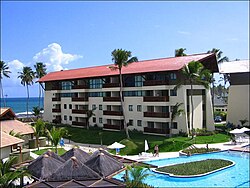
- Cupé: A 4.5-kilometer stretch featuring luxury hotels and a mix of calm reef-protected waters and choppy open seas.
- Maracaípe: A premier destination for surfing that hosts legs of the Brazilian Surf Tournament and international events.
- Pontal de Maracaípe: A fluvial-marine environment at the Maracaípe River estuary, ideal for boat trips and kayaking through mangroves.
- Serrambi: A favorite for scuba divers due to the presence of shipwrecks ranging from the Colonial period to the World Wars.
- Camboa: A quiet, deserted beach with shallow pools, though access is limited by the Merepe River estuary.
Cultural Landmarks
Beyond the sand, the Convento de Santo Antonio serves as a major historical milestone. Founded in 1606 and designated as national historical heritage in 1937, it remains a symbol of the municipality's spiritual and colonial past.
Economy and Infrastructure
Ipojuca's economy is a dual engine of tourism and heavy industry. While the summer months bring a global influx of tourists to its sophisticated hotels and pousadas (traditional guest houses), the year-round economic stability is provided by the Suape Port.
Suape is one of Brazil's most developed international ports and container terminals. Located 40 kilometers south of Recife, it operates 365 days a year regardless of tidal schedules. The port has attracted billions in national and international investment, serving as a catalyst for industrial growth across the entire state of Pernambuco.
| Indicator | Value/Detail |
|---|---|
| Estimated Population (2025) | 106,539 |
| Total Area | 527.32 km² |
| Service Sector Contribution | 71.87% |
| Secondary Sector Contribution | 27.59% |
| Primary Sector Contribution | 0.54% |
| Per Capita Income (2007) | R$76,418 |
Frequently Asked Questions
What is the best beach in Ipojuca for swimming?
Porto de Galinhas is the most famous for its natural pools, while Muro Alto is ideal for those seeking calm, wave-free waters due to its extensive natural reef wall.
What is the significance of Suape Port?
Suape is one of the most important container terminals in Northeast Brazil, providing critical logistical infrastructure that drives the industrial economy of Pernambuco.
What does the name Ipojuca mean?
The name comes from the Tupi Guarani word "Iapajuque," which means "Dark Water."
Is Ipojuca a good destination for surfing?
Yes, Maracaípe beach is specifically known for its deep waters and large waves, making it a regular stop on the Brazilian and international surf calendars.
What historical sites can be visited in Ipojuca?
The Convento de Santo Antonio, founded in 1606, is a primary historical landmark and part of Brazil's national historical heritage.