Inverness Parliamentary Constituency (1918–1983)
The Inverness constituency served as a vital electoral district for the House of Commons of the Parliament of the United Kingdom for six and a half decades. Established in 1918 and abolished in 1983, this county constituency played a central role in representing the interests of the Scottish Highlands during a period of significant administrative and political transition.
Operating under the first-past-the-post system—an electoral method where the candidate with the most votes wins regardless of whether they achieve an absolute majority—the constituency elected a single Member of Parliament (MP) to represent its residents in London.
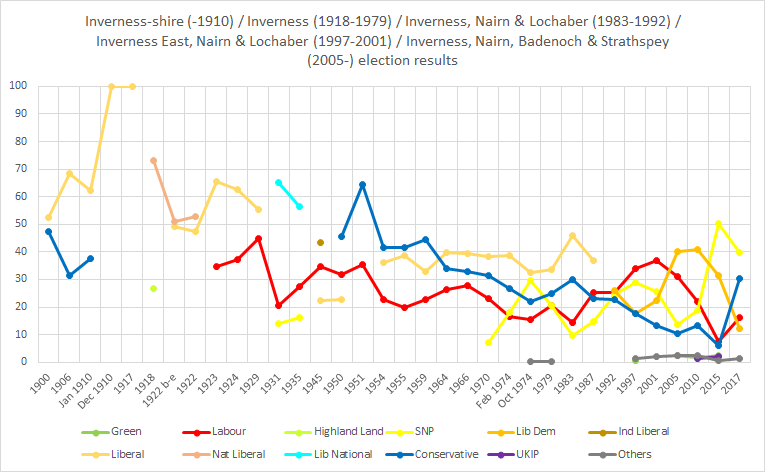
Evolution of Boundaries
Before the creation of the Inverness constituency, the region was split between two distinct entities: the Inverness-shire constituency and the Inverness Burghs constituency, both of which existed from 1708 to 1918. The former nominally covered the county excluding the burgh (the town center), while the latter focused on the burgh itself.
The 1918 Realignment
The Representation of the People Act 1918 sought to align constituency boundaries with updated local government borders. This act merged the previous entities to create the new Inverness constituency, which now included the burgh of Inverness. It became one of three constituencies serving the combined area of Inverness and Ross and Cromarty, alongside the Ross and Cromarty and Western Isles constituencies.
Geographically, the Inverness constituency encompassed the county of Inverness, excluding the Outer Hebridean districts of Harris, North Uist, and South Uist, which fell under the jurisdiction of the Western Isles constituency. These boundaries remained unchanged for every election from 1918 until the early 1980s.
Local Government Changes and Abolition
In 1975, the Local Government (Scotland) Act 1973 abolished counties and burghs as administrative areas. Consequently, from 1975 to 1983, the Inverness constituency existed entirely within the Highland local government region.
The constituency was officially abolished prior to the 1983 general election. It was replaced by three new constituencies designed to cover the region: Inverness, Nairn and Lochaber, Ross, Cromarty and Skye, and Caithness and Sutherland.
Key Facts
- Duration: Active from 1918 until 1983.
- Representation: Elected one Member of Parliament (MP).
- Predecessors: Formed from the merger of Inverness-shire and Inverness Burghs.
- Successors: Split into Inverness, Nairn and Lochaber; Ross, Cromarty and Skye; and Caithness and Sutherland.
- Geography: Covered the county of Inverness, excluding the Outer Hebrides (Harris, North Uist, and South Uist).
Members of Parliament
The constituency was represented by a variety of political affiliations, reflecting the shifting political landscape of the Highlands.
The first MP for the newly formed seat in 1918 was Thomas Brash Morison of the Coalition Liberal party, who had previously served as the MP for Inverness-shire.
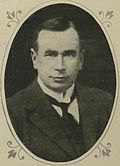
Following Morison, the seat saw representation from Sir Murdoch Macdonald (National Liberal/Liberal), Lord Malcolm Douglas-Hamilton (Unionist), and Neil McLean. The final MP for the constituency was Russell Johnston of the Liberal party, who later transitioned to represent the successor seat of Inverness, Nairn and Lochaber.
| Election Year | Member of Parliament | Political Party |
|---|---|---|
| 1918 | Thomas Brash Morison | Coalition Liberal |
| 1922 (By-election) | Sir Murdoch Macdonald | National Liberal |
| 1950 | Lord Malcolm Douglas-Hamilton | Unionist |
| 1954 (By-election) | Neil McLean | Labour |
| 1964 | Russell Johnston | Liberal |
Frequently Asked Questions
When was the Inverness constituency created and abolished?
The constituency was created in 1918 following the Representation of the People Act and was abolished in 1983.
Which areas were excluded from the Inverness constituency?
The constituency covered the county of Inverness but excluded the Outer Hebridean districts of Harris, North Uist, and South Uist, which were part of the Western Isles constituency.
Who was the first MP for the Inverness constituency?
Thomas Brash Morison, a Coalition Liberal and former MP for Inverness-shire, was the first member elected in 1918.
What happened to the constituency after 1983?
It was replaced by three new constituencies: Inverness, Nairn and Lochaber; Ross, Cromarty and Skye; and Caithness and Sutherland.
How was the MP for Inverness elected?
The MP was elected using the first-past-the-post system, where the candidate with the highest number of votes won the seat.