Inverness, Nairn and Lochaber: A History of the Former UK Parliamentary Constituency
From 1983 to 1997, the Inverness, Nairn and Lochaber constituency served as a key electoral district for the House of Commons of the Parliament of the United Kingdom. Located within the Highland subdivision, this county constituency was designed to represent a diverse geographic area of Scotland, electing a single Member of Parliament (MP) through the first-past-the-post system.
The constituency was formed by merging elements of three previous districts: Argyll, Inverness and Moray, and Nairn. Its existence spanned a period of significant administrative change in Scotland, reflecting the evolving nature of local governance and electoral boundaries.
Key Facts
- Active Period: 1983 to 1997.
- Representation: Elected one Member of Parliament (MP).
- Primary Representative: Sir David Russell Johnston (Liberal, later Liberal Democrat).
- Geographic Scope: Covered the Inverness, Nairn, Lochaber, and Badenoch and Strathspey districts.
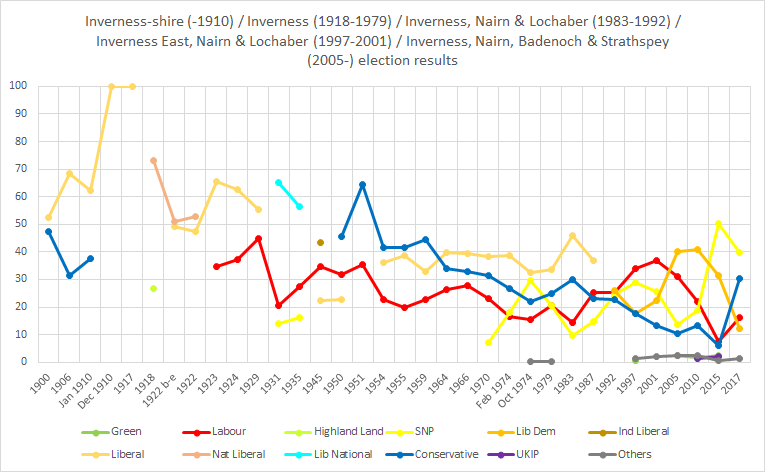
- Historical Milestone: Hosted the closest four-way result in a UK Parliament election since 1918 during the 1992 vote.
Constituency Boundaries and Local Government
The creation of the Inverness, Nairn and Lochaber constituency was closely tied to the Local Government (Scotland) Act 1973. This act abolished the traditional county and burgh system in 1975, replacing it with a region and district structure. Consequently, the constituency was mapped to cover four of the eight districts within the Highland local government region:
- Inverness district
- Nairn district
- Lochaber district
- Badenoch and Strathspey district
While these four districts formed this constituency, the remaining four districts of the Highland region were split between the Caithness and Sutherland and the Ross, Cromarty and Skye constituencies.
Administrative Transitions
The landscape of local governance shifted again in 1996 under the Local Government etc (Scotland) Act 1994. This legislation abolished the district system entirely, transforming the region into a unitary council area—a single-tier authority responsible for all local government functions.
By 1997, the parliamentary boundaries were redrawn once more. The Inverness, Nairn and Lochaber seat was abolished and divided among three new constituencies: Inverness East, Nairn and Lochaber; Ross, Skye and Inverness West; and Caithness, Sutherland and Easter Ross.
Political Representation and Election Results
Throughout its entire existence, the constituency was represented by Sir David Russell Johnston (later Baron Russell-Johnston). Having previously served as the MP for the Inverness constituency, he maintained his seat from 1983 until the constituency's abolition in 1997. During his tenure, his party affiliation transitioned from the Liberal Party to the Liberal Democrats.
The seat was known as a marginal constituency, meaning the margin of victory was narrow enough that it could realistically be won by another party in a subsequent election. This volatility peaked during the 1992 general election.
In the 1992 contest, the four major political parties were separated by a mere 3.41%. This remains one of the most competitive results in British political history, marking the closest four-way split in any UK Parliament election since 1918.
| Attribute | Details |
|---|---|
| Period of Existence | 1983–1997 |
| Member of Parliament | Sir David Russell Johnston |
| Political Parties | Liberal / Liberal Democrat |
| Preceding Constituencies | Argyll, Inverness and Moray, Nairn |
| Succeeding Constituencies | Inverness East, Nairn & Lochaber; Ross, Skye & Inverness West |
Frequently Asked Questions
When was the Inverness, Nairn and Lochaber constituency abolished?
The constituency was abolished in 1997 when parliamentary boundaries were redrawn to create three new seats in the Highland area.
Who represented the constituency during its existence?
Sir David Russell Johnston (later Baron Russell-Johnston) represented the area from 1983 to 1997, serving first as a Liberal and later as a Liberal Democrat.
What made the 1992 election in this constituency significant?
The 1992 election was notable for being the closest four-way result in a UK Parliament election since 1918, with the top four parties separated by only 3.41%.
Which local government districts were included in the constituency?
The constituency covered the districts of Inverness, Nairn, Lochaber, and Badenoch and Strathspey.
What electoral system was used for this seat?
The constituency used the first-past-the-post system, where the candidate with the most votes wins the seat regardless of whether they achieve an absolute majority.