Inverness and Nairn Railway: The First Step in Highland Rail Connectivity
In the mid-19th century, the arrival of the railway transformed the British landscape, bringing cheap transport for local produce and essential commodities. While cities like Aberdeen were quickly connecting to Central Scotland, Inverness remained isolated, separated from the south by the formidable Monadhliath Mountains. The Inverness and Nairn Railway was born out of this necessity, serving as the critical first link in a larger vision to connect the Highlands to the rest of the United Kingdom.
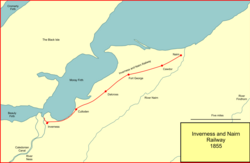
Launched in 1855, the line was not merely a local convenience but a strategic move to break the isolation of Inverness. By establishing a 15-mile route to the burgh of Nairn, local interests laid the groundwork for a network that would eventually stretch to Aberdeen and Perth.
Key Facts
- Operational Dates: November 5, 1855 – May 17, 1861.
- Route Length: Approximately 15 miles between Inverness and Nairn.
- Track Gauge: 1,435 mm (4 ft 8 1⁄2 in) standard gauge.
- Construction Cost: £56,540 to build and equip.
- Successor: Absorbed by the Inverness and Aberdeen Junction Railway in 1861.
- Legacy: The line remains in operation today as part of the route from Inverness to Aberdeen.
The Vision of Joseph Mitchell
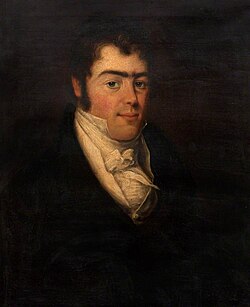
By 1853, it had become clear that the Great North of Scotland Railway (GNoSR) was unwilling to extend its reach to Inverness, stopping instead at Keith. This left Inverness interests in a precarious position. Enter Joseph Mitchell, an energetic engineer who proposed a phased approach to connectivity. Rather than attempting a costly and immediate leap to the south, Mitchell promoted a shorter line to Nairn.
Mitchell viewed this as the "northern section" of a future Inverness-to-Perth railway. To ensure the project's success, he negotiated a peace treaty with the GNoSR, granting them running powers over the line and booking facilities in Inverness to prevent expensive parliamentary opposition.
Construction and Early Operations
The Inverness and Nairn Railway Act 1854 received royal assent on July 24, 1854, paving the way for construction. Because the line was not yet connected to any other railway, all heavy components—including locomotives and rolling stock—had to be delivered via coastal shipping from Leith. This logistical challenge caused several delays in the opening process.
The line officially opened for general traffic on November 7, 1855, following a ceremonial opening on November 5. The initial service featured four trains daily in each direction, with a journey time of 45 minutes. The passenger business was an immediate success, notably stimulating tourism to the seaside at Nairn.
Early Infrastructure and Stations
The original line served several key locations, including Inverness, Culloden, Dalcross, Fort George, Cawdor, and Nairn. The Inverness station began modestly with a single 20-yard platform and a horse-operated wagon turntable for its riverside extension.
| Station Name | Opening Date | Notes/Fate |
|---|---|---|
| Inverness | Nov 7, 1855 | Still open |
| Culloden | Nov 7, 1855 | Renamed Allanfearn (1898); closed 1965 |
| Dalcross | Nov 7, 1855 | Closed May 3, 1965 |
| Fort George | Nov 7, 1855 | Renamed Gollanfield Junction (1899); closed 1965 |
| Cawdor | Dec 1, 1855 | Renamed Kildrummie (1857); closed 1858 |
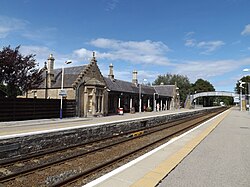
| Nairn | Nov 7, 1855 | Still open |
Evolution into the Highland Railway
The Nairn line was always intended as a stepping stone. In 1856, the Inverness and Aberdeen Junction Railway was authorized to bridge the gap between Nairn and Keith. By 1857, this new company took over the working of the Nairn line, eventually absorbing it entirely on May 17, 1861.
Further expansion occurred in 1863 with the opening of the Inverness and Perth Junction Railway, which provided a more direct route south via a summit at Dava. In 1865, these companies merged to form the Highland Railway. While a newer, more direct line to Aviemore opened in 1898, the original stretch between Inverness and Nairn remained a vital artery for traffic heading toward Aberdeen.
Locomotives and Rolling Stock
At its inception, the company operated two 2-2-2 locomotives of the Raigmore class, named Raigmore and Aldourie. These engines proved unsuitable for the line's specific requirements and were later rebuilt as 2-4-0s, remaining in service until 1901.
The rolling stock consisted of four-wheeled coaches sourced from Brown & Marshall in Birmingham, along with a variety of wagons for timber, cattle, and sheep, and a brake van. All stock was transferred to the Inverness and Aberdeen Junction Railway upon its formation.
Frequently Asked Questions
Why was the railway built only to Nairn initially?
Engineer Joseph Mitchell proposed a shorter 15-mile line to Nairn to avoid the immense initial expense of a full route to the south, viewing it as a strategic first step toward connecting Inverness to Perth.
How did the company transport its first locomotives?
Since the line was not yet connected to any other railway network, all locomotives and heavy construction materials were brought in via coastal shipping, primarily from Leith.
What happened to the Inverness and Nairn Railway company?
It was absorbed by the Inverness and Aberdeen Junction Railway in 1861, which later merged with the Inverness and Perth Junction Railway in 1865 to form the Highland Railway.
Is the line still in use today?
Yes, the section of the line between Inverness and Nairn continues to operate as part of the modern railway route connecting Inverness to Aberdeen.