International Labour Organization: Advancing Global Social and Economic Justice
The International Labour Organization (ILO) is a specialized agency of the United Nations dedicated to promoting social and economic justice. By establishing international labour standards, the ILO seeks to ensure that work worldwide is productive, sustainable, and conducted under conditions of freedom, equity, security, and dignity.
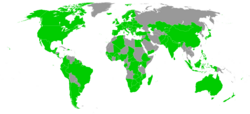
Founded in October 1919 under the League of Nations, the ILO is one of the oldest specialized agencies of the UN. It operates on the fundamental principle that "labour is not a commodity," a sentiment reaffirmed in the 1944 Declaration of Philadelphia. Today, the organization comprises 187 member states, including 186 of the 193 UN member states and the Cook Islands.
Key Facts
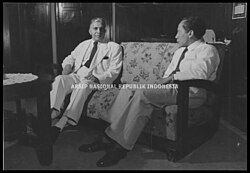
- Founded: 11 April 1919.
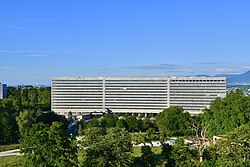
- Headquarters: Geneva, Switzerland.
- Membership: 187 member states.
- Core Mission: Setting international labour standards to advance social and economic justice.
- Major Award: Nobel Peace Prize (1969).
- Leadership: Led by Director-General Gilbert Houngbo (as of 2022).
Foundations and Legal Framework
The ILO's influence on international labour law is rooted in its extensive system of conventions and treaties. As of 2026, the organization has established 193 such instruments. Among these, eight are classified as fundamental conventions under the 1998 Declaration on Fundamental Principles and Rights at Work.
These fundamental standards focus on four critical areas:
- Freedom of association and the right to collective bargaining.
- The elimination of forced or compulsory labour.
- The abolition of child labour.
- The elimination of discrimination in employment and occupation.
Organizational Structure and Global Reach
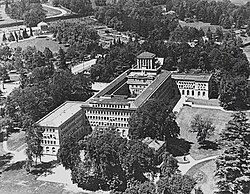
The ILO is headquartered in Geneva, Switzerland, and maintains a vast global network to implement its mandates. This includes approximately 40 field offices and a staff of 3,651 (as of 2022) operating across 107 nations. A significant portion of this workforce—1,698 staff members—is dedicated specifically to technical cooperation programmes and projects.
Regional and Sub-regional Presence
To effectively address diverse regional needs, the ILO operates five main Regional Offices:
- Africa: Abidjan, Côte d'Ivoire.
- Asia and the Pacific: Bangkok, Thailand.
- Europe and Central Asia: Geneva, Switzerland.
- Latin America and the Caribbean: Lima, Peru.
- Arab States: Beirut, Lebanon.
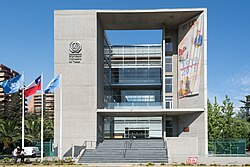
Additionally, the organization utilizes Directors-General and various sub-regional offices (DWTs) in cities such as Cairo, Dakar, Pretoria, Yaoundé, New Delhi, Budapest, Moscow, and Santiago to coordinate local efforts.
Major Initiatives and Global Impact
Combating Child and Forced Labour
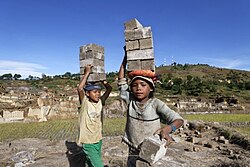
The ILO is a global leader in the fight against exploitative work. In 1992, it launched the International Programme on the Elimination of Child Labour (IPEC). Operating in 88 countries, IPEC is the ILO's largest operational programme, focusing on strengthening national capacities to end child labour.
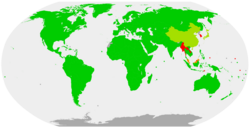
To address forced labour, the ILO adopted the Forced Labour Protocol in 2014, which entered into force on 9 November 2016. This protocol modernizes the 1930 Forced Labour Convention (No. 29) to tackle contemporary issues such as human trafficking.
Health, Rights, and Sustainable Development
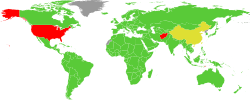
The ILO also addresses critical health crises in the workplace. In 2010, it adopted Recommendation No. 200, the first international labour standard concerning HIV and AIDS, aimed at protecting the rights of HIV-positive workers and their families.
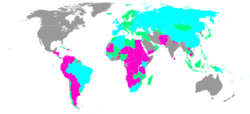
Furthermore, the ILO serves as the custodian agency for nine of the 17 indicators of Sustainable Development Goal 8 (SDG 8), which focuses on "decent work and economic growth." This includes gathering data for the Global Youth Empowerment Strategy.
Historical Milestones
The ILO's history is marked by its ability to influence national policy. A notable example occurred in Poland during the 1980s. After the government declared martial law in 1981 and suppressed the Solidarność trade union, the ILO Committee on Freedom of Association filed a complaint. Following international pressure and a Commission of Inquiry, the Polish government granted legal status to Solidarność in 1989, adhering to ILO principles.
| Category | Details |
|---|---|
| Official Languages | English, Spanish, French |
| Member States | 187 (186 UN members + Cook Islands) |
| Key Legal Instruments | 193 Conventions and Treaties (as of 2026) |
| Parent Organizations | UN General Assembly, UN Economic and Social Council |
| Primary Goal | Social and economic justice through labour standards |
Frequently Asked Questions
What is the primary mandate of the ILO?
The ILO's mandate is to advance social and economic justice by setting international labour standards that ensure work is productive, sustainable, and conducted with dignity and equity.
Which UN member states are not part of the ILO?
Seven UN member states are not members of the ILO: Andorra, Bhutan, Liechtenstein, Micronesia, Monaco, Nauru, and North Korea.
What are the "fundamental conventions" of the ILO?
These are eight core conventions that protect the right to collective bargaining, the elimination of forced labour, the abolition of child labour, and the end of employment discrimination.
How does the ILO contribute to the Sustainable Development Goals?
The ILO is the custodian agency for nine of the 17 indicators of SDG 8, which focuses on promoting decent work and economic growth globally.
What is the significance of the Declaration of Philadelphia?
The 1944 Declaration of Philadelphia reestablished the ILO under the United Nations and reaffirmed the core principle that "labour is not a commodity."